Computardery

The inevitable result of adding machines made available to autists.

Fetch Me Some Damn Interweb Porn

Much hot air has been blown recently on the whole internet music/movie/copyright/ shenanigans. The music industry is being killed/is being saved by Apple's iTunes. Movie piracy is/is not killing movies. But has anyone thought of the porn industry? Their sacred copyright protections are being, uh, violated as much or more than music or less sexy movies. And while the smut peddlers were among the first to jump on the web bandwagon (and VHS before) they, like many other slightly more respectable businessmen, are finding it very hard to compete with "free."

Anyway, here is an interesting bit on how Web 2.0 and other buzzwords are if not killing, certainly maiming the porn bidness.

Posted by Buckethead Buckethead on   |   § 2

Click-spam

Ugliness ensues, and the internets get weakened.

You should read the whole Wired article, honestly. The money quote from Mr. Schneier:

Oddly enough, Storm isn't doing much, so far, except gathering strength. Aside from continuing to infect other Windows machines and attacking particular sites that are attacking it, Storm has only been implicated in some pump-and-dump stock scams. There are rumors that Storm is leased out to other criminal groups. Other than that, nothing.

Personally, I'm worried about what Storm's creators are planning for Phase II.

Be scared, but also be aware that breaking the internet for one country breaks it for all developed countries. The wonders of interconnectedness!

Posted by Patton Patton on   |   § 0

Guess which minister, Vol. I

Can you guess which of the ministers might have been responsible for this gem of succinct, trenchant commentary?

If I pooped on a sheet of paper and used my finger to smear it into ones and zeroes, I would have written a better Windows browser than Safari.

Just saying.

And this follow-up, for those who might have thought the first comment wasn't ambiguous?

if I may be succinct:

ass browser.

First person to guess correctly gets, free, the URL from which they can download Apple's Safari browser.

Posted by Patton Patton on   |   § 1

The Precious

At around 2:00 yesterday afternoon, I was Ralphie on Christmas morning discovering that he had not gotten an official Red Ryder carbine action two-hundred shot range model air rifle, but instead a Barrett M82A1M .50 cal semi-automatic rifle with the lengthened accessory rail, rear grip and monopod socket. And ten boxes of ammo and a range pass.

Why was I so happy?

Because I had gotten home and after some minor difficulties gotten my precious iPhone hooked up, activated, and synced.

Thanks to existing contractual obligations, the unreasoning greed of auto mechanics and the Federal government, and a wife who despite her manifold virtue was dubious of the clear and obvious need for my iPhone purchase I was not one of the geeks who waited in line on June 29th for an opening day iPhone. Instead, I was a geek who had to wait six weeks like a sucker, while review after glorious review only whetted my appetite and turned the screws on the rack of my anticipation.

But having it in my sweaty palms, I find (almost to my surprise, despite having actually wasted a lunch hour in a pilgrimage to the local Apple store to fondle one) that the iPhone actually does live up to the hype. It is literally and figuratively the Jesus phone.

I got the 8GB version, figuring that more is better in the storage department. I loaded up almost four hundred songs, a movie, three tv shows, a complete audio book college course on the Crusades, a hundred pics of the Buckethead clan – and I still have 4.3 GB left. Plenty of storage.

As for performance, playing with the iPhone I remembered a quote I read once from Jonathan Ives, the design guru at Apple – “when our tools are broken, we feel broken. And when somebody fixes one, we feel a tiny bit more whole.” It is staggering, after witnessing the ease of use and careful attention to detail embodied in the iPhone, to realize that in decades of cell phone design evolution, no one had ever come within a country mile of getting it right until now. Other phones are sun-warmed piles of dung compared to the glory of this phone.

I had a decent phone – a Motorola Razr. I appreciated above all its slenderness – if I was going to carry around a phone all the time, I might as well have one that was unobtrusive. For dialing numbers and talking to people, it was certainly adequate. I could press and hold “2” to talk to Mrs. Buckethead. But if I needed to look up another number from my contacts, I was screwed. Can’t do but one thing at a time.

Adding contacts was nightmarish, typing on the tiny number pad and being prompted at each change. Using the internet was a painful and expensive joke. The only function other than talking that I used at all regularly was the calculator.

Now I realize that the Razr was not a smart phone. But friends of mine have had smart phones, and I’ve played with them, and they are pretty much just as user hostile as mine was – just user hostile over a broader range of functionality.

In the last 24 hours or so, I’ve:

  • Watched a movie, Sky Captain and the World of Tomorrow
  • Watched Aqua Teen Hunger Force (“Circus”) and the Soup.
  • Gotten and replied to dozens of emails
  • Talked to my mom
  • Read many articles on the internets, including this one
  • Listened to lots of Johnny Cash
  • Consulted the weather in several cities
  • Used the map function to locate stuff, and navigate there
  • Set the timer for no good reason
  • And, gotten Mrs. Buckethead angry for setting her personalized ringtone to “bark”

In any given 24 hour period in the last decade or so, I might have used a computer to accomplish most if not all of those tasks. But forty pounds of computer equipment does not travel well, and the wireless router in my office does not reach several miles to the nearest town – let alone fit comfortably in your pocket.

The stunning thing is that all of these tasks were accomplished gracefully, easily, even joyfully. I’ve found myself just switching between applications to watch the animations. I am a techwriter by trade, so it is perhaps disturbing to realize that this thing does not need a manual. It is that intuitive – nothing is arcane, obscure or clearly not designed to be used by humans.

Which makes you want to use all the various thingies and gadgets, because they are flat out fun to use. And so well designed, that even this website looks better on the iPhone than it does on a 24” monitor on my desk. (It also makes you crave more applications.) I knew how to access and use most of the applications on my Motorola phone, I just didn’t use them because it was entirely too much of a pain in the ass to actually use them.

All other phones are broken, and this one is not. And of the two major worries that many had – the keyboard and the battery life – I have no complaints on either score. I’m already getting pretty fast on the typing, and I’m just about to recharge it for the first time.

This is one kick ass, highly enslickened, gorgeous piece of technological gimcrackery. I recommend it highly.

Posted by Buckethead Buckethead on   |   § 7

Correcting a recent dearth of iPhone posts

[wik] Not that I have a dog in this race, but I found myself thinking it would be fairly cool if the blender had broken and he'd been impaled by one or more iPhone parts. Nothing against Blender Guy, of course, and I'm sure that attitude is just a compensation for all the WWE & NASCAR I don't watch.
 

Posted by Patton Patton on   |   § 0

Proof, as if it were needed...

...that we live in a world of plenty, nay, a decadent world. Did he really need that badly to see the innards of his new iPhone?

I don't think he's just trying to get his Bluetooth speakers working, either. At $500+ a pop, he must have been affirmatively pissed at his new toy. [wik] For any iPhoners who might find themselves irked at activation problems, don't worry, don't get mad, and don't bust your iPhone to smithereens. It seems that "DVD Jon" has already broken the activation process. [alsø wik] For those with WSJ subscriptions, further info on the myriad workarounds the first week of the iPhone's life hath wrought.

Posted by Patton Patton on   |   § 0

The Jesus Phone

I happened to be near the Apple Store yesterday. (Buying a geek book for work down the street from it.) I wandered in. The hype crowd had cooled down but it was still hoppin' for a cool summer evening. A Monday no less.

Now I know Buckethead is drooling over the phone, but I've been interested in it because I am looking for a laptop alternative. I hate blogging inside my house on a nice day. I would love to go to a cafe and blog over WiFi and check out the jarheads on PT runs. What good is living near the Pentagon if you don't get gym queen eye candy? (Really, it's like living in the Castro in SF again, except the men are straight and not quite as ripped.) But I digress.

I really want a laptop and was seriously considering a MacBook, priced the damned thing and everything. Looked at the refurbs, offered to buy one off a girlfriend who hated hers. (She and I are of the same ilk, no lifting your hands off the keyboard to use the mouse. It wastes time.) But I thought maybe I should wait a see what this iPhone thingamabob is all about. You see, I have a 4GB Nano I won in a blog contest and I really don't use it. I have an indash 6-CD changer and usually that's enough music to last me months without a change. I even mislaid the thing for a few months because I just don't need audio white noise in my life. I abandoned my Palm V after I didn't have a desktop anymore to sync it to pull down articles from AvantGo and read them on the train and because I was a car commuter and didn't have the time to read anymore.

So here I am at the store. I looked at an iPhone and started to use it as instinctively as I knew how because a really great GUI doesn't need instructions. It should be intuitive and obvious. Right?

Well, I had heard a little about how the button gets you always back to the start page with your icons. I admit, it's a beautifully clear screen with great width, but it's about the size of my old Palm V and still feeling a bit large in the hand. (I use a KRZR right now, not crazy about it, but it's narrow, which I like.)

After about 30 seconds, I wanted to hurl the damned thing across the room. Luckily for Apple and its patrons, it was bolted down.

Excuse me, but this gadget was designed by men for men. Being the girly girl that I am, I keep my fingernails long. I like to scratch the itch. There's nothing more satisfying than bearing down and taking a layer of dermis off when you've got a terrible itch. Unfortunately, that precludes using this device. Period. End of story. I don't even need to proceed any further. If you are not a nail biter, you can never use this phone.

All the men around me thought it was the bomb. I glanced at their fingers. They were all effing nail biters. Shit. Even I AM a nail biter when I am bored at work, but I don't bite down to the quick. That's disgusting and makes your fingers bleed, an even worse biohazard. But of course their fat sausage fingers are greasy and skating right across the glass surface. The idea of that makes me nauseated and reach for the Windex.

All around me I heard was that it was amazing. Honestly, I don't think it's that great. It's still not going to replace a laptop and wireless connection for a person like me. Either I want a phone or I want a highly connective mobile device, but apparently what I really want is a sub-notebook about 4-6" across with a wireless card, and a full-size 110-key folding keyboard accessory. The Jesus phone doesn't cut the mustard at all. (I am seriously thinking of patenting that idea so if any of you are electrical engineers with experience in injection molded plastics, please contact me.)

I don't have chunky fingers and I was still mistyping out the wazoo. I literally had to hunt and peck with my ring finger (shortest fingernail) to type. The interface could not keep up with my speed. Also, for the auto guessing of words, I couldn't easily figure out at first which button would complete the fill because I could not accurately ascertain which one I was hitting. (Why does the return key actually do a carriage return after it autofills? That's crap. Auto fill with no line break.) I did try covering my finger with my shirt tail and typing, which was surprisingly effective, even through a couple layers of fabric. I hear that with gloves on, it's impossible to use, which sort of precludes outdoor winter use, say in front of a bar grabbing a smoke trying to get your friends to meet you inside in 15 minutes as they walk from the metro. (Who says the smoking ban in SF, NYC and DC sucks? At least you get clear signal outside!)

The other thing that really struck me as poorly done is that the screen automatically rotates the output for web browsing. Ok, that's pretty neat and a good idea. But when you use Safari and the top tilts 90 degrees to the right, that's great. I'm a righty and that instinctive for me. But when I was looking at the embedded YouTube application, IT TILTED THE OTHER WAY. Um, not cool to have to rotate it 180 degrees from the web browser just to watch video. That's insane. The Apple dweebie in the store insisted that I had done something wrong, however, a device should never automatically switch from one orientation to the other like that spontaneously. I should be able to set it to a righty setting and lefties should get their own setting. That's a pretty reasonable GUI expectation.

To be fair, my blog looked GREAT onscreen! So did my blogpal, David's blog (see the iPhone inputted comment I left there and the crappy typos). And PFBlogs.org. Three sites I would definitely visit if I had a mobile device. I have a PSP and I have tried to use WiFi to browse the web with it, but frankly it sucks. The iPhone is VAST improvement over that. The incoming sound over iPod headphones was ok. I didn't get a chance to hear back from anyone about how the phone messages sounded that I left for them. (Buckethead?)

OH. Word to the hygiene wise, if you wish to go to see this device, TAKE YOUR OWN HEADPHONES. It was vile to watch the unwashed masses use the the same headphones over and over. I happened to have my iPod in my purse and used my own self-defiled headphones, thank-you-very-fucking-cleanliness-much. I only wish I had Purell because I was touching that screen all over and was getting grossed out. I didn't want to put it up to my face to use lest my skin I break out from necrotizing faciitis. Really, you cannot be too careful around these Mac fans. While their brand image may be clean, oy vey, their clientele is not. And this is the NoVA, BMW-driving yuppie crowd. It was teh ick. And for those not in the know, I am not a clean freak, but basic public health demands some more caution. Thank god it came out in the summertime, because during flu season, it would be quite the vector for spreading germs. (Don't even tell me that these are special headphones with the mic in the cord, I don't care. It's gross. Do want me to breathe all over your food the next time we dine together?)

Ok, that's enough of my ranting. You get the point. I'm not throwing away money on this thing. I pity Buckethead who will probably shed tears of joy when he first gets it and the curse AT&T 6 months later for the poor service. (News tip, VERY VERY LATE on Friday afternoon, 6pm ish EDT, AT&T announced the purchase of Dobson Telecom, which will give them better coverage in flyover country, so in a year, complaints about spotty service around the US might actually be moot. I presume I will still not be able to get a signal from inside the anechoic chamber better known as my parents' home. I swear, the NSA doesn't even block radio signal that well. Only Verizon gets through there. Sprint, Nextel AT&T nothing. You have to walk down the driveway to the sidewalk to get signal.)

[wik] I really, really, really wanted to like this phone. I did. I really want to be one of the cool kids and I was hoping it would be suitable for what I want, but alas, it's not. I *heart* Steve Jobs and I'd give my left pinkie to go work at Pixar, even if that would slow down my typing, I'd do it. There's something hot about the turtleneck and the rimless glasses, but I bet he's another psycho behind the wheel of a black BMW, because he definitely is a megalomaniac.

Posted by Mapgirl Mapgirl on   |   § 10

Scratch the surface

Microsoft's innovative (if, by innovative, you mean taking ideas that have been kicking around for twenty years and putting them in an overpriced and stunningly unwieldy form factor and calling it "revolutionary") Surface computer was debuted at the D conference a little while ago.

Here's a new take on it.

Posted by Buckethead Buckethead on   |   § 3

I'm a know something, thank you

Ever wanted to know something about video codecs? I'm giving you all or nothing: read this link and know everything, or don't and know nothing. Actually, it's a well written piece, and if the mysteries of codecs have you befuddled, it should sort you right out.

Posted by Buckethead Buckethead on   |   § 2

Waiting is painful

By now, even headhunters in the highlands of New Guinea are aware that the Jesus Phone from Apple will be released on the 29th of this month. But I will have to wait a little longer to get my hands on my own personal iPhone. My current two year contract does not expire until July 17th, and I must wait until it does before starting a new one. Damn, damn, damn. Mrs. Buckethead is highly dubious of my intentions to get a new phone, especially since it costs half a grand. I have a perfectly good Motorola Razr, she says, and she's right. But the Razr doesn't have that touchscreen magic. It doesn't have the preternaturally slick interface that can only come from Apple. It doesn't have WiFi. I want an iPhone so bad I can taste it.

Posted by Buckethead Buckethead on   |   § 11

The purity of essence of our precious category tags

Patton has accused me of being overly concerned about wasting a scarce natural resource. The category tag. In this, of course, he is completely wrong. Naturally, I could have argued that over-categorizing a post dilutes the utility of tags. And I would have been right. But that wasn't the point. I was attacking him on aesthetic grounds, and just to stick a stick in his eye.

Just to prove that I am not some sort of homo-tree-hugging-enviro-commie, this post, which really is about everything, is tagged with every category we have. And, when I have a free moment, I'll add some new categories, and add them to this post.

So there.

Posted by Buckethead Buckethead on   |   § 5

On information overload

Today's WSJ (subscription for fulltext), in the Business Technology section, juxtaposes two pieces on the hypergrowth of digital information, discussing its reasons, its effects, and some responses to the growth.

The first piece is a straightforward and informative mini-whitepaper, entitled "Cutting Files Down to Size". It mentions the efforts of Chevron and Credit Suisse to control their information, primarily through implementation of new tools, new methods, and new employee work habits. There's something about an information base that's presently 1.2 petabytes in size, potentially growing by 57% per year, that can focus the minds of management. Add to that the million email messages per day that the 59,000 employee Chevron claims to process, and you're talking some serious data. So much data, perhaps, that's it's not even possible to glean the information from it. A veritable flood.

The primary solutions discussed are conceptually simple:

  • Get people to pay attention to the amount by which they're increasing the deluge
  • Put systems in place to eliminate redundancy, such as using Microsoft's well-reviewed SharePoint server, ensuring that even the worst PowerPoint slide decks are only stored once
  • Admitting, and getting data creators to admit, that not all information is equally valuable

All excellent steps, though both expensive and difficult to implement. Totally aside from the grotesque knock-on effects of continually increasing technology infrastructure to store all new information, the real benefit from such efforts is to remove potential sources of background noise; the unimportant, the duplicative, and the no-longer-operative. "Data" is both easy and not intrinsically valuable - it's "information" that's both difficult and valuable, and too much data can obscure the information. Best of luck to the contestants in slaying their particular dragons.

The companion piece, on the same page, in Lee Gomes' "Talking Tech" column was the more intriguing of the two. Entitled "Computers Should Be Taught To Let Certain Memories Go", it contained an interview with Harvard KSG professor Viktor Mayer-Schoenberger, and was among the more thought-provoking pieces in the entire day's paper.

Mr. Mayer-Schoenberger's thesis is this:

Human beings ... weren't designed to remember everything we ever learned, and sometimes are better off when we forget. Computers, he adds, should as a result be taught to let some memories go.
...
We are biologically hard-wired to selectively remember. But in moving into a digital age, we are now surrounding ourselves with tools that have inversed (sic) that.
...
How does this make life different?

In the predigital age, we might have called someone who knew a person we were interested in learning about, got them to tell us about the person. And we would get a quick picture -- but not a complete and comprehensive picture of each and every piece of communication or behavior that the person did over the past 20 years. I think we have lost something by moving from that sort of short encapsulation toward a complete picture that provides us with all the details, the sort that over time, we as a society, and as human beings, tend to forget.

But what's the problem with that?

Things that happened 10 or 15 years ago might have happened to a different person. Therefore, we should put less weight on what we did 15 years ago than we would do now. In the past, our brains did this automatically for us by forgetting it. But we haven't been able to develop another evolutionary method, another method by which we can weigh things that happened further in the past differently from those that happened more recently.

(ellipses mine)

Interesting theory, and one that makes some rational sense. I can't speak for anyone but myself on the subject, but I'm surely not the same person today as I was 15 years ago, and would want any judgment of me weighted more on the current me than the one from decades ago.

The (mild) shocker in the piece, however, was this, his prescription for a solution:

My proposal is that we have a law that mandates that software coders build into software a better ability for people to let their digital tools forget, if they so wish. Right now, both Windows as well as Mac OS have a huge amount of meta data that they keep track of for each file that we use: "Date Created," "Owner," and so on. So I suggest that we add another type of meta data: "Expiration Date."

Conceptually, he has a point - that would be at least a potential solution to the problem he's laid out. Why the rush to what I can guarantee would be massively ineffectual legal efforts, I wondered? For starters, I presumed it's because he's an associate professor with Harvard's Kennedy School of Government, whose faculty, perhaps by definition, thinks more abstractly and less rationally than, say, Harvard Business School's must. Then I visited his faculty page at KSG:

...He advises businesses, governments, and international organizations on regulatory and policy issues. He holds a bunch of law degrees, including one from Harvard, and an MS (Econ) from the London School of Economics.

That explains it. Ignoring any questions about how many law degrees one can effectively use, the "bunch" he holds appear to have been enough to outweigh any pragmatism learnt at LSE.

(also posted at issuesblog.com)

Posted by Patton Patton on   |   § 6

Patent infringement excitement

Not for the first time, the technology world has a do-or-die patent judgment hanging over its head - "Judge grants partial stay in Vonage patent case"

The last such major drama was a bit more than a year ago, in the case of NTP v. Research in Motion (RIM), related to the Blackberry remote messaging service and its infringement of patents held by a patent licensing firm. In that instance, much of RIM's effort before ultimately reaching settlement was dedicated to contesting the patents. During late 2005 and early 2006, there were many stories of successful challenges to NTPs patents, as reported here, here, and here, as well as myriad other places.

In that last linked story, one of the two primary crutches on which the losers of patent infringement cases regularly lean was described like so:

More bad news for we-don't-actually-make-anything NTP in their long legal dispute with RIM — the US patent office just made a "first office action" rejecting the validity of the last of eight NTP patents they were reviewing, five of which were at the heart of the RIM patent infringement suit.

Another of the crutches is the all-too-common complaint that the Department of Commerce’s United States Patent and Trademark Office (USPTO) provides patents far too willingly, either for inventions that are obvious or trivial and thus not patentable or already widely known in the public domain prior to the patent filing. Disclosure of presumptively patentable inventions prior to first filing with the USPTO makes them ineligible for protection, in many cases, and certainly, disclosure by someone other than the patent applicant is strong indication that the invention fails the to surmount the hurdles regarding triviality and uniqueness.

Notwithstanding successful defense of patents widely considered invalid, like Amazon's patent for "one-click" technology in internet commerce, dissenters regularly continue the argument, both generally (as with DNA patents in the comment linked to the ledt) and related to specific patents like Amazon's.

In the case of NTP v. RIM, RIM had hoped to obtain reversals on all NTP-owned patents it had been judged guilty of violating. RIM ran out of time, and had to pay the piper, even though every single patent at the heart of the case had, by crunch time, been provisionally revoked. This was clearly an unfortunate, and arguably an unfair, result for RIM stockholders.

In the current case, Vonage was granted the temporary right to continue using the patents at issue, but not to use them in providing services to new customers. Vonage, predictably, was disappointed by this:

Roger Warin, a lawyer for Vonage, said the partial stay amounted to "cutting off oxygen and a bullet to the head" of the company.

And, given stronger finances, it seems possible that Vonage, like RIM before it, might attempt a blocking or delaying tactic while attempting to have the patents overturned.

But Vonage (they of the "shaky finances", both before and after their IPO) isn't RIM (they who, even if they perhaps shouldn't have needed to pay NTP, weren't mortally damaged by the battle). And Verizon isn't NTP. It's bigger, of course, but the technology underlying the patents at issue wasn't purchased, to my knowledge, but was instead actually invented by Verizon. Even under the arguably silly (silly because patents, like other property, can be bought and sold) stance that NTP didn't really deserve the patent protection it used to win the case, Verizon is a whole different breed of cat, possessor of many patents, quite familiar with the process of acquiring and protecting them, and to which such an argument doesn't apply. Any attempts to invalidate its patents seem likely to be a hard battle, with at best an uncertain outcome for the challenger.

While "a bullet to the head" and "cutting off oxygen" seems less likely to guarantee instant death than a bullet to the lungs and cutting off its head would be, Vonage, as Mr. Warin said, is in deep trouble as a result of the only-partial stay of the patent infringement judgment. Inability to acquire new customers will be their death knell, given a business model that's predicated, still, on market share growth instead of financial results.

Breathy claims, made during the initial trial, that they had alternative technology that could be used instead ring hollow for me, and were interesting for public- and customer-relations, but are not operative in a real world where new customers must coexist with old, and where implementing any sort of new technology, especially for a customer base far larger than the company's service quality seems to merit, would be like performing open heart surgery in the bed of a pickup truck going 90 mph on a rough road.

Good riddance to a company that's often treated its customers rather cavalierly? Perhaps not. But as a happy-to-be-ex-customer, I think it's more likely than not.

[wik] The more things change, the less they stay the same:
(5:47 PM ET Apr 6, 2007)
"Vonage receives stay, can continue signing up new customers".

SAN FRANCISCO (MarketWatch) -- Vonage Holdings Corp. said late Friday it has received a stay from a federal court in Washington, D.C., allowing it to continue to sign up new customers. Earlier Friday a judge the same court issued a ruling barring Vonage from signing up new customers, because Vonage in March had been found to infringe on patents owned by Verizon Communications Inc.

Apparently, Vonage used the "Oooooh! You're killin'me" defense. So I guess we'll just see.

Posted by Patton Patton on   |   § 8

The massive Zune user community

In the wake of the joint EMI/Apple announcement that DRM-free EMI tunes will be available for sale on Apple's iTunes store, people have been speculating on what it all means. Aside from many predictions of the imminent demise of DRM, one potential fallout is a new chapter in the audio standards war. (Apple favors AAC, Microsoft WMA, and MP3 is the default other format. For more info on audio file formats, see this wikipedia overview with links, or the second half of this article for a good explanation.) Arik Hesseldahl of Business Week talks on this, and it's well worth a read, but the bit that got me laughing was this:

AAC-format supporters include some notable names, including Microsoft's Zune. So come May, the 16 people who own one will be able to buy EMI tracks from iTunes and presumably play them on that device.

I am amused by how Microsoft always quotes market share figures by saying, "Hard Drive Music Players." They've gotten less than 10% of maybe a quarter of the total music player market, and that doesn't even take into account iPod sales from Apple stores and online. They might have managed to get 2% of the total market. Quite a splash considering how much cash they through at it.

Posted by Buckethead Buckethead on   |   § 0

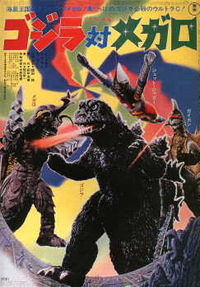
Godzilla vs. Megalon?

How else to describe a court battle between the two titans of enterprise software, Oracle and SAP? Heavyweights, both.

On March 22, 2007, Oracle filed suit against SAP alleging corporate theft. Per Oracle's filing:

"This case is about corporate theft on a grand scale, committed by the largest German software company—a conglomerate known as SAP," the lawsuit says. "From that Web site, SAP has copied and swept thousands of Oracle software products and other proprietary and confidential material onto its own servers."

My initial reaction to the news was "Whoa. SAP just made a big mistake". In the fullness of the news cycle, however, further details arrived, via a story in one of last week's issues of the WSJ (subscription req'd) entitled "SAP Unit Denies Oracle's Claims":

According to the complaint, TomorrowNow in some cases accessed information using log-in information for Oracle customers with expired support contracts. In other cases, TomorrowNow accessed information beyond what customers were entitled to access, according to the suit.

My reaction after reading this bit of news, in a story focused on SAP's proclamation of innocence, was that Oracle's position isn't quite as iron-clad as it had first appeared to be. 

I'm not the only one who thinks so. Wired Magazine, in an interesting article, also from last week, entitled "Is Oracle Using Computer Crime Law to Squelch Competition?" questions how different the case would be had the Oracle customers simply provided written manuals in their possession to the SAP subsidiary. Further, Jennifer Granick, the author of the Wired article, doesn't pick a likely winner in the case, but seems dismayed at the prospect of Oracle's succeeding in their suit, but doing so simply because the access was electronic rather than physical.

There's a larger issue that occurred to me in this matter, however. I'm no Oracle maven, but I remember quite vividly the marketing campaign Oracle ran earlier this decade touting "Unbreakable: Oracle's Commitment to Security". Ever since the 2002 debut of that campaign, naysayers have been a dime a dozen. In fact, Oracle itself, by its actions if not its advertising rhetoric, has admitted as much. No less a luminary than Bruce Schneier, founder & CTO of BT Counterpane was quoted thusly:

When they say their software is unbreakable, they're lying.

Ouch. That could have left a mark, directed anywhere other than at Oracle's marketing department, I'd guess.

But unless Oracle has dispensed with the fiction that they, alone in the technology world, are capable of providing a secure database, application, or portal, it would seem as though they're begging for further ridicule when complaining that SAP (via its TomorrowNow subsidiary) was able not only to get into Oracle's systems with expired passwords, but that SAP was also able, as if by magic, to access areas to which those same customer passwords were not authorized.

Friends of mine with cooler heads have pointed out that, if Oracle were attempting to get a customer to sign a new maintenance agreement, they might well have avoided disabling access for those expired accounts. My rejoinder? That still doesn't explain or excuse the fact that their security over this information must be marginal, at best, if they allowed access to items for which the customers weren't authorized.

And one logical conclusion a court could, but wouldn't be forced to, draw, is that Oracle didn't think highly enough of the supposed "corporate secrets" to even put a lock on the door.

Advantage, SAP?

(also posted at a issuesblog.com)

Posted by Patton Patton on   |   § 0

The Song Remains The Same

Buckethead recently sent me a link to an interesting article in The Consumerist on how one regular innocent music fan found himself driven to desperate piracy by the perversity of the record industry.

In short, this music fan, who has given in his estimate about $20,000 to the various labels in revenues over the years, found himself stymied by the DRM on the most recent Luna album.

Last week while I was busy importing my CD's into iTunes so I could listen to them on my iPod (a most tedious task), I hopped on the internet. iTunes was busy importing a Luna CD, one of my favorite bands, so I decided to see what they were up to since they disbanded a few years back. After a few clicks in Google, I found a blog site describing a posthumous, internet-only release of a collection of covers the band had recorded throughout their career. While I already had many of the songs (they were often featured on b-sides and imported singles, etc.), I couldn't resist tracking down this compilation. As I read further on the blog site I encountered a link to a .zip file containing the entire collection ripped as 128kbps mp3's.

While I must admit being tempted to simply click away and download the collection, I though to myself, "Well, if I buy the music it's only $10, and this way I will get high quality .WAV files. Besides, it's not like Luna were getting rich off of their careers, they could use the money..."

So I headed to Rhino's online store, purchased the music, and downloaded the files.

A little later that evening, I tried to move the .WMA files into iTunes, when I received an error message telling me that iTunes could not import them because they were copy protected. I downloaded the files again (which took another 12 minutes) and again, the same message.

So I called Rhino customer support and after an 8 minute wait spoke with a representative. She informed me that the files were indeed copy protected so that I could only play them on specific music players, most notably not iTunes.

"You don't understand," I said, "These files were not copied or pirated, I actually purchased them."

"Well" she responded, "You didn't actually purchase the files, you really purchased a license to listen to the music, and the license is very specific about how they can be played or listened to."

There's much more there, about how Rhino eventually advised him to keep trying illegal maneuvers until he found a way around their DRM to make the files work with iTunes.

Now, leaving aside the perversity on display here - do the right thing and get giant hassles in return - I am appalled that Rhino, of all labels, hasn't gotten their act together in the eight-odd years since Napster first came on the scene. Eight long years of missing opportunities, making mistakes, and alienating the same public that should be their partners in sharing awesome music together.
And yet, the song the labels sing now is exactly the one they sang when I left the music business four years ago: electronic files are murder; physical media is the past, present and future; consumers are licensees, not purchasers, of the music they consume; and what the hell is with this tech-mology stuff anyway? And that's a death warrant.

Some of you will remember a couple years ago that a Harvard Business School professor did a huge study of the effect on downloaded music on retail music sales (recently published in the Journal of Political Economy as "The Effect of File Sharing on Record Sales: An Empirical Analysis." At the time, he found that the effect was exactly "none." Declines in music sales could be explained through other means, for example the proliferation of other forms of media entertainment competing with music for the public's attention and dollars, as well as the end of the long era in which record and tape owners were upgrading their old media catalogs to compact disc. Indeed, downloaders either tended to download music they'd not have bought anyway, or to treat downloading as a way to sample new music that they then might pay for. In fact, the evidence suggested that there was a significant 'long-tail' effect at work - the million-sellers lost some sales to downloading, but the download-assisted boost in sales of the other thousands of half-forgotten albums out there more than made up for the decline at the top.

Whether or not you agree that downloading in and of itself has a minimal net negative impact on record sales, the facts are that CD sales are down 20% from last year. It now takes far fewer sales to have a #1 hit than it did even three years ago. Right now, indie band The Arcade Fire have the number-two album in the country. What!?! They're fine. They're alright. But they're just The Arcade Fire, and their new album has gotten a lot of good press. Whoop-de-doo. Since they haven't shot platinum yet, I can only surmise that they the overall sales pool is indeed shrinking. Further evidence: abrasive 80s revivalists !!! (that's pronounced however you want - "bang bang bang" or "chick chick chick" are the ones I've heard) are also in the Billboard Top 200. Now, I've heard !!!'s new album, and yeah sure it's fine. But I'm a little bewildered as to why a band whose closest antecedents are cult heroes like Wire and Television and whose name isn't even pronounceable on the radio have a charting album.

I will probably get tired of saying this some day, but not yet: The idiots who run the music industry are slowly strangling their baby by steadfastly refusing to pursue creative ways to adapt to changing realities and partner with their audiences to create new means of selling and buying music. Instead, they are suing the dead and prepubescent children, lashing out at the exact same people they should be embracing, the exact same people who are the key to their future. (Except the dead guy, of course, but he did leave behind children who are currently being sued in his place.) They are even forcing out executives, like EMI's Ted Cohen, who have advocated forcefully and articulately for the industry to stop shitting where it eats its dinner.

For a while, I felt a little bad about all the old-school executives who knew music and only music, who I assumed were ignorant of computers and digital media and only needed some time to get used how things work today. Then, I thought, they'd turn it around and stop it with the lawsuits and the rootkits and the $18 compact discs and the single-vendor licensed media files. But I'm now convinced I was giving them far too much credit. No, those money-grubbing bastards deserve every ounce of pain and humilation that is undoubtedly coming to them.

[wik] Just a final observation. A computer recently came through the tech support shop where I work, that contained more than 12,000 files purchased from iTunes. Can you count with me the ways in which this person has used his money unwisely?

Posted by Johno Johno on   |   § 4