

Just adding to my time in purgatory


Posted by
Buckethead
 on
| § 1
on
| § 1
on
| § 1


Things desiring to bring near the end of the world.
on
| § 1
on
| § 0
From Charlton:
Maybe fairness is like energy - it is conserved, it cannot be destroyed, but when fairness is deployed it is dissipated into slightly raising the background heat.
*
Perhaps when fairness is moved around it is dissipated into useless low level rhetoric, which can do no work.
*
A society addicted to moving fairness around is perhaps depleting the system of its ability to achieve anything by means of justice. The fairness death of the universe...
Whole post here.
on
| § 0
It is a commonplace that the advance of technology killed the Feudal age. The cost of training, equipping and supporting the Medieval knight was large, relative to the economic output of the era. And this cost was necessary because in many respects it was the best bang for the buck given the technological and economic realities. So the military necessity, the social structure and the available technology mutually created and supported each other in an environment where there had been significant collapse of large-scale institutions and in which there were powerful threats to local populations.
As technology fitfully advanced, new military paradigms arose. The rise, first of archers and pikemen and then the firearm, created a tactical environment unfriendly to the armored knight, which then made the cost of training, equipping and supporting the expensive and arrogant knight sufficiently unpleasant that he faded from the scene.
Technology didn't stop with killing the knight. Masses of musket-equipped soldiers were eventually joined with mass-produced muskets, mass-produced canned goods, and eventually mass-produced mass production. Soon, even the emaciated descendants of the knight - the aristocracy - was on its knees.
Democracy triumphant! Workers of the world unite, and eat the rich! Buy large quantities of Chinese trinkets!
However, the rise of capitalism and democracy were not without their downsides. While the initial wave led to decentralization of economic and political decision-making, the system did not provide much in the way of safeguards against the eventual re-centralization of power using the techniques and technologies that the age of mass production and eventually the information age provided.
Crony capitalism, regulatory capture, the unfettered rise of the financial industry - we are seeing that allowing these things to happen, and especially to happen with the seal and approval of a democratic mandate, equivalent to the mandate of heaven - is probably not a good idea. In fact it likely will lead to the collapse of modern society - and if you read zero hedge, you'll know that this will happen sometime before next Tuesday.
There are new technologies on the horizon. The maker movement, 3D printing, home fabricators, automated CNC routers, the nascent technological cornucopia will soon force upon us vast changes, fully equivalent in scale to the changes brought by the industrial revolution, and before it the late medieval technology boom in metallurgy and clockwork and the harnessing of wind and water power.
These technologies, if you listen to the hype of their creators and promoters, will lead to a golden age of libertarian skittle-shitting unicorn rainbow happiness. And hey, they might be right. It might be stage one of the rapture of the nerds, and all humanity will just leap forward into the promised land where everyone is safe from obnoxious jocks with big muscles and little understanding of the wonders and nuances of star trek minutia and WoW guild politics.
But will it?
Just to be contrarian here for a moment, what if the new technology does not result in further democratization and libertarian society fertilization? Okay, sure, the cost of many things will go down, and that would be an argument in favor of the established perception of the economic and social potential of this complex of technologies. Global design and local production will surely have a vast effect, one corner of which will be lower cost of some goods.
But will the cost of absolutely everything go down? I think, yes and no.
The rifle is a simple piece of technology. Mass produced in quantity and distributed, it is and has been the center of large national armies for half a millennium. To be sure, we have accreted a lot of things around the hoary and grey-bearded rifle-equipped infantryman. Artillery, air forces, etc, ad nauseam. And those can generally only be produced by nation states because you need to own the factories to make these expensive items that allow the democratic citizen soldier to prosper on the battlefield.
The concentration of power enabled by mass production and democratization has been focused on the nation-state, and increasingly on the parasitic large corporation/finance behemoths that interpenetrate and influence the nation-state. As Aretae recently pointed out, the interference of the nation state in even simple things like transportation networks hugely distorted the 'natural' growth of economies. And this leads to interesting thoughts.
The growth of new methods of production might lower the cost of some things enough that the cost of other things, especially networks of things will go up, relatively speaking. (If useful things become cheap enough, you can get lots of them. If they are intelligent things, having lots of them will grant capabilities beyond a linear extrapolation of having just one would lead you to expect.) Will the cost of these networks of things rise to the level at which you need the concentrated essence of economic power - the nation-state - to effectively field fighting forces with them? The likeliest case, given the wider range, is that the cost would fall between the normal individual's means and national-debt-inducing.
If there is a collapse, or pseudo-collapse, in national and international economies and society as a result of the recent and ongoing unpleasantness - what will happen? Local-producing makers and fabricators will create regional trade networks. Trading designs globally, but producing locally, we can imagine whole new industrial ecosystems growing up around descendents of today's maker spaces. The modern smithy will be a fab lab where the local artisan can produce circuits, finished parts in plastic and metal or wood - customized and perfectly suited to the task at hand. No more mass-produced assembly line toys from China - if you want something, you go to the smithy and he makes it, just like of old.
But the thing is, a fully realized maker fab will be able to create enormously sophisticated devices and indeed entire infrastructures on a custom and ongoing basis. This goes far beyond printing interesting dildos in pink ABS plastic. Drones, drone controllers - and therefore systems of surveillance, mini-missiles, over the horizon attack capabilities, metalstorm pods, munitions, AAD systems, all networked and controlled by systems of software modeled on modern game software.
Producing rifles - even super-cool, electrically activated, rapid-fire, armor-piercing, self-homing bullet firing metalstorm rifles - with this nearly automated manufacturing technology would be the smallest thing. Equivalent to the medieval smith making a knife - a trivial exercise.
In a world that is suddenly regionalized (at best) or hyper-localized (at worst), where large-scale institutions are enfeebled both by the growing power of new technologies and the economic systems that evolve around them as documented by people like John Robb; and of course by their own inherent flaws as ably documented by Moldbug and Foseti - you have something that starts to look a lot like the pre-feudal age where the common folk are at risk from the still powerful remnants of the old order, and from out of context threats like vikings and other mobile bandits.
And what defends local communities from threats? A defense infrastructure that is complicated to produce, and difficult to utilize. While the local maker can produce any simple tool almost at cost from scrap metal and plans pulled out of the cloud (just as the medieval smith could produce simple tools from pig iron and the sweat of his brow) creating a complex of drones, missiles and automated defense systems that might be very like that imagined by Daniel Suarez in his books Daemon and Freedom(tm) is more on the order of a highly skilled armor smith producing a complicated and effective suit of armor, and the sword smith creating a usable and durable sword out of high-grade steel. And the horse breeder providing destriers, and the community providing for the feeding and training of the knight who used them...
What if the new proto-medieval knight (the old one was the thug who was skilled at arms, and seized the opportunity to create an economic situation that would support him and provide defense for the people sufficient enough that they accepted the rest) is the techno-geek gamer who understands the means of designing and utilizing the new high-tech to provide for the defense of the commons. And whose training to be effective takes years, and requires the output of a significant community, and works best when the skills are transmitted in a master/apprentice mode.
Because one guy with a rifle won't be an effective combatant in a world with networked drones, micro-missiles, sensor networks, and who knows what else that could be created with a mature fabbing technology. And as easy as a rifle is to learn to use, learning to use complex networks of weapons won't be.
Technology forces cultural changes. But not usually in ways that we expect. Our current system is between two and four centuries old, depending on how you count it. Technology is undermining it, along with its own inherent and multiplying flaws. That's about as long as things generally last. In times of great change, things don't normally continue on a linear extrapolation of current events, or even the events of the last century. We are perhaps foolish to imagine that the result of the changes taking place will be merely the elimination of only the bad parts of the current system.
on
| § 7
While I'm being all Mr. Blog Chatty Cathy, look at this:

Ominous volcanic lightning pics are like catnip for Buckethead.
on
| § 0
I have been, as is my wont, supremely lax in posting. This despite my setting up an automated process to post. So there you go.
I would say that the spirit moved me to the post this, but that would not be true. Even without the spirit motivation, Bruce Charleton has had some very interesting posts over the last little while. The one that caused me to actually pull the trigger on this post is this one:
Charleton's knife of insight is sharp, here. If a modern St. Patrick were sent to us by real Christians from some parallel world, maybe from a Patriarch of Constantinople who didn't live in Istanbul, what would he think of us? I imagine that this hypothetical Apostle to the Americans would see us in our secular glory rather like the Conquistadors saw the Aztecs. With horror.
What common ground could our St. Patrick find with us when the core assumptions of our daily life are so far removed from what, historically, people have always believed? Oh sure, we don't put people on altars and rip their hearts out. Yet. But at least the Aztecs believed in the divine.
I have what others have described as an interesting relationship with Christianity. (And there's a draft post that needs finished...) I find that I need a Pagan Missionary, really.
Then we have this:
Therefore deification does not mean the “actualization” or “realization” of one’s latent divinity, a belief that is less Christian than monistic or pantheistic.
Actualization is a fingernails on blackboards kind of word for me. It makes me want to punch somebody. Kind of like the feeling I get when I see someone wearing a Che tshirt. It is indicative of the depths to which we have sunk that even the people pretending to traditional faith still feel that it's all about them, and not, you know, God or something.
And finally this:
But in Orthodoxy (so far as I see it, not far) there is not the same sense of trying to reach an intellectually coherent and satisfying answer as there is with Western Catholicism.
For the Orthodox there are these parable-like narrative theological explanations, mostly comprehensible to the common man - and beyond these simple explanations there is mystery.
If you want to go further, the path is spiritual not philosophical. The understanding aimed-at, therefore, is not more complex or logical, but (presumably) an understanding which comes directly by revelation, and is not (perhaps) communicable to those of lower levels of holiness.
This is the one thing in Orthodoxy that most appealed to me, when long ago I formally converted. I was raised in a particularly dry and dusty sort of Lutheranism. A comfortable enough community, in its way, especially if you can't sing and like potluck dinners. Which, as it happens, is me all the way. However, the efforts of our Pastor to explain to me the passion and mystery of Christ, redemption, and the like fell a little flat. Largely because it sounded like he was relating to me the minutes of the local Rotary club. Of which he was a member. Look at the benefits that accrue, to you - the local business man, if you become a Rotarian!
Exciting.
And the Roman Catholic hyper legalism is just as annoying. But here's these guys, the Orthodox, with a rich, nay, baroque iconography, beautiful liturgical music, they don't do any of that. They go up to a certain point, stop, and say, "It's a mystery." I like that. I may not have the spiritual development to understand. Might not ever. But at least I'm not treated like a prospective Chamber of Commerce supporter, or bedeviled with hair-splitting exegesis.
on
| § 0
Once I thought that this was the most awesomist picture ever:
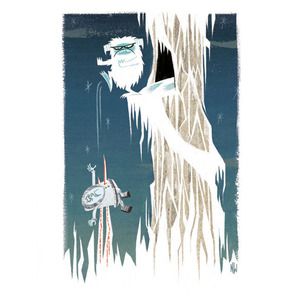
Or maybe this one:

But now I know that it's this:

Bearmageddon. Jesus wept. Today is day zero for this webcomic, done by the guy who did the starkly amazing Axe Cop with his kid brother. New pages every Wednesday and Friday.
on
| § 0
The Dominion of Canada wonders what will happen if the US economy really tanks. I haven't listened to this yet, but I will tonight. Apparently the BBC has unearthed a coup plot in the US from the 1930s. A new book claims that the Roswell aliens were a Soviet Hoax. It's discussed in this piece at NPR, down in the "highlights" section. This is the interesting part:
On flying discs and conspiracy theories "The UFO craze began in the summer of 1947. Several months later, the G2 intelligence, which was the Army intelligence corps at the time, spent an enormous amount of time and treasure seeking out two former Third Reich aerospace designers named Walter and Reimar Horten who had allegedly created [a] flying disc. ... American intelligence agents fanned out across Europe seeking the Horton brothers to find out if, in fact, they had made this flying disc. "The idea behind it remains, why? Why were they looking for a flying disc? And conspiracy theorists have had their hands on this declassified file for over a decade now, and they say it proves that this flying disc came from outer space. If you read the documents, the takeaway that I found fascinating was that at the end of it, the Army admits finding the Horten brothers, and that the Horten brothers admitted their contact with the Russians and that's where the file ends. Everything after that is classified." On why Area 51 is actually classified, according to a source "The Horten brothers were involved in the flying disc crash in New Mexico. And that is from a single source. ... There was an unusual moment where that source became very upset and told me things that were stunning that's almost impossible to believe at first read. And that is that a flying disc really did crash in New Mexico and it was transported to Wright-Patterson Air Force Base, and then in 1951 it was transferred to Area 51, which is why the base is called Area 51. And the stunning part of the reveal is that my source, who I absolutely believe and worked with for 18 months on this, was one of the engineers who received the equipment and he also received the people who were in the craft. "The people were, according to the source, were child-sized pilots, and there's a lot of debate about how old they were. He believes they were 13, although other people believe they may have been older. But this is a firsthand witness to this, and I made a decision to write about this in the very end of the book, after I take the traditional journalist form of telling you everything in the third person, I switch and I kind of lean into the reader and I say, 'Look, this is not why Area 51 is classified to the point where no one in the government will admit it exists. The reason is because what one man told me.' And then using the first person, I tell you what I was told. And there's no doubt that people are going to be upset, alarmed and skeptical of this information, but I absolutely believe the veracity of my source, and I believe it was important that I put this information out there because it is the tip of a very big iceberg." On the Soviet human experiments her source told her about "The child-sized aviators in this craft [that crashed in New Mexico] were the result of a Soviet human experimentation program, and they had been made to look like aliens a la Orson Welles' War of the Worlds, and it was a warning shot over President Truman's bow, so to speak. In 1947, when this would have originally happened, the Soviets did not yet have the nuclear bomb, and Stalin and Truman were locked in horns with one another, and Stalin couldn't compete in nuclear weaponry yet, but he certainly could compete in the world of black propaganda — and that was his aim, according to my source. ... "What is firsthand information is that he worked with these bodies [of the pilots] and he was an eyewitness to the horror of seeing them and working with them. Where they actually came from is obviously the subject of debate. But if you look at the timeline with Josef Mengele, he left Auschwitz in January of 1945 and disappeared for a while, and the suggestion by the source is that Mengele had already cut his losses with the Third Reich at that point and was working with Stalin." On why the Soviets would have undertaken such a hoax "The plan, according to my source, was to create panic in the United States with this belief that a UFO had landed with aliens inside of it. And one of the most interesting documents is the second CIA director, Walter Bedell Smith, memos back and forth to the National Security Council talking about how the fear is that the Soviets could make a hoax against America involving a UFO and overload our early air-defense warning system, making America vulnerable to an attack."
Sweet Untimely Meditations has a this, on the idea that things will only get worse. A basic rundown of the obvious threats, and a pleasant read. Fjordman posts at Gates of Vienna on preparing for Ragnarok. Well, if there's one thing I'm ready for, it's Ragnarok. Dinner tonight, not so much - but I've got Ragnarok covered.
According to the French writer Guillaume Faye, for the first time humanity as a whole is threatened by a cataclysmic crisis that is likely to begin in the decade before 2020 — a crisis provoked by degradation of the ecosystems and geopolitical contests for scarce resources like agricultural land, oil, and above all water; by the fragility of an international economic order based on speculation and the massive indebtedness of democratic states; by the return of epidemics; by the rise of terrorism and nuclear proliferation; by the growing aggressiveness of Islam’s world offensive; and by the dramatic aging of European populations, whose below replacement-level birth rates are confronted with rapidly growing masses of young people in the dysfunctional countries of the global South, coupled with mass migrations to the North. This convergence of catastrophes will mark the transition from one era to another. The USA will most likely cease to be the leading world power by mid-century, perhaps cease to exist at all in its present form. The global center of power will then move back to Eurasia, where it has almost always been previously. The strongest power will probably be China or what Faye calls “Euro-Siberia” — a federated alliance between the peoples of Europe plus Russia. He doesn’t think this is literally the end of the world, merely the end of the world as we know it. Something new may arise from these events, since Europe is a civilization of metamorphosis. Faye predicts two possibilities for European civilization over the coming century: regeneration based on a resurgence of ancestral values, or else disappearance. Europe, especially the western half of the Continent, is currently being invaded. This is coupled with an incredible masochism on the part of Europeans themselves. Only a terrifying crisis can awaken them, and war is the most merciless of selective forces; a people that abandons its will to power inevitably perishes. A “mental AIDS,” a virus of nihilism, has severely weakened their natural defenses. Consequently, Europeans have succumbed to self-extinction. The primary symptom of this is “xenophilia,” a systematic preference for the Other over the Self. The current advanced state of decadence owes much to the secularization of Christian charity and its modern egalitarian offshoot, human rights. In the widest possible sense it was the same civilizational genius that gave the world the concepts of universal gravitation and universal human rights. After the unprecedented successes of the Scientific Revolution, post-Enlightenment Europeans fell so much in love with the power of their own ideas that they ultimately came to define their very existence as one big idea, hence the concept of an “idea nation” or “proposition nation” was born. The leaders of this were the Americans and the French, whose Revolutions in the late 1700s came to view their countries as universal republics. This ideal was not and could not be implemented at that time, but two centuries later, coupled with the rise of global communications, it won out over ethnic identification. Faye believes that Europe now faces a danger unparalleled in its history and refuses to see it. It has been colonized by peoples from the South. This non-European invasion began in the 1960s and was largely self-engendered, by politicians contaminated with Marxist ideas, by an employer class greedy for cheap labor, and by Utopian humanitarian ideals or misplaced post-colonial guilt. Illegal immigrants/foreign colonizers are very rarely repatriated, but receive lavish social welfare benefits handed out to them by anti-white forces in control of the state: A race war is foreseeable now in several European countries, a subterranean war that will be far more destructive than ‘terrorism.’ The White population is being displaced, a sort of genocide is being carried out against it with the complicity or the abstention of the ruling class, the media, and the politicians, for the ideology these collaborating elites uphold is infused with a pathological hatred of their own people and a morbid passion for miscegenation. The state’s utopian plan for ‘republican integration’ has nevertheless failed because it assumed peaceful coexistence between foreigners and natives, non-Whites and Whites, was possible in a single territory. Our rulers haven’t read Aristotle, who taught that no city can possibly be democratic and orderly if it isn’t ethnically homogeneous… European societies today are devolving into an unmanageable ethnic chaos.
I have to try to resist these thoughts, because I know I am fascinated by disaster scenarios. But as I look around, there are indications of all sorts of potential nastiness - economic and otherwise. More for my own reference, but here's a link to that post from a while back where a guy commented on Mangan's about the real US government ideology, following a Moldbuggian sort of line. If you haven't read it, it's worth it. Also, just read everything on Zero Hedge to get your mind in the right place for the coming econopocalypse. Just recently, they've had a few good ones: on attacking the Fed, on game over, on spinning out of control. Plus, there's more! I really should stop reading ZH, it makes me sad.
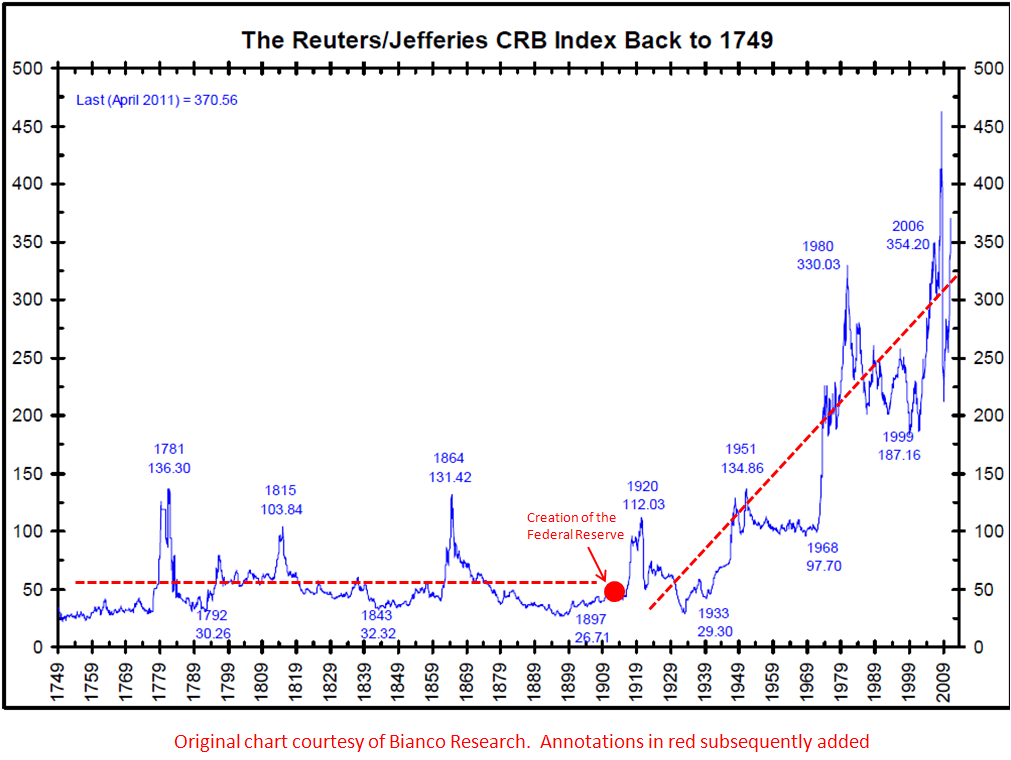
[wik]: I almost forgot a couple more. From Simon Rierdon - Solar apocalypse, Detroit apocalypse, and Economic apocalypse. Looking at pictures of what Detroit has become is depressing.
on
| § 3
From my pal Christian:
FAQ for my Students: The Rapture
Q: With the rapture coming, should I bother working on my final paper?
A: Yes. The odds are you will not be judged worthy of ascent to heaven, in which case your grades will still be a basis of judgment for rewards in this earthly sphere.Q: What if my instructor is raptured?
A: None of our instructors bear much chance of being judged worthy. However, on the off chance your instructor is chosen, an army of unemployed secular Marxists is waiting to take his/her place.Q: If my mother/father/grandfather/grandmother/favorite aunt/etc. is chosen, will I be excused from the final so that I may mourn his/her loss?
A: No. They have not died, but been granted eternal life, thus this does not count as a case of a death in the family.Q: If my instructor is not raptured, is he really fit to judge me?
A: Yes, seeing as you were not raptured, you are still subject to the earthly judgment of the unsaved. If/when you are redeemed, a change of grade form will be automatically processed by heavenly authorities if they decide your grade was unfairly given by one of the damned.Q: If my computer crashes and my printer breaks and there is no email on account of the rapture, will I be able to get an extension on the paper?
A: Everyone in tech and IT departments is of Satan’s party, so the internet, your computer, and your printer should continue to work the way they always have: sporadically.Q: How will the rapture affect your curving, particularly if raptured students are exempt from final tests/papers?
A: Final grades are not curved, but students who are taken up in the rapture will be given incompletes, just in case.
He got it from here.
on
| § 0
The wife found this:

Apparently, there is such an unlikely thing as an African Orthodox church, and that church went ahead and canonized Coltrane.
on
| § 2
Interesting interview with sf author and singularitarian Vernor Vinge here.
Vernor Vinge: I see four or five concurrently active paths to the Singularity:
- Artificial Intelligence: We create superhuman artificial intelligence in computers.
- Digital Gaia: The worldwide network of embedded microprocessors, sensors, effectors, and localizers becomes a superhumanly intelligent entity.
- Internet Scenario: Humanity with its networks, computers, and databases becomes a superhuman being. (Bruce’s story “Maneki Neko” is a beautiful and subtle illustration of this possibility.)
- Intelligence Amplification: We enhance individual human intelligence through human-to-computer interfaces.
- Biomedical: We directly increase our intelligence by improving the neurological function of our brains. (I regard this last item to be the weakest of the possibilities.)
AR is central to progress with possibilities (3) and (4).
If we humans want to keep our hand in the game, AR is an important thing to pursue.
Cool stuff, as you'd expect. But the most exciting thing for me is the news that there will be a new Vinge book out this year, a sequel to A Fire Upon the Deep called The Children of the Sky. Sweet.
on
| § 2
on
| § 1
One night last summer, Lady Gaga sat in a tour bus in England, covered in stage blood from her concert that day. She told me that she had cried hysterically before a recent show because she'd had a dream that the devil was trying to take her. She then said, in earnest, that the spirit of her dead aunt was literally inside her body and that she had eaten a bovine heart to face her fear of her father's heart surgery.
If a stranger on a train had said all of this to me, I would have moved a few seats away.
But this was one of the most famous women in the world. "It's hard to just chalk it all up to myself," Lady Gaga said of her success, explaining that there was "a higher power that's been watching out for me."
Cut to…Snoop Dogg in the living room of his home outside Los Angeles, smoking a blunt and discussing his comeback after leaving Death Row Records. "God makes everything happen," he said. "He put me in that situation with Death Row, and he took me out of it."
Cut to…a hotel room where Christina Aguilera is gorging on junk food and discussing her success. "All of this isn't something that I did," she told me. "It's something that is totally there for a purpose." In a separate interview, Ms. Aguilera's mother explained that fame was her daughter's destiny: "We thought there must be some divine intervention. Early on, I realized…God has plans for her."
Now that is one solid collection of righteous, God-fearing folk. Still, interesting that success may be linked to belief not only in God, but belief in God's plans for you.
on
| § 0
Another link from Christian, The Problem with Possession. Weird that he linked this, as the day before he passed me this, I was sorting and organizing books and ran across my copy of Hostage to the Devil by Malachai Martin. Which is by far the creepiest book I have ever read. A sample:
The main door of Puh-Chi was ajar when the police chief arrived. A small knot of men and women stood watching. They could see Father Michael standing in the middle of the floor. Over in one corner there was another figure, a young, naked man, suddenly ravished by an unnatural look of great age, a long knife in his hands. On the shelves around the inner walls of the storehouse lay rows and rows of naked corpses in various stages of mutilation and putrefaction.
“YOU!!” the naked man was screaming as the police captain elbowed his way to the door, “YOU want to know MY name!” The words “you” and “my” hit the captain like two clenched fists across the ears. He saw the priest visibly wilt and stagger backward. But, even so, it was the voice that made the captain wonder. He had known Thomas Wu. Never had he heard him speak with such a voice.
“In the name of Jesus,” Michael began weakly, “you are commanded . . .”<
“Get outta here! Get the hell outta here, you filthy old eunuch!”
“You will release Thomas Wu, evil spirit, and ...”
“I’m taking him with me, pigmy,” came the voice from Thomas Wu. “I’m taking him. And no power anywhere, anywhere, you hear, can stop us. We are as strong as death. No one stronger! And he wants to come! You hear? He wants to!”
“Tell me your name ...”
The priest was interrupted by a sudden roaring. No one there could say later how the fire started. An incendiary? A spark carried by the wind from burning Nanking? It was like a sudden, noisy ambush sprung by a silent signal. In a flash the fire had jumped up, a living red weed running around the sides of the storehouse, along the curved roof, and across the wooden floor by the walls.
The police captain was already inside, and he gripped Father Michael by the arm, pulling him outside.
The voice of Wu pursued them over the noise: “It’s all one. Fool! We’re all the same. Always were. Always.”
Michael and the captain were outside by then and turned around to listen.
“There’s only one of us. One . . .”
The rest of the sentence was drowned in a sudden outburst of flaming timbers.
Now, the glass rectangle of the single window was darkening over with smoke and grime. In a few minutes it would be impossible to see anything. Michael lurched over and peered in. Against the window he could see Thomas’ face plastered for an instant of fixed, grinning agony a horrible picture, a Bosch nightmare come alive.
Long, quickly lashing tongues of flame were licking at Thomas’ temples, neck, and hair. Through the hissing and crackling of the fire, Michael could hear Thomas laughing, but very dimly, almost lost to I lie ear. Between the flames he could see the shelves with their gray-white load of corpses. Some were melting. Some were burning. Eyes oozing out of sockets like broken eggs. Hair burning in little tufts. First, fingers and toes and noses and ears, then whole limbs and torsos melting and blackening. And the smell. God! That smell!
Then the fixity of Thomas’ grin broke; his face seemed to be replaced by another face with a similar grin. At the top speed of a kaleidoscope, a long succession of faces came and went, one flickering after the other. All grinning. All with “Cain’s thumbprint on the chin,” as Michael described the mark that haunted him for the rest of his life. Every pair of lips was rounded into the grinning shape of Thomas’ last word: “one!” Faces and expressions Michael never had known. Some he imagined he knew. Some he knew he imagined. Some he had seen in history books, in paintings, in churches, in newspapers, in nightmares. Japanese, Chinese, Burmese, Korean, British, Slavic. Old, young, bearded, clean-shaven.
Black, white, yellow. Male, female. Faster. Faster. All grinning with the same grin. More and more and more. Michael felt himself hurtling down an unending lane of faces, decades and centuries and millennia ticking by him, until the speed slowed finally, and the last grinning face appeared, wreathed in hate, its chin just one big thumbprint.
Now the window was completely black Michael could see nothing. “Cain . . .” he began to say weakly to himself. But a stablike realization stopped the word in his throat, just as if someone had hissed into his inner ear: “Wrong again, fool! Cain’s father. I. The cosmic Father of Lies and the cosmic Lord of Death. From the beginning of the beginning. I ... I ... I ... I ... I ...”
Michael felt a sharp pain in his chest. A strong hand was around his heart stifling its movement, and an unbearable weight lay on his chest, bending him over. He heard the blood thumping in his head and then loud, roaring winds. A dazzling flash of light burst across his eyes. He slumped to the ground.
Strong hands plucked Michael away from the window just in time.
The storehouse was now an inferno. With a tearing crash, the roof caved in. The flames shot up triumphantly and licked the outside walls, burning and consuming ravenously.
“Get the old man away from here!” screamed the captain through the smoke and the smell. They all drew back. Michael, slung over the shoulder of one man, was babbling and sobbing incoherently. The captain could barely make his words out:
“I failed ... I failed ... I must go back. Please . . . Please . . . must go back . . . not later .. . please . . .”When they got Michael to the hospital, his condition was critical. Apart from burns and smoke inhalation, he had suffered a minor heart attack. And until the following evening, he continued in a delirium.
Before the fall of Nanking, he was smuggled out by the faithful police captain and a few parishioners. They made their way northwestwards, barely escaping the tightening Japanese net.
On December 14, the Japanese High Command let loose 50,000 of their soldiers on the city with orders to kill every living person. The city became a slaughterhouse. Whole groups of men and women were used for bayonet and machine-gun practice. Others were burned alive or slowly cut to pieces. Rows of children were beheaded by samurai-swinging officers competing to see who could take off the most heads with one sweep of the sword. Women were raped by squads, then killed. Fetuses were torn alive from wombs, carved up, and fed to the dogs.
All told, over 42,000 were murdered. Death enveloped Nanking as it had the entire Yangtze delta. Animals and crops died and rotted in the fields.
That's from the prologue. The book was deeply disturbing to me, though at the time I read it I was a doctrinaire agnostic. Hell, it creeps me out still just remembering it from fifteen years ago.
You can buy the book here, or read it online in html or pdf.
on
| § 0
Loyal reader John Veit emails us with news of US Patent 6023874. Why is this important? Well, for John, it's important because he's the patent holder. For us, it's important because when the zombies come, we will want an instinctive, automatic aiming system so that we can rapidly engage and de-brain our undead assailants. And that's what John has come up with:
This looks like an exceedingly simple mod for a handgun. And though I haven't tried it, it looks like the sort of thing that would work. I imagine the grip would feel weird at first, but I'm sure I could cope with that if the benefits were there.
The video mentions that this method isn't recommended for the M1911 handgun. My personal sidearm is a Kimber custom classic, modeled closely on the 1911. Perhaps John can chime in in the comments on whether this prohibition is just for actual 1911 models, or pretty much any .45 on that model. I'd certainly like to try this system out.
Related: Isegoria a while back on the half triangle Opti-Sight technology. More information on Aimed Point Shooting here.
on
| § 7
... he can perhaps assuage his hunger with this nifty Zombie putter-downer recommended by Rocket Jones:

Rocket Jones' description is apt:
"If you'll notice, besides the space saving bullpup design, there are two magazine tubes sitting side by side under the 18.5" long barrel. There's a selector lever that you use to set to feed from either magazine. Can you say "seven rounds of double ought *and* seven more of slugs?" I knew you could. That's fifteen rounds (one in the chamber) of sweet zombie brain perforating power right there."
But really, it was almost spoiled when he pussies out on the bore:
"My only reservation is that this puppy is 12 guage. I like 12 guage, but if I'm going to be shooting enough to warrant this kind of weapon, I'd rather see it in something a tad more benign to the shoulder like 20 gauge or even .410. That would probably also add a couple more rounds to the magazine capacity too."
Shame on you, Jones.
The World's Most Perfect Zombie Killing Weapon? Until we get plasma rifles, this is certainly a contender.
on
| § 6
Where are they? The Fermi Paradox has lept out at me twice in as many days. First off, a post on the arXiv blog about some new research into the FP.
Their approach is to imagine that civilisations form at a certain rate, grow to fill a certain volume of space and then collapse and die. They even go as far as to suggest that civilisations have a characteristic life time, which limits how big they can become. In certain circumstances, however, when civilisations are close enough together in time and space, they can come into contact and when this happens the cross-fertilisation of ideas and cultures allows them both to flourish in a way that increases their combined lifespan. Bezsudnov and Snarskii point out that this process of spreading into space can be easily modelled using a cellular automaton. And they've gone ahead and created their own universe using a 10,000 x 10,000 cell automaton running over 320,000 steps. The parameters that govern the evolution of this universe are simple: the probability of a civilisation forming, the usual lifespan of such a civilisation and the extra bonus time civilisations get when they meet. The result gives a new insight into the Fermi Paradox. Bezsudnov and Snarskii say that for certain values of these parameters, the universe undergoes a phase change from one in which civilisations tend not to meet and spread into one in which the entire universe tends to become civilised as different groups meet and spread. Bezsudnov and Snarskii even derive an inequality that a universe must satisfy to become civilised. This, they say, is analogous to the famous Drake equation which attempts to quantify the number of other contactable civilisations in the universe right now.
So the question is, do we live in a world where intelligent species are too far apart to cross-pollinate, and survive; or one where they are, but it hasn't happened yet? This is interesting, and is somewhat in line with my own thinking - though they are completely ignoring the possibility of BEMS and conflict, and supposing that intelligent entities in space are all bug-eyed Sagans who will get along famously. I'm not saying they can't, but it isn't a sure thing. Read Killing Star if you're uncertain about that one. Pay special attention to the Central Park analogy. Interesting spin on the Fermi Paradox - but nothing really outre. Charles Stross, in his recent post Mediocrity (a sequel to the thrilling post Insufficient Data)
In general, there are two classes of solution to the Fermi paradox; ones that assume that we are unique special snowflakes in an empty cosmos, and those that postulate that intelligent species are common, but some kind of mechanism stops them from colonizing interstellar space. If we look at the second problem set, and broaden the focus ... well, intelligent species emerge as components of a biosphere bound to a particular planetary habitat. We humans are land-dwellers on Earth in the later high-oxygen period; conditions on earth even one billion years ago would have been rapidly fatal for an unprotected human, and even today, survival on 90% of our planet's surface area is contingent on the availability of cultural artefacts like boats (80% is water) or clothing (for protection in hostile climates). So the real question isn't, "can intelligent life colonize other star systems?" so much as "can intelligent life propagate itself, and its supporting biosphere and technosphere to run in alien environments? Which is a very different question. Call it the Ark Problem; if your name is Noah and you're going on a one-way trip to another world, how big an Ark do you need (and how many specimens per speciality, be they biological or technological)?
There is of course the not-answer to the Fermi Paradox - the simulation hypothesis - which argues that there are exactly as many intelligent species as the simulation designer decided to throw in the box with us, and no more. But then, it gets interesting.
It's that danged principle of mediocrity that's causing all these problems. It shows up in the Fermi Paradox, it turns up in the Simulation Argument, it turns up like a bent penny in all sorts of places — it's a big problem for the standard model of spacetime, once you start digging into the Boltzman Brains paradox (for a quick intro, look here or here). Indeed, it seems to me to be a corollary of the weak anthropic principle.
I'd never heard of the Boltzmann Brain paradox - I followed the links. From the first:
The idea Don put forward is this: there’s us, the ordinary observers (OO’s) in the world, who have achieved a certain stature after billions of years of evolution in the universe, and are now capable of making quite refined (or so we think) observations of the universe. Andre Linde called OO’s “just honest folk like us.” We’ve made it as a species, man- and womankind, and we’re figuring ou the really deep things that are going on like the Big Bang, genetics, and all the rest. Then, though, there are the BB’s in the universe: Boltzmann Brains. Random fluctuations of the fabric of spacetime itself which, most of the time, are rather insignificant puffs which evaporate immediately. But sometimes they stick around. More rarely, they are complex. Sometimes (very very rarely) they are really quite as complex as us human types. (Actually, “very very rarely” does not quite convey just how rare we are talking now.) And sometimes these vacuum quantum fluctuations attain the status of actual observers in the world. But, the rarest of them all, the BB’s, are able to (however briefly) make actual observations in the universe which are, in fact, “not erroneous” as Don Page put it.
Over time - in a sufficiently long-lived universe - BB's should predominate. (More so if, god forbid, they should learn how to reproduce.)
The thing is, when you start talking about very very…very rare things like Boltzmann Brains, you are talking about REALLY long times. Much longer than we’ve had on earth (and I mean 4.5 billion years) by many orders of magnitude. Numbers like 10 to the 60th years were being batted around like it was next week in this talk. By those times, all the stars and all the galaxies have gone out, and gone cold, and space has continued to expand exponentially and things are long past looking pretty bleak for the OO’s still around, who (we presume) need heat and light and at least a little energy of some sort to survive, even if we are talking about very slow machine intelligence (even slower than humans for example). So eventually, the mere fact that there is, at these long times, just oodles of space in the universe means that the BB’s become more and more common (even if they are rare) and eventually dominate the, uh, intellectual landscape of the universe. Of course this immediately raises all sorts of questions, such as mind/matter duality, the nature of reality and consciousness and multiple consciousnesses, perceived versus objective independent reality. Not to mention whether our “universe” is the only one.
And from Wikipedia, more on the Boltzmann Brain:
Boltzmann proposed that we and our observed low-entropy world are a random fluctuation in a higher-entropy universe. Even in a near-equilibrium state, there will be stochastic fluctuations in the level of entropy. The most common fluctuations will be relatively small, resulting in only small amounts of organization, while larger fluctuations and their resulting greater levels of organization will be comparatively more rare. Large fluctuations would be almost inconceivably rare, but this can be explained by the enormous size of the universe and by the idea that if we are the results of a fluctuation, there is a "selection bias": We observe this very unlikely universe because the unlikely conditions are necessary for us to be here, an expression of the anthropic principle. This leads to the Boltzmann brain concept: If our current level of organization, having many self-aware entities, is a result of a random fluctuation, it is much less likely than a level of organization which is only just able to create a single self-aware entity. For every universe with the level of organization we see, there should be an enormous number of lone Boltzmann brains floating around in unorganized environments. This refutes the observer argument above: the organization I see is vastly more than what is required to explain my consciousness, and therefore it is highly unlikely that I am the result of a stochastic fluctuation. The Boltzmann brain paradox is that it is more likely that a brain randomly forms out of the chaos with false memories of its life than that the universe around us would have billions of self-aware brains. The rationale behind this being paradoxical is that, out of chaos, it is more likely for one instance of a complex structure to arise than for many instances of that thing to arise. This ignores the possibility that the probability of a universe in which a brain pops into existence, without any prior mechanism driving towards its creation, may be dwarfed by the probability of a universe in which there are active mechanisms which lead to processes of development which (given a starting state that is unlikely but not as unlikely as the spontaneous appearance of a brain with no precursor) offer a reasonable probability of producing a species such as ourselves. In a universe of the latter kind, the scenarios in which a brain can arise are naturally prone to produce many such brains, so the large number of such brains is an incidental detail.
Fascinating. Weird to imagine that after the heat death of the universe, and trillions of years after the death of all OO's like us, Boltzmann Brains may still be there, observing.
on
| § 0
When the messiah returns:  From Boing Boing.
on
| § 1

Glommed from GraphJam
Speaking of low-brow humor and memes, this, via an email from my ever-precocious daughter: One definition of "meme", from the always interesting WolframAlpha
 on
| § 1
on
| § 1

As is widely known, I am a bit of a jackhole. And on a bad day, much much worse. Hell even on a good day, I barely clear vaguely irritating. So it should be no surprise to anyone that I have a blog that I don't, you know, blog on.
But it may come as a surprise to you, dear reader, that there are actual, real reasons for my bloggy hiatus. Here's one of them:

That darling creature and her two older siblings are cute, adorable, brilliant and exceptional in all ways. Including being exceptional black holes for time. A joyful, wonderful black hole, but the event horizon is there nevertheless. Then there's the staggeringly less enjoyable time sink in my life, the five hour round trip commute. This, mercifully, is abating - the reason that I've had the time to even contemplate a site redesign, and start writing again, is that I am now back to my ideal state of working at home the majority of the week.
My goal, my New Years and Groundhog Day's resolution, is to write, on average, at least one post a day. And as an added bonus to you, I will even attempt to make them interesting and entertaining. And just for Bram, I will post regularly on Zombies, since I was cruel enough not to design a zombie theme for perfidy.
on
| § 1


