Filthy Lucre

Money is the root of all evil. And the trunk. And the branches. And the leaves.

I suppose this should make me sad

But it doesn’t. From a WSJ email, dispatched this evening to my inbox, this story:

NEWS ALERT
from The Wall Street Journal

Sept. 17, 2007

William Lerach is set to plead guilty to one count of conspiracy in the criminal case involving the noted securities lawyer’s former firm, now called Milberg Weiss LLP. The plea agreement, which calls for a one to two year prison term, could be announced as soon as Tuesday.

I’m all for protecting the common man, the common investor, and I’m nothing if not both of those things. However, while Milberg Weiss (...Bershad Hynes & Lerach) LLP has always claimed that their seldom-seemly, and often seedy, pursuit of class action lawsuits, against any company whose stock price took a noteworthy downturn, was for the public good, I’ve never been able to agree.

Not in my stance as a champion of the unfettered right of public companies to run roughshod over their investors, either. Because I have no such stance. Instead, my dim view of him and all who practice his kind of law is justified by standard tactics he and his partners (current and former) have used in pursuit of specious claims. Think “greenmail”, ala Carl Icahn and Boone Pickens in the 1980s - make life tough enough for someone, even someone who’s got no basis for having to defend their actions, and they’ll pay you to go away.

As referred to in an Los Angeles Business Journal article of Sep 3, 2007, Lerach is an “economic terrorist”, and I don’t think that’s too tough a characterization of him. As the article says:

Lerach, of course, did not invent but did perfect the securities class action lawsuit. In that scheme, most any company that sustained a stock drop, even if it had nothing to do with anything of consequence, often found itself the recipient of allegations of fraud in a Lerach-engineered lawsuit. Likewise, companies that announced most anything negative could get the same kind of lawsuit – often within hours of the announcement.

Lerach then pounded the company, using the discovery process to find some little scrap somewhere in some underling’s file drawer that “proved” the company knew that bad news could develop.

In other words, this guy, and all lawyers like him, specialized in swooping in any time there was even a flimsy pretext for doing so. I mean, there’s no way a stock could drop without malfeasance and lying on the part of management, right?

Well, no - that’s wrong. But Lerach, et al, after having put their lawsuit’s stake in the ground, would then embark on forced discovery at their target companies, essentially fishing around for a reason to justify their lawsuit.

And one doesn’t have to be a big-business apologist to find that sort of thing to be outside the bounds of fair and reasonable play.

Over the years, I’ve been the recipient of at least 50 securities class action solicitations. I received one just the other day, ”In re CARDINAL HEALTH, INC. SECURITIES LITIGATION“. And while I almost never take the time to participate in these paper chases, I’ve always paid particular attention to any such action which has either “Lerach Coughlin Stoia Geller Rudman & Robbins LLP” or any of the many versions of “Milberg Weiss +/-Bershad +/-Hynes +/-Lerach LLP” listed as the attorneys looking out for my “best interests”.

Because they don’t, they haven’t, and investors are simply a raw material for them and their business process. And I throw their solicitations away as soon as possible, to avoid stinking the house up.

His former partner Bershad has already pled, and if the news report is correct, Lerach’s getting ready to do the same. It’s not the Christian thing to say, but I’m not much of a Christian anyway, so I’ll hope that Milberg, Weiss, and all the rest be following them to the pokey soon after.

Posted by Patton Patton on   |   § 0

I Hate You Jericho Hill

Jericho Hill, one of the list mods at Get Rich Slowly forums went to the happy hour for PF bloggers I hosted last week. I extended an invitation when I saw he was from DC. My bad. He is a prime Casey Serin Hater, so he brought me up to date on Mr. Serin’s sad travails.

And all I could do is pray that God would not kill me for my schadenfreude.

JH then told me to visit caseypedia.com, the wiki for the Casey Haters. I fear I am one and will have to join this elite club of people who pay their bills on time and have integrity. How many of the ministers and their fine minions are secret Casey Haters as well?

It's people like Mr. Serin who ought to be jailed for fraud. Having worked a bankruptcy case for a fraudulent flipper in Baltimore, it disgusts me that people who get liar loans and then end up in foreclosure on multiple properties are going to bring the economy down with their stupdity. It's the greedy mortgage brokers and banks who need to tighten credit a little and exercise a little fiscal responsibility and stop idiots like Mr. Serin from even getting into the position of being irresponsible. I'd love to let him hang himself, but apparently he's quasi-homeless in Australia. Most likely he'll get a free trip back courtesy of extradition papers. (OMG, I hope so. That would be frickin' awesome! Eek. I am sure Mr. Serin would use those exact words to describe the experience of being violated in federal prison. It seems to be one of his favorite phrases.)

N.B. this is a modified cross post of something on Mapgirl's Fiscal Challenge.

Posted by Mapgirl Mapgirl on   |   § 1

The wonders of Perfidious Advertising

Just seen in the Perfidious Advertising section, left:

Beautiful Russian Brides seeking men for marriage and dating. Find your true love now.

Luckily, we're not planning to refurnish the Ministry Bunker and Castratorium from the proceeds of advertising. And, while I hope it goes without saying, we as a group express no opinion on whether any reader will find their true love, from Russia or anywhere else.

Posted by Patton Patton on   |   § 1

Alex, I'll take "About damned time" for $500

Via CNN: Congressman indicted in global corruption case

Story Highlights

  • William Jefferson faces 16 charges of bribery, obstruction, racketeering
  • Louisiana Democrat's schemes reached across Atlantic, prosecutors say
  • Investigators found $90,000 in Jefferson's home freezer
  • Search of Capitol Hill office prompted constitutional questions

I hope that the long time between the refrigerator raid and the indictment helped the Feds guarantee this smug, smarmy, thieving fuck does hard time for the rest of his life.

Posted by Patton Patton on   |   § 3

Washingtonienne Files for Bankruptcy

I love a good sex scandal, probably way more than the next person.

I had to hear about Jessica Cutler from an Assistant Attorney General outside of the United States. Sex blogging is more his thing than mine (Reading them, not writing them) and he's the kind of naughty boy who'd get sucked into this sort of tale. (No pun intended.) We love public drama overspill like this. We're terrible people, which is what makes us so fun.

Anyhow, apparently she's filed for bankruptcy because she struggling to pay her bills due to a $20 million dollar lawsuit from her former paramour. He's a complete idiot for having sex with her in the first place because she's really kind of ugly. I've seen pugs with cuter faces, but who am I to compare since she's looks like a B or a C-cup in her Playboy shoot and last I checked I'm still wearing a tightly packed A. (And that's only when I'm retaining water like a dyke in the Netherlands.)

She was dumb to use their initials anyway. I give them names like 'The Chemist', 'Valentine', 'Italian Wonder Boy'. It keeps people guessing and makes men paranoid that I'm writing about them. Of course, some I don't make up, like 'Wolf'. (Of course he bites!)

Hat tip to Udandi Andi!

Posted by Mapgirl Mapgirl on   |   § 7

The purity of essence of our precious category tags

Patton has accused me of being overly concerned about wasting a scarce natural resource. The category tag. In this, of course, he is completely wrong. Naturally, I could have argued that over-categorizing a post dilutes the utility of tags. And I would have been right. But that wasn't the point. I was attacking him on aesthetic grounds, and just to stick a stick in his eye.

Just to prove that I am not some sort of homo-tree-hugging-enviro-commie, this post, which really is about everything, is tagged with every category we have. And, when I have a free moment, I'll add some new categories, and add them to this post.

So there.

Posted by Buckethead Buckethead on   |   § 5

Comparative legal analysis

What do these two suits have in common?

image

"Couple sue Wal-Mart over slip in vomit
(AP/Nashville Tennessean)

and 

"ACLU: Boeing offshoot helped CIA
(AP/Houston Chronicle) Simple:

  • They each have a distinct odor associated with them
  • They're both based on slippery circumstances
  • They're both as baseless as the day is long

Only one of them, however, appears to have been categorized by the Associated Press as an "Odd Story". So let's look at that one first:

Couple sue Wal-Mart over slip in vomit DAVENPORT, Iowa (AP) -- A woman's fall in a puddle of vomit has resulted in a lawsuit against Wal-Mart. June Medema, slipped in the vomit at a Davenport Wal-Mart on June 13, 2005, according to the lawsuit, filed by Medema and her husband, James, in Scott County District Court earlier this month.

Medema claims that she was seriously injured in the fall.

The lawsuit alleges that Wal-Mart's negligence led to Medema's fall, but it does not specifically say how the store was negligent.

John Simley, a Wal-Mart spokesman, decline comment saying he hadn't seen the lawsuit.

The lawsuit claims that Medema suffered serious neck and upper back injuries in the fall and has undergone several surgeries and is unable to work.

It's a mercifully short story, so it's included here in its entirety. All you need to know is in that third paragraph - "...but it does not specifically say how the store was negligent." In order to prove negligence, of course, the Medemas will have to prove that Wal-Mart knew the vomit was puddled on the floor. Which will be rather difficult - if they didn't see it, why should Wal-Mart have done so?

As to the second story, I can completely understand the ACLU going after a Boeing subsidiary - They can't sue the US government or the CIA on a classified matter, so they simply picked someone else in the transaction chain to sue.

NEW YORK — A Boeing Co. subsidiary that may have provided secret CIA flight services was sued Wednesday by the American Civil Liberties Union on behalf of three terrorism suspects who claim they were tortured by the U.S. government. The lawsuit charges that flight services provided by Jeppesen Dataplan Inc. enabled the clandestine transportation of the suspects to secret overseas locations, where they were tortured and subjected to other "forms of cruel, inhuman and degrading treatment."

The ACLU, of course, has been known to provide valuable legal services. They've also been known to tilt at windmills in pursuit of an agenda that tends to be decidedly leftist. Not "liberal" - leftist. As I said, I can understand their grasping at straws to find someone to sue, because money-grubbers have to go where the money is, even if they expect to get no money out of the matter.

I just can't understand why they think their suit will survive a summary judgment request. Jeppesen Dataplan didn't man the flight, didn't own the plane, and didn't load or unload alleged passengers from the alleged extraordinary alleged rendition alleged mission. Jeppesen provides flight planning services. Logistics.

Undaunted by this bit of reality, the ACLU soldiers on:

The ACLU said the company "either knew or reasonably should have known" that they were facilitating the torture of terrorism suspects by providing flight services for the CIA.

That's one of the ten most absurd things I've read in the last 48 hours. Having been on flights which used the services of flight planning companies like Jeppesen, and having occasionally been with the pilot when he was planning the flight, I'm comfortable asserting that in no case did a flight services vendor demand to know, let alone show even the slightest interest in, what the purpose of the flight was. Which is just as well - it would have been none of their business, and they'd have been told as much.

It occurs to me that there are two other things these two suits have in common - they're both weakly disguised fundraising attempts, and neither one will be successful at anything other than garnering publicity for its plaintiff.

Also posted at issuesblog.com

Posted by Patton Patton on   |   § 5

I guess that's one indication of bad economics

Who knew that trail mix was cheaper than corn? Not me, at least not until this morning's WSJ article entitled "With Corn Prices Rising, Pigs Switch To Fatty Snacks".

GARLAND, N.C. -- When Alfred Smith's hogs eat trail mix, they usually shun the Brazil nuts.

"Pigs can be picky eaters," Mr. Smith says, scooping a handful of banana chips, yogurt-covered raisins, dried papaya and cashews from one of the 12 one-ton boxes in his shed. Generally, he says, "they like the sweet stuff."

Mr. Smith is just happy his pigs aren't eating him out of house and home. Growing demand for corn-based ethanol, a biofuel that has surged in popularity over the past year, has pushed up the price of corn, Mr. Smith's main feed, to near-record levels.

...

Mr. Smith says he's paying about $63 to feed a single pig for five or six months before it goes to market -- up 13% from last year. His costs would be even higher if he didn't augment his feed with trail mix, which he says helps him save on average about $8 a ton on feed.

(ellipsis mine)

The presumption that corn-based ethanol was somehow going to be a great net-positive for the US economy has always been based on the thinnest of pretense, put forward by the farm lobby in the US. As covered in an earlier post here (regarding Michael Bloomberg's energy plan), corn is just about the stupidest way to make ethanol, perhaps second only to making ethanol out of oil itself, if such a thing is even possible.

And even if it were technically wise to do so, the mad rush to corn-based ethanol, driven by government mandates and subsidies that help nobody but the farm lobby, was always going to affect the supply/demand curve for corn.

Better late than never, there appears to be a sudden realization of the problem, if recent press mentions count for anything:

The items above are cherry-picked from among many, many other such recent stories. The last two are of a genre that puts the lie to the entire boondoggle being foisted onto the American consumer, particularly given that cane-based ethanol actually generates far more energy than it takes to produce, unlike corn-based ethanol. Cane-based suffers, however, from the choke-hold the farm lobby continues to wield on the American legislative windpipe.

Much the same as, say, in the waste industry, where at a high enough price for landfill space, people are willing to recycle, prices for oil in the energy market can cause people to willingly overpay for alternatives. But when the costs of the alternatives, direct and indirect, become high enough, as they appear to be doing in the ethanol market, consumers are certain to rethink that entire "energy independence" thing.

Corn based ethanol is "ethanol done wrong". Add to that the fact that it's "ethanol done expensive", and you can just wait for the increased backlash, attempting to drown out the farm lobby. The question, of course, is whether our legislative overlords will be allowed to listen and undo the damage they've done over the past twenty years on this front.

A final tidbit from the WSJ piece:

Dwight Hess, a cattle feedlot operator in Marietta, Pa., is located in the heart of snack country, near Hershey and Herr Foods Inc., a maker of potato chips, pretzels and snack mixes. His cattle ration consists of about 17% "candy meal," a blend of chocolate bars and large chunks of chocolate; 3% of what he calls "party mix," a blend of popcorn, pretzels, potato chips and cheese curls; 8% corn gluten; and the remainder corn and barley he grows. He says the byproducts save him about 10% on feed costs. Still, it costs him about 65 cents to put a pound on a steer, up from 42 cents last year.

Near the Snake River in Idaho, Cevin Jones of Intermountain Beef is struggling to feed his 12,000 cattle in light of higher feed costs. Traditionally, he has used up to 30% corn or other grains in his feed mix. This year he's using 100% byproducts, including french fries, Tater Tots and potato peels.

"It's kind of funny," Mr. Jones says, "every once in a while, you can spot a couple of cattle fighting over a whole potato."

I suppose that soon, my family too will be able to eat junk food more cheaply than grains. I'm not looking forward to that, and I have something like 2% of the US population (plus 80% of the legislature) to thank for the sad fact.

See also - "Corn Too Expensive? Turn Pigs into Ethanol"

Also posted at issuesblog.com

Posted by Patton Patton on   |   § 6

Having let this age for a while on my desktop

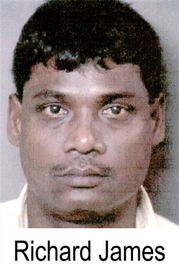
I'll just ask the question: When you see a story like this one:

Deadly insurance fraud case nears trial

By TOM HAYS, Associated Press Writer Mon May 7, 2:24 PM ET

NEW YORK - When Basdeo Somaipersaud's body was found in his favorite park in 1998, his family assumed he cracked his head during one of his drinking binges. But an autopsy detected small puncture wounds on his torso, and a sedative sometimes used to treat schizophrenia in his system.

Authorities now say Somaipersaud was injected with lethal doses of the sedative chlorpormazine while he was in a defenseless, drunken stupor — and then his killers tried to cash in on his life insurance policy.

...(blah, blah, blah - not to steal the fun out of the story, turns out the insurance guy named James who wrote the policies was likely the guy who set up the murder. Condolences to the family, murder diminishes us all, and so on and so forth - none of that's my point, because, really, my reaction would have been the same if the story had been written about puppies, or hemorrhoids, or any number of other things)

...and the picture next to the story is this one:

image

...am I the only one whose mind immediately goes to a skit from Dave Chappelle's show, the one with the punchline:

I'm Rick James, bitch!

? Never mind, it's probably just me. But at least I can drag that AP story to the trash now.

Posted by Patton Patton on   |   § 0

I want real money

Emperor Buckethead I. That has a nice ring to it, don’t you think? When I become Emperor of the United States, there’s a few things I want to change around here.

Last weekend, my mom came out to help celebrate the birthday of my son, who turns four this coming weekend. As part of the bag of gifts that she brought out for greedboy, she included a couple of the new dollar coins, the ones with George Washington’s portrait on them. I was underwhelmed with this latest effort from the Bureau of Printing and Engraving.

The coin feels like what Monopoly money would feel like if the game used coins. It’s light, as if it had a plastic core. The sheen is distinctly unreminiscent of gold. The quality of the art work is poor, I mean really, from some angles it looks like poor George is missing his eyes instead of his teeth. Zombie George is not what I want on my dollar coin. The fonts are ridiculous. And once again, we have a dollar coin the same size as a quarter.

Now, I am in favor of dollar coins. Ever since I spent time in England, I have been for dollar coins. The pound coin is a nifty thing, and we by rights should have an equivalent. A large value coin that is easily distinguishable from other coins. This, our government has signally failed to provide for us for far too long.

One of the problems, of course, is inflation. Precious metals, the ones that make the best coins, are now far to expensive to use in coins – people would melt them down for the metal rather than use them as currency. That’s why our dollar coins are made of anodized aluminum, and our quarters are made of tin foil.

To make things right, we can’t just make better coins. We must make more far reaching changes to our system of currency. To wit, we must revalue the currency 10:1. That is to say, ten current dollars would equal one new dollar. With this simple change, we can return to decent coins.

A quick peak at the internets reveals some key facts:

Gold= $21.63/g
Silver= $.43/g
Copper= $.008/g

Penny= 2.5g (3.1g before 1982)
Nickel= 5g
Dime= 2.3g
Quarter= 5.7g
Pound Coin= 9.5g

So what does it all mean?

  • A ten gram gold coin would be worth over $200 now. But, under the new dispensation, it would be worth $20. The return of the $20 gold coin.
  • A silver quarter would be $2.44, or very nearly .25 in the new order.
  • Current dimes in silver would be $.99, or almost exactly ten cents.
  • Old half dimes were made of silver, and weighed 1.3g - $.56, or 5.6 cents in the new money. Perfect.
  • A 3g penny, made of pure copper, would be worth about 2.5 cents. Double the size, and you have 5 cents current currency, or ½ cent in the new system. (The old large penny was 10g.) Our lowest denomination coin would therefore be 5 cents, and the eliminate the penny crowd would be simultaneously thwarted and victorious.

So, the new coinage:

  • Twenty Dollar – pure gold, 9.25g, about the size of a British Pound coin. Worth $200 in current money. Obverse: Liberty with sword and shield; Reverse: “Give me Liberty or give me death”
  • Ten Dollar – pure gold, 4.75g, about the size of a nickel. Worth $100 in current money. Obverse: Eagle; Reverse: U.S. Space Series - Armstrong on Moon, Mercury Capsule, Gemini Capsule, Docked lander and Apollo Capsule, Space Shuttle, Skylab, Voyager, Burt Rutan and SpaceShipOne… $10:
  • Five Dollar – pure gold, 2.5g, about the size of a dime. Worth $50 in current money. Obverse: Gouverneur Morris; Reverse: Seal of the United States of America.
  • Dollar – gold/silver alloy, 8.75g, about the size of a pound coin. Worth $10 in current money. Obverse: Grizzly Bear; Reverse: American warplanes series: P-38 Lightning, P-51 Mustang, F-6 Hellcat, F-86 Super Sabre, F-4 Phantom II, F-15 Eagle, F-14 Tomcat, F-18 Bug, F-22 Raptor, F-35 Lightning II...
  • Half Dollar – gold/silver alloy, 4.5g, about the size of a nickel. Worth $5 in current money. Obverse: John Hancock; Reverse: Liberty Bell.
  • Quarter Dollar – pure silver, 6g, about the size of a quarter. Worth $2.50 in current money. Obverse: Buffalo; Reverse: American Generals series: Patton, Sherman, Grant, Washington, Sheridan, MacArthur, Eisenhower, … Lee, Jackson, no Omar Bradley.
  • Dime – pure silver, 2.5g, about the size of a dime. Worth $1 in current money. Obverse: George Washington (from current quarter); Reverse: U.S. Capitol.
  • Half Dime – pure silver, 1.25g, about half the size of a dime, and the size of the old 19thC half dimes. Worth 50¢ in current money. Obverse: Walking Liberty; Reverse: Independence Hall.
  • Two Cents – copper/silver alloy, 5g, about the size of a nickel. Worth 20¢ in current money. Obverse: John Adams; Reverse: Statue of Liberty.
  • Cent – copper/silver alloy, 2.5g, about the size of a penny. Worth 10¢ in current money. Obverse: Abraham Lincoln (image of his statue in the memorial); Reverse: Lincoln Memorial.
  • Half Cent – pure copper, 6g, about the size of a quarter. Worth 5¢ in current money. Obverse: Liberty Head; Reverse: Wreath.

Italicized coins would be relatively rare. The Gold/Silver alloy would be about 4% gold. Every coin will have the motto “Liberty” and the year on the front; and “United States of America,” “E Pluribus Unum,” and the value on the back. The value will always be indicated in words, not numbers. Americans should be literate. The series of coins is not a bad idea, but we need some new topics. The idea of the Buffalo is cool, and looks good, too. So I combined the two. The Buffalo, the Grizzly and the Eagle each get a coin and a series.

And while we’re at it, why not change the folding money? I think the bills should be a little bit bigger, like the old money before 1929. Maybe about 7 by 3, instead of the current 6.14 x 2.61 inches. As for colors, screw the new colors. We can add enough other counterfeit countermeasures to return to the traditional green for the front of the bill. On the back, though, we could, conceivably, use other colors. Some of the older bills had blue, orange or even red in addition to black for the reverse side. I’m open to change there.

I’ve never been completely satisfied with the choices on our bills. Jackson was a terrible president, and doesn’t deserve a place on the $20 bill. Hamilton was important, but he’s worn out his welcome.

I think we need really large denomination bills again. I know that electronic transfers make them largely unnecessary, but the idea is just too cool to pass up. The new bills should have a portrait on the front, and a painting that is relevant to the portrait on the back. And the portrait should have a oval border around it, like we used to have.

So, a new order for the paper money:

  • One Dollar Bill – ($10 in current money); Obverse: George Washington; Reverse: Washington Crossing the Delaware.
  • Two Dollar Bill – ($20 in current money); Obverse: Thomas Jefferson; Reverse: Declaration Signing. (Same as current $2 bill.)
  • Five Dollar Bill – ($50 in current money); Obverse: Abraham Lincoln; Reverse: Surrender at Appomattox. (Screw the southern prideniks.)
  • Ten Dollar Bill – ($100 in current money); Obverse: FDR; Reverse: Engraving of Iwo Jima flag-raising. (Screw the japs.)
  • Twenty Dollar Bill – ($200 in current money); Obverse: Ronald Reagan; Reverse: Engraving of the Berlin Wall being torn down. (Same to the commies.)
  • Fifty Dollar Bill – ($500 in current money); Obverse: Albert Einstein; Reverse: Engraving of the Trinity nuke test. (Same to the enviro-anti-nuke weenies.)
  • Hundred Dollar Bill – ($1000 in current money); Obverse: Nikola Tesla; Reverse: Engraving of a couple Tesla Coils going nuts. (Same to Thomas Edison.)
  • Five Hundred Dollar Bill – ($5000 in current money); Obverse: Wilbur and Orville Wright; Reverse: Engraving of the first flight at Kitty Hawk.
  • Thousand Dollar Bill – ($10,000 in current money); Obverse: Werner von Braun; Reverse: Engraving of a Saturn V rocket lift off. (Screw anyone who says von Braun was a Nazi. Maybe he was, but he became a good American.

How cool would it be to have a $500 bill with a picture of nuclear explosion on it? Or pay for groceries at the whole foods store with a Reagan twenty? Or carry fifty dollars in change in your pocket instead of a reinforced canvas bag, and each coin with a picture of an American warbird? This new money would kick ass.

So there it is, the Buckethead plan for American monetary reform.

Posted by Buckethead Buckethead on   |   § 3

That's Un-American!

Who would have thought that making quality products would lead to world-wide domination? Apparently not GM, who just slipped into second place behind Toyota. When reached for comment, GM spokesmen replied, "They cheated."

The last American car I bought was a 1963 Cadillac, 20 years ago. Based on my experience with friends and relatives, I don't believe that I will buy any others in the near future - the sole exception being the potential purchase of a used pickup. The reason? They suck. Just 'cause they're made here (which, strictly speaking, they're aren't always) is not reason for me to subject myself to unreliable and poorly engineered vehicles.

[wik] Patton also posted on this very topic, but was too shy to post it at Perfidy. I will do him the favor of reproducing it here:

Hide the women and children! To the storm cellar, pronto! The Japs have sold 90,000 more cars than the, (quick - what’s a light-hearted pejorative for Detroit natives?) the Detroit guys!


Hey, wait a minute - so what? That little statistic is even less important than the dates and times at which the Dow Jones Industrials crossed each of the 1,000 point barriers, that is, “not at all”.

Given the fine mess that’s characterized GM these past few years, including poor results, billions of dollars in losses, junk bond ratings on its corporate debt, the jettisoning of the majority of its GMAC finance arm to Cerberus, the bankruptcy of Delphi, which it tried (and failed) to hive off as a separate, self-sustaining entity, and the battles with Jerry York, Kirk Kerkorian, and Tracinda, the fact that Toyota has passed them in sales is neither surprising nor particularly newsworthy.

They’re rather lucky to still be ahead of Ford, itself a company that is, as Monty Python might say “not at all well”.

Xenophobes and Detroit residents may mark this day as one that will live in infamy. More rational sorts will simply see it as the logical end to a progression that Toyota began, 20 years ago, when they started making cars better than General Motors was able or willing to do. Given that my last four vehicles have been made by Toyota, perhaps my objectivity isn’t perfect in this matter.

My post has the advantage of pithiness, but Patton got several more jokes in.

Posted by Buckethead Buckethead on   |   § 11

"Can a Company Be Run as a Democracy?"

Interesting title, from a story in yesterday's WSJ (subscription).

Short answer? "Yes, in some cases, if the company's really, really tiny."

Slightly longer answer? "Are you nuts?"

The article centers around the management practices in place at a company called Ternary Software Inc.

During a recent strategy meeting at Ternary Software Inc., a programmer criticized the chief executive's new incentive plan for employees. An hourlong discussion ensued, in which several participants, including the CEO, critiqued the proposal. Ultimately, all six participants agreed to handle incentives differently.

That part was crucial: Ternary runs itself as a democracy, and every decision must be unanimous. Any of Ternary's 13 other employees could have challenged the incentive decision and forced it to be revisited.

...

The 19-person Exton, Pa., company has a policy-setting team of seven people, including two frontline workers elected by their peers. The team is linked to smaller groups through the company that ultimately give all employees a voice. The team meets to set policy for two hours once or twice a month.

The article's author cites instances of similar management practice, including Honest Tea Inc., of Bethesda, MD and Continuum Inc. from West Newton, MA. She also includes, for comparison, I guess, Google, which

...prides itself on an egalitarian culture that includes weekly updates from executives who field questions from employees.

As though that's somehow applicable.

The article goes on to include quotes from several b-school professors, including this from Ryan Quinn, a management professor at the University of Virginia's Darden School who says:

...these companies typically are willing to sacrifice some short-term profit to pursue innovation or other goals. Mr. Quinn says unorthodox practices can succeed at large and small companies, but says he has never seen a company like Ternary, that strives for unanimous agreement.

Note, he didn't say that this practice can succeed at large and small companies, just that unorthodox practices can. Like, for instance, having everyone wear a funny hat on alternating Fridays. So, overall, his response strikes me almost as a polite way of asking "Are you nuts?"

An additional bit of insight, from Harry Katz, dean of Cornell University's School of Industrial and Labor Relations, goes a bit further:

...[he] doubts a system like Ternary's could work on a large scale. In bigger companies, "there's an inevitable conflict of interest between managers and employees," Mr. Katz says.

The article also provides several other instructional views life within Ternary. Two excerpts:

Ternary's path to workplace democracy wasn't painless. The company, founded in 2001, first tried to draft a mission statement by consensus in 2004, when it had grown to more than a dozen employees. The meeting lasted two days and ended as participants too exhausted to continue arguing agreed in principle to run the company as a democracy. An attempt the next year to create a salary system by consensus was no better. But Mr. Robertson persevered, guided by two out-of-print books about a Dutch management technique called "sociocracy" or "dynamic governance." He has dubbed Ternary's system "holacracy" and has begun marketing it as a managing style.

I'll let the dripping irony in that passage speak for itself.

The meeting where the incentive scheme was discussed was typically busy. The team rejected Mr. Robertson's proposal to replace the profit-sharing program with an "ad hoc bonus system" based on performance, formulating a new plan that would keep the profit-sharing program and introduce monthly bonus incentives. The group also assigned the CEO new responsibility for spurring growth, gave the sales manager more authority to negotiate contracts, and decided to bill clients by the day, rather than by the hour.

Technology chief Anthony Moquin, one of the founders of the company, said his gut reaction to the billing change was that it was simplistic. But he accepted it, saying, "We can try it and see how it works."

That's a common refrain at Ternary. Managers don't look for an ideal solution, merely a workable plan that looks like progress. Employees who don't like the results can seek a seat at the next strategy meeting or ask a member of the policy group to revisit the issue.

(emphasis mine)

Funny when you read it that way, it sounds like it should be a whole lot less interesting to the owners or managers of a company. In effect, it eliminates the value of any management role, including that of the CEO:

"It takes getting beyond your ego," says Mr. Robertson, who, as one of the founders of the company, has the CEO title but little typical CEO authority.

And it brings into question why you'd even have the title, let alone give it to someone.

The story goes on to explain how the company has benefited, in tough times, from having the flexibility to get all employees to agreement on issues like pay cuts. Quite uplifting, if you're exceptionally light and aren't running a for-profit business.

Left unsaid, in the story itself or the comments from the professors, a couple of things.

  • Ternary isn't Google, and whatever else you might say of Google, you won't say they're managerially incompetent or have created a company incapable of growth.
  • Not only does the typical company have conflicts of interest between managers and employees, the typical company, particularly one larger than 19 employees, has conflicts between employees and employees, as well as between managers and managers.
  • It might be horrible to contemplate, and even more horrible to enunciate, but not all employees have as much to add to any given decision-making process as the others.
  • In any event, the dynamics of watering down decisions by making sure they're universally approved results in watery decisions, catering to the lowest and loudest common denominator.

No offence to managers, employees, or Ternary Software, Inc. itself, but I'll be anxiously awaiting the future WSJ story about how Ternary grew and found the limits of what is essentially an intellectually lazy, confrontation-free, feel-good management style that doesn't strive for excellence, instead only for "a workable plan that looks like progress", and then jettisoned it as laughably unworkable.

Unfortunately, though I think you can already see where I'm going here, Ternary seems quite unlikely to ever grow too awful much, constrained as they are by a system that enforces crushing mediocrity, even in a small company like theirs.

As Professors Katz and Quinn intimated, unorthodox isn't bad, but there are a lot of things that can work in small companies which would be impossible at scale. Paying for everything on the owner's personal credit card is an excellent example. Keeping all your invoices and receipts in a shoebox is another. And, with all due respect to the admirable goal of "giving workers a voice", so is the practice of pretending they've each got something crucial and important to say about the company's direction, or that, in the event of failure, your fallback position is that "at least we all agreed on the strategy".

Sorry, but not all opinions matter equally, and without accountability for failure, there cannot be success in any non-trivial enterprise, including Ternary's. The time spent in search of universal approval of all decisions, and of making sure that every last person is happy and contented, is time wasted. And yes, this metaphor can be extended to the broader social and political realm, but I'll spare you that for now.

(all ellipsis above, mine)

(also posted at issuesblog.com)

Posted by Patton Patton on   |   § 10

Me? I'd prefer they just focus on getting out of Chapter 11

Chapter 11 proceedings seem to focus the corporate mind. Not always on anything that matters to business, however. Witness, below, excerpted from an email message I got from Delta Airlines today:

In a partnership with The Conservation Fund, we are the first U.S. airline to implement a voluntary carbon offset program — and we'd love to have you "onboard."

It's simple. Beginning June 1, 2007, you will be able to add a small donation to fund the planting of trees in sustainable managed forests around the globe when you book your ticket at delta.com. These trees will help off-set carbon emissions by absorbing carbon dioxide from the atmosphere and converting it to oxygen as part of their natural processes.

We'll disburse 100 percent of your donation to "The Conservation Fund program" to plant trees and to support the organization's education and outreach efforts. Additionally, we'll make a donation to The Conservation Fund for every customer flying on a Delta mainline jet worldwide on Earth Day (April 22).

It's just part of our Force for Global Good initiative that strives to benefit the world we fly everyday. So go ahead and take a flight, and join us in uniting our customers and employees in support of environmental stewardship.

Note: this, from the company with the well-meaning customer service people who called to reschedule a flight I've got on tap for next week because their operations staff had changed things, leaving me a massive 7 minute connection time in Atlanta. Whoops. But at least they called.

Anyhow, a couple things occur to me right off the bat.

If they'd paid as much attention to their stockholders as they pretend to pay to the environment, their (former) stockholders wouldn't need to be such heavy users of Preparation H. Sure, the stock's at $0.16/share as I write this, but it's likely overvalued. Bankruptcy has a way of doing that.

Secondly, as I read that kind offer of theirs to join the "Force for Global Good", it sure looks like they're trying hard to do it with my money, and that it's not really them (other than on Earth Day™!) that will be doing the giving. If they want to give their own corporate money to a fool's boondoggle like carbon offsets, I'm fine with that. I'm not one of their stockholders, and am, in fact, a relatively steady customer of theirs. They've already proven, over the years, a callous disregard for the interests of their owners, and those owners are probably beyond surprise at this point. The customers, like me, being a bit more flexible in our ability to avoid having donations milched on our behalf, will see this as the useless public relations gum flapping that it is.

[wik] What good is corporate gum flapping without a press release?

Posted by Patton Patton on   |   § 0

Redux: Godzilla vs. Megalon, as reported by Punky Brewster?

Not that I want to bash on the same topic too hard, but subsequent analysis I've seen of the Oracle vs. SAP kerfuffle (below), brings into question my understanding of copyright law, and my analysis of the overall case. Such as this bit, from an article of 3/27/2007 by Michael Hickins, entitled "SAP Could be 'In a World of Trouble'":

Analysis: The lawsuit that Oracle filed against its rival in the enterprise software market last week is going to get even worse. When all is said and done, SAP's conduct, if proved true, could cost it hundreds of millions of dollars in penalties, untold points of market share and even, perhaps, jail time for some executives.

In the complaint, Oracle said it plans to register thousands of new copyright claims for its software and then "amend its Complaint to add further copyright allegations and causes of action when the registrations for these copyrights" are granted by the United States Copyright Office.

I'm no lawyer, and I don't know who Michael Hickins is, but I'm guessing that either he's no lawyer either, or he's a lawyer similar in skills to the public defender assigned in the movie "My Cousin Vinnie".

Where do I start? Purple prose like "...hundreds of millions of dollars in penalties, untold points of market share and even, perhaps, jail time for some executives" is an easy first step.

Business judgment errors, if they were even errors at all, by a tiny subsidiary of SAP called TomorrowNow, seem unlikely to damage the corporate reputation of SAP to the tune of "untold points of market share", unless "untold" is a synonym for "zero".

In order for there to be hundreds of millions of dollars in penalties, it would seem required that Oracle present evidence of hundreds of millions of dollars in damages. This seems highly unlikely, and not just because this seems clearly less than some corporate spying skullduggery than SAP's division simply walking through unlocked doors at Oracle on behalf of Oracle's former support customers. I don't know what the controlling law is alleged to be, but treble damages, such as in the case of antitrust, don't seem applicable, and I have trouble conceiving that TomorrowNow, with several hundred employees engaged in servicing all its customers, not just those who've recently moved from Oracle, somehow mulcted hundreds of millions in business.

In earlier stories on the case, I'd not seen any reference to copyright violation as the core complaint. That connection is the basis that the author, via his source, "Eric Goldman, director of the High Tech Law Institute at the Santa Clara University School of Law", uses to arrive at the 9 digit number for penalties. The odd thing about this, aside from it being a new-ish underpinning for the complaint, is that in order to make its complaint even "complaintier", Oracle plans to "register thousands of new copyright claims for its software", and then amend its initial lawsuit.

Having authored copyrighted material, including software, I'm more than passingly familiar with the process, and it's got nothing to do with registering claims of copyright. All that's required is to clearly claim copyright in the document, and presto! you've got a copyrighted document. Registering such claims with the government extends the process, but doesn't increase the degree to which you possess copyright protection. So that part of the story raises flashing red flags to me regarding the credibility of Mr. Goldman, above, and by extension, of Mr. Hickins. If I'm right (and of course, there's a chance, however small, that I've misunderanalyzed this), Mr. Hickins is at worst guilty of producing an inflammatory article. Mr. Goldman, of course, should know better.

If the basis for the complaint is copyright infringement, then I wonder how it occurred. For instance, is the claim that SAP's division wasn't allowed to read the documents that were freely available on Oracle's system? I haven't seen (and don't expect to see) claims that TomorrowNow republished the documents under their own name, and fair use, last time I checked, included simply reading such copyrighted documents. If there's a clause in the Oracle support contract that prohibits disclosure of the contents of the Oracle documents, then the case might better be made against the customers who disclosed the documents, indirectly, simply by providing access to them via user ID and password.

I'm not the only one who's raised this question. From a story last week at InternetNews:

Scott Hervey, an attorney with Weintraub Genshlea Chediak, a Sacramento, Calif.-based law firm that specializes in trade secrets and trademark law, said it was too early to tell what this could end up costing SAP if all the charges are proven.

He noted that Oracle based its complaint on unusual provisions, such as "trespass to chattel." He said the last time he saw that provision used in a lawsuit was in 2003, when Intel unsuccessfully sued a former employee for sending e-mail to current employees.

He added that it was also interesting to note the laws that Oracle was not invoking in its complaint. In particular, despite making claims that SAP stole and copied copyrighted information, Oracle isn't suing for copyright infringement. "I'm curious as to why there's no such claim," he told internetnews.com.

And while the complaint alleges that SAP used stolen passwords, Oracle chose not to sue under the anti-circumvention provisions of the Digital Millennium Copyright Act. "The anti-circumvention provision prevents circumvention of access controls--and that's what passwords are," he said. Oracle would not comment on why it made those choices at this time.

Funny - the reason I didn't recall this case being based on copyright violation is that, initially, it wasn't. Which makes it seem as though Oracle's lawyers are pulling the case together on the fly. Why might they do so?

Goldman, again:

And according to Goldman, the very language of the lawsuit reads as much as a marketing document as a legal one. "There is no doubt in my mind that the document is intended to be circulated to potential and current SAP customers," he said.

Goldman pointed to several instances in the complaint, such as where Oracle refers to its "broader, deeper product line," showing that Oracle intends to use this case to seed doubt in the minds of SAP's current and potential customers.

Lawsuit as marketing ploy? Who would have thought it? Turns out that my opening line above needs amendment. Rather than "...brings into question my understanding of copyright law, and my analysis of the overall case", I should have said "brings into question my understanding of copyright law as a marketing cudgel". Yeah, that's more like it.

Finally, the mention of jail time for SAP executives seems silly, at this point in the case, because I'm unaware of any civil case that ends with jail time. Perhaps that's just me, and perhaps this could turn into a criminal case at some point. Though still no apologist for SAP, and still no lawyer, I think such an outcome seems highly unlikely.

(also posted at a issuesblog.com)

Posted by Patton Patton on   |   § 0

What, exactly, constitutes a “5 Star” rated stock?

Things are more interesting for Dell, Inc. than perhaps the former and once again current CEO, Michael Dell would prefer. In today's Wall Street Journal, you could find a report that "Dell's Internal Accounting Probe Uncovers Evidence of Misconduct".

Dell Inc., after a lengthy internal probe of its accounting practices, said it had found evidence of misconduct but didn't specify what it was.

The computer maker said the investigation also found a number of accounting errors and deficiencies in the financial-control "environment." Dell stressed that its investigation isn't complete, however, and said it will delay filing its annual 10-K report with the Securities and Exchange Commission, originally due April 3, past an extension date of April 18.

In the wake of the options backdating feeding frenzy of the past year, additional news of corporate skullduggery large and small has started just bouncing off of me, leaving no meaningful impression, positive or negative. Such was the case with today's Dell news, particularly given that Dell hasn't filed a 10-Q with the SEC since June, 2006. They're now going to be late with their 10-K for the fiscal year ended February 2, 2007, as well.

All rather ho-hum, to be honest.

Until, on the way home Friday evening, I heard a story reported by Jeff Tyler on the always enjoyable Marketplace radio show. (audio available at the link, in RealPlayer format). Excerpt:

JEFF TYLER: Dell has not clarified what kind of "misconduct" has been uncovered. And that's left stock analysts guessing: How bad are the skeletons in Dell's closet?

Morningstar analyst Rick Hanna says the company is giving investors little to go on.

RICK HANNA: They haven't filed a quarterly report for over three quarters now. Think about an analogy. We're kind of driving in the fog and it's hard to see very far in front of you, because there's not a lot of light that's being shed on the situation.
Morningstar rates management practices at various companies. And Hanna says:

HANNA: They grade relatively poorly, quite frankly. On the Morningstar report card, Dell's management gets a "D."

In terms of consumer satisfaction, the company isn't looking so hot either. A new survey shows Dell is losing PC customers to other brands.

{...}

Taken together, Dell might not seem like a very attractive stock. But despite the dark clouds, Morningstar analyst Rick Hanna says the business model is solid and the stock is under-valued.

HANNA: As an example, they've probably got close to 5, $6 a share, just in cash, sitting on the books. They're still incredibly financially healthy. I mean, this is still a very, very solid, very strong company.

On a rating of 1 to 5 stars, Morningstar still gives Dell its strongest recommendation: 5 stars.

(ellipsis mine)

Since Dell's 10-K isn't actually due until Tuesday, they're not truly lacking quarterly reports for "over three quarters now", only two (Q2 2007 ended ≈7/2006 and Q3 2007 ended ≈10/2006). Nevertheless, the market has had earnings releases from the company, and so is not flying completely blind about reported performance. In other words, the analysts, such as Mr. Hanna, have the company's reported income statements and conference call information to use in providing ratings and advice. It's not quite like "driving in a fog", and all due respect to Mr. Hanna, it's not even like "it's hard to see very far in front of you". Perhaps a better analogy would be that it's hard to determine if the speed bump you just plowed over did any damage to your muffler.

As near as I can tell, what the market is missing are balance sheets and statements of cash flow for all periods after the 13 week period ending early in August, 2006, as well as any management discussion of results, aside from whatever occurred in company conference calls. Introductory accounting tells us that income statements represent what you did (or what you say you did), and balance sheets represent what you have. Clearly, one flows into the other, and without that last bit, attaching credibility to the income statement can be difficult.

Also, absent any reported balance sheet since August 4, 2006, Mr. Hanna's assertion that Dell's got $5 or $6 per share in cash is ill-founded. On that August balance sheet, there looks to be about $3.50/share of cash, and that's a number that's been trending down quite noticeably since January 2005. Receivables are growing, cash is shrinking, and the vaunted Dell model of years past, with days sales outstanding (DSO) measured in negative numbers seems long gone. They may have a solid business model, but it's not obviously the model that got them to number one in the industry. (To be completely fair, the old model had practical limits, of course).

Given the unreported, and unknown, basis of the concerns about accounting errors, deficiencies in the financial-control environment, and the possibility of employee misconduct, a cautious analyst would treat the last-reported numbers with, well, caution, and in no event would that analyst inflate (inadvertently, I'm absolutely certain) the reported numbers such as cash to provide a basis for retaining a high rating on the stock.

Particularly with a company whose management rates a "D", from that same analyst.

Morningstar's rating of Dell seems based more on "iconography"; on what it used to be rather than what it demonstrably is right now or will be in the reasonably predictable future - a company whose finances, customer service, and market dominance are all a bit sketchy for the time being. Dell's in no danger of disappearing, and isn't, to my mind, a bad company to deal with - I've bought more products from them than I can count, I consider myself a happy customer, and I will in all likelihood buy from them in the future. There are good companies with dubiously valued stocks, bad companies with rightly valued stocks, and two other permutations that don't support my thesis and which I'll let you calculate on your own. Dell arguably looks to be in that first category for now.

The stock would need to have performed twice as well as it has in the past several years just to rise to the mediocre level of "dead money". It's been a stone loser, in other words. And unless Morningstar has just recently raised its rating to "5 Star" (a hypothesis I doubt, but which doubt I can't support, since I don't subscribe to Morningstar), then Morningstar's ratings are based something far more ethereal than anything I'd be able to use to make an informed decision about a company's equity.

If it's at a bottom now, of course it could go up. It could also, based on the results of its financial review and competition from a rejuvenated HP, start digging from the bottom it's allegedly reached, acquiring a new bottom. And even if that doesn't happen, there's still no way to tell when or if Michael Dell will be able to bring the operations and market position back to their former luster.

Moral of the story? I still don't know what constitutes a Morningstar "5 Star" rated stock, and I'm understandably (I hope) skeptical of such a rating on Dell, and by extension on all other similarly rated stocks.

(also posted at a issuesblog.com)

[wik] In the weekend version of the WSJ, (subscription, but will be on Marketwatch site next week) curmudgeonly columnist Herb Greenberg, who's never a shortseller but seems to respect shortsellers more than he does stock-boosters, published a piece on Dell. With Seattle money manager Bill Fleckenstein as his source, he wrote:

In an August 2004 column on his Fleckensteincapital.com Web site, he reminded readers that it was the balance sheet, not the income statement, "that provided the tip-off that disaster loomed" for Dell rival Gateway, which rapidly became one of the PC industry's fastest financial fiascoes.

{...}

Mr. Fleckenstein was also uncomfortable with the size of the "long-term investments and long-term receivables" and "long-term liabilities" line items. It was a balance sheet, Mr. Fleckenstein wrote at the time, that "looks more like that of a financial institution than the box maker that it is." He continued: "If there turns out to be a problem with 'other current assets,' or any of these long-term investments or long-term receivables, you can see that when you match off these assets and liabilities, there could potentially be a lot less left than what people now think."

Therein lies the quandary for investors banking on a return to the powerful Dell model of the past: If Dell has to rearrange its balance sheet to show that it wasn't as profitable as analysts once believed, it may not be as profitable in the future as they are expecting.

(ellipsis mine)

Posted by Patton Patton on   |   § 2

Mapgirl uses cheap trick to gain readers

Ministry Crony and finance guru Mapgirl has the great honor to be the hostess of the 90th Carnival of Personal Finance. It's great to see Maps pushing the boundaries like this, and tackling subjects far afield from her usual material. You will also note that she has cleverly arranged the material in the carnival into several categories, an innovative and, dare I say, useful new blogging practice. With this sort of blog acumen, there can be little doubt that MFC will soon be one of the brighter stars in the blog firmament.

Posted by Buckethead Buckethead on   |   § 2

Earn big money

By way of Princess Cat, I see that there is a contest (with actual prize money) for best milblogger over at the VA Mortgage Center blog. $3,000 cash money to the winner, and $250 to the top ten finishers. It seems they need someone to straighten out the prize money statement. Regardless, folks will be getting checks. Cat has suggested that you all vote for Sgt. Hook, to help him subsidize his trip to the Milblogger conference this spring here in the Nation's capitol. But I noticed, to my horror, that Murdoc had not been nominated. I corrected that grievous oversight, and I hope that he'll be sending more links our way. Of course, I could make it easier for him by posting more often.

Posted by Buckethead Buckethead on   |   § 1