

Just Because


Because John Lanius reminded me of this.
Posted by
Buckethead
 on
| § 0
on
| § 0
on
| § 0

Because John Lanius reminded me of this.
on
| § 0
I started my super-slow workout program just now, and despite only doing five exercises for a little over a minute and a half each, I am convinced that this is serious exercise. It's been about fifteen minutes since I stopped, and my muscles are still all a-trembly. I lifted weights semi-regularly for a while back in my twenties. I seem to remember that the weights were a bit bigger then. But that's to be expected, that was almost twenty years ago, and now I am a decrepit old man.
I signed up for the gym in my office building, and I am now having buyer's remorse. The machine I thought was a leg press when I looked at it from across the room is actually a leg extension machine. And there's no seated row-type machine either. I substituted a lat pull for the seated row today - next time, I'll use the free weights to do a proper one. However, the weights are all dumbbells - there's no bars or stands. Which sucks, because I can't replace the leg press with a squat if there's no bars or racks. And what's really annoying is that I signed up through December because the pro-rated yearly membership was the best deal, by far - only $40 more than a month membership.
So, I used the leg extension machine. I don't know if it would make more sense to keep using that - it does hit the quads, after all, or use the one bar I have at home without a rack. Not safe, really, with no one to spot me.
Thoughts on super-slow based on my now vast-experience with the system: it kicked my ass. The slow, controlled pace really gets you. I remember doing multiple sets of ten that didn't burn like this did. I was pretty good at guestimating the weight that would get me to failure in about a minute and a half - only slight adjustments will be necessary for next time. All the upper body exercises (seated row lat pull, chest press, pull down, overhead press) hurt, and my muscles were like jelly after. Which is, as I understand it, how it should be. But the leg press extension hurt much more. It hurt a lot. It took a fair chunk of will power to get to ninety seconds, and I actually cheesed out a bit and didn't really go to failure. I don't know why that exercise hurt that much more than the others. Strange. The explanation for that one is probably wherever my back fat went to.
Despite my disappointment with the lackluster facilities, I'm feeling pretty good about the whole thing. Right now, my arms, back and chest feel pleasantly tingly and sore. My thighs are recovering, though they still feel week.
I wonder if it might make more sense to price out a power rack and some decent free weights, and spend the money on that rather than on a renewal at this place. I've got room in the garage, and seeing as I work at home, it shouldn't be hard to find the time. And after six months or so, I think I'd be in the habit enough to trust myself to keep at it.
on
| § 5
on
| § 0
As some may be aware, two weeks ago I started a paleo diet with Aretae and some others. So far, aside from some on the whole minimal slippage, I've kept the diet pretty well. As happened last time I did a paleo diet, my energy level is significantly higher, and my general sense of well-being is improved. I'm losing a little over a half pound a day, average, and yesterday crossed a bit of personal milestone - I'm under 260 for the first time in somewhere around a decade. (Yea, me.)
All cool, right? But the funny thing is, the weight is not coming off in a uniform fashion. One of the things that pushed me to start the diet again was that about a month ago, I scratched my back and felt a little more padding than I should have. Holy backfat, Batman! Not in gross quantity - I'm not orca fat by any stretch - but unpleasant. Today, I scratched my back and it was gone. Gone, as in completely and utterly not there. My back feels toned and shit.
Which is odd, because earlier, I had been complaining that it felt like I was getting fatter in the gut, even though I know I'm losing weight at a pretty good clip. I guess that perception is just because I'm losing the non-gut fat faster.
The human body is a strange and terrible thing.
[wik] at my current wasting rate, I should be down to my dating weight in just three months. Though I understand that weight loss on this sort of diet often plateaus for a while before resuming. I'll be able to wear a bathing suit just in time for first frost. Awesome timing!
[alsø wik] Before:

[alsø alsø wik] After:
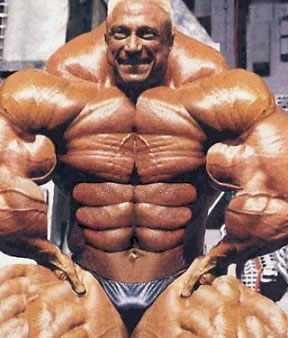
[wi nøt trei a høliday in Sweden this yër?] I think I'll look better without the mustache.
on
| § 2
I downloaded this the other day, and I've just been enthralled. It's really surprising - even when we no better, having read our Gibbon, we still imagine that Europe went from full-on Roman Empire glory straight into deepest Dark Age, without going through any sort of awkward in-between phase. Pirenne's Mohammed et Charlegmagne is a perfect corrective for this - straightforward prose, well balanced scope, telling details and a good narrative organization.
The Germans, pushed into the Empire by the arrival of Attila of Hun fame, did not want to destroy the empire. They wanted to use it for their own benefit. The successor kingdoms set up - the Vandals in North Africa, the Visigoths in Spain, the Ostrogoths in Italy, a grab bag of smaller tribes in Gaul - were all integrated into a post-Roman system that was still largely Roman. What's remarkable is how Roman, and how prosperous, these states remained. Urban culture survived the Barbarian invasions, remained tied to the Emperors in Constantinople, and trade - in the form of Syrian and Jewish merchants - was still being conducted in volume.
We know - though I haven't gotten to that part in the book yet - that in the dark ages, the money economy collapsed utterly, western Europe was largely isolated from the rest of the world, and literacy took a powder. But it certainly wasn't the Vandals and Goths that did it.
The version I downloaded is just images of the pages - not OCR'd - but I'll put up some quotes over the next few days. Fascinating stuff, and relevant as well to the ongoing discussions here, and in Aretae and Foseti-land.
[wik] Link to book. Free download, though you should consider flying to Belgium and giving money to his heirs.
on
| § 2
I've been reading some of the books I got with my amazon gift card (thanks, Dad!) and here's a bit of an (brief) update:
[wik] Update: I downloaded Pirenne's Mohammed et Charlemagne, and now I'pm totally sucked in. I don't think I'll be reading anything else until I'm done with this.
on
| § 6
The interior of this structure is awesome.
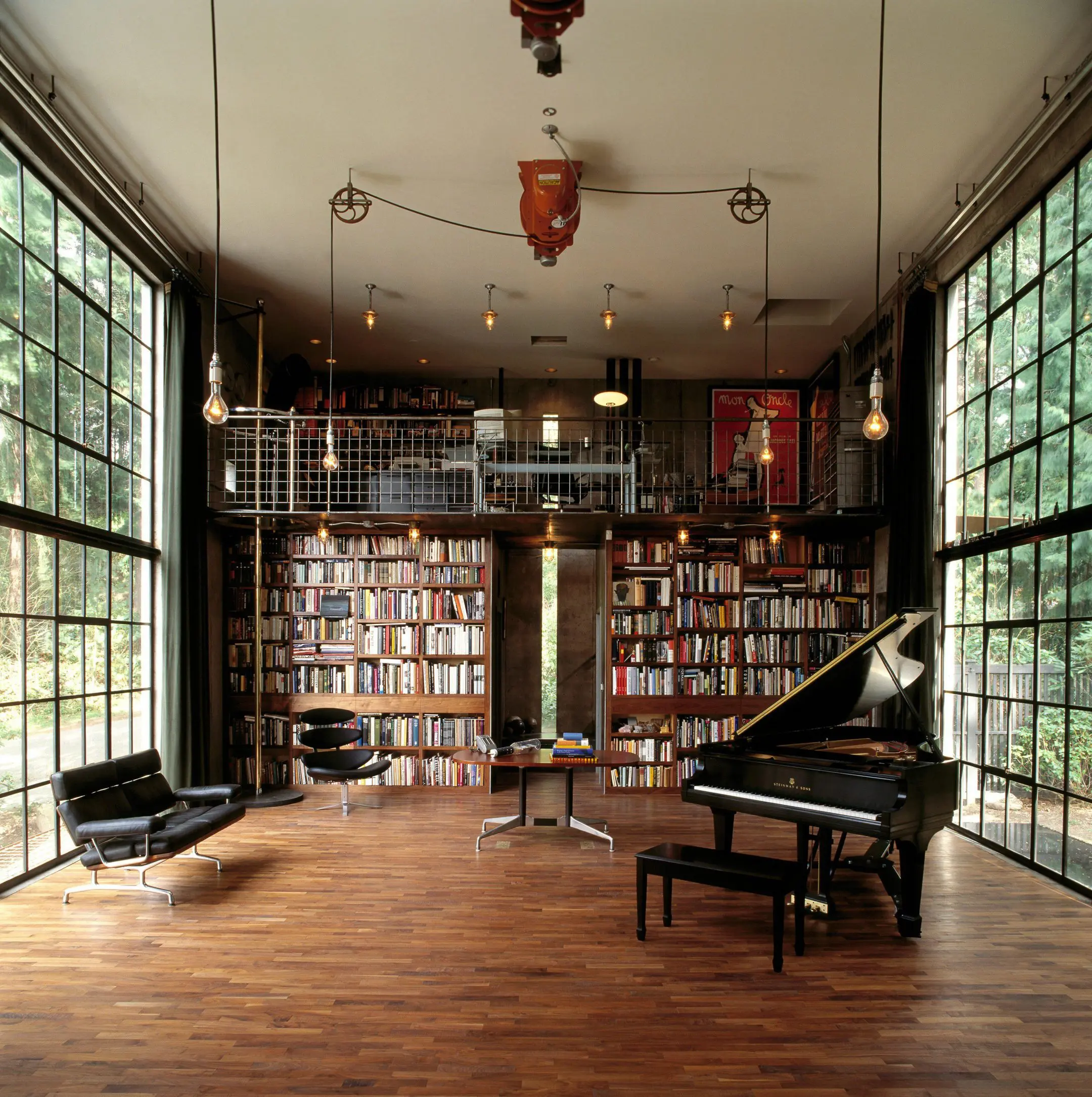
[Architects] Olson Sundberg Kundig Allen says, "The Brain is a 14,280 cubic-foot cinematic laboratory where the client, a filmmaker, can work out ideas. Physically, that neighborhood birthplace of invention, the garage, provides the conceptual model. The form is essentially a cast-in-place concrete box, intended to be a strong yet neutral background that provides complete flexibility to adapt the space at will. Inserted into the box along the north wall is a steel mezzanine. All interior structures are made using raw, hot-rolled steel sheets."
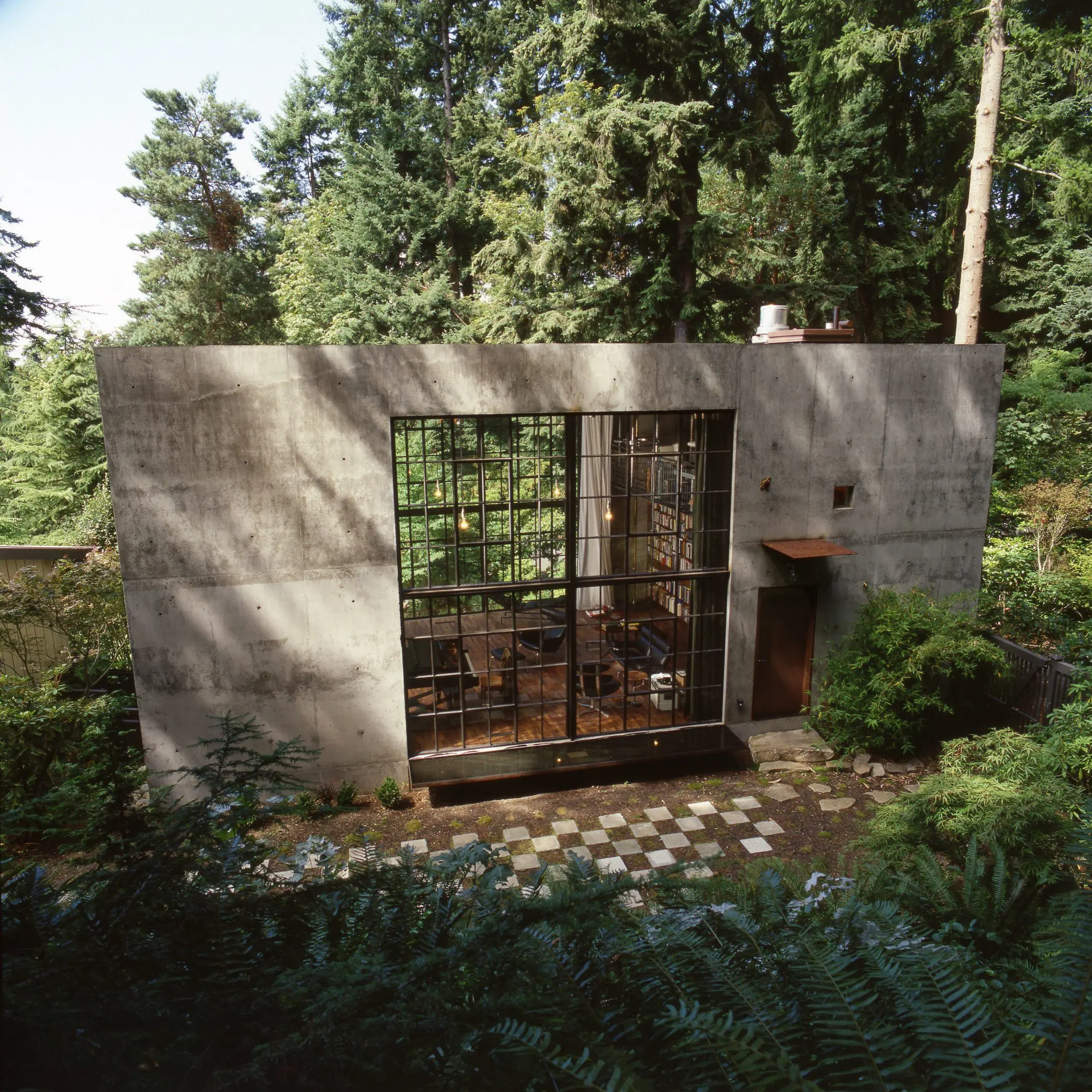
The exterior, not so much. But if the exterior looked more like this:

(Image from here.)
It'd be a lot nicer. You can kind of imagine what the structure would look like if you combine in your head this image with the second one from above:
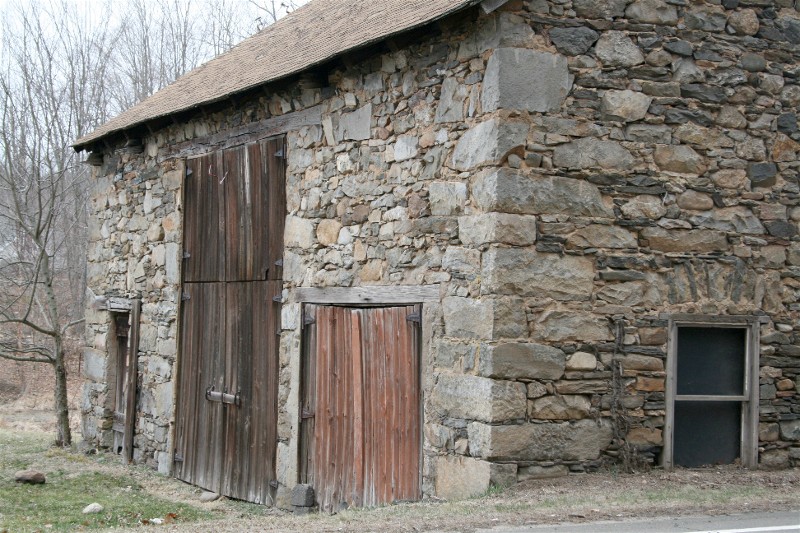
(Image from here.)
If this were a little bigger, and a little cleaner - just replace that big door with giant windows. Now that would be an office to get up for in the morning.
[wik] Hat tip, The SteamPunk Home. Images of the Brain taken from Apartment Therapy.
[alsø wik] The apartment therapy links are long dead, as is the site where I got the barn image. But the Brain is still available here. There's more internal images there, worth a look.
on
| § 0
In light of my last post, it makes me wonder, again, how history might have unfolded without Islamic conquests. The continuity of Classical civilization, without the interruption of the Dark Ages; the Eastern Roman Empire not reduced to a nub and finally destroyed by the Turks; North Africa, Egypt, Syria and Lebanon, Anatolia - all would have been Christian, and speaking Greek or Latin. Persia likely would have eventually become Christianized, rather than converted to Islam. The Crusades never would have happened, for sure, but without having to claw back up from next to nothing, Europe would have been further along by the turn of the millenium.
The European discovery of the New World, and their exploration efforts in general might have been delayed by centuries, since Christians would have controlled access to the Red and Black Seas, and thus trade with the Orient.
Very different, indeed.
on
| § 2
It is commonly thought that the barbarian Germanic tribes (ancestors of later barbarian French and Germans) invaded the west Roman Empire, extinguished the light of culture and learned urban life and brought about the dark ages so impressively imagined in this work. Further, it is also thought that Islam, in conquering large swaths of the east Roman Empire and North Africa, did not have the same effect; rather, they preserved the learning of the Classical world, saving it up until it could be translated into Latin by industrious scholars in the late middle ages in Cordoba.
Thinking about this, it seems strange. Why would the Arabs, renowned through later ages for their contempt for learning, have preserved the corpus of Greek and Latin literature? The muslim armies bursting out of Arabia in the seventh century were no where near as civilized as the partially Romanized Germans.
And thinking more, in my reading about Belisarius and Justinian in the period right before the Islamic breakout, the German successor kingdoms in the west - Italy and North Africa - were, while not exactly up to par with Augustan Rome, not uncivilized. The cities were still there, still trading, Latin was still being spoken and the ruling classes learned it and aped the manners of their Roman predecessors.
Well, this guy thinks that the Islamic - Arab expansion in the seventh century was the real cause of the Dark Ages:
Henri Pirenne’s posthumously-published Mohammed et Charlemagne (1938) presented to the academic world the results of a lifetime of research and study. His conclusions were stunning. The accepted narrative of western civilization, he maintained, was erroneous in a fundamental way. Classical civilization, the literate and urban culture of Greece and Rome, did not die as a result of the “Barbarian” Invasions of the fifth century. On the contrary, the great cities of the west, of Gaul, of Italy, of Spain and of North Africa, continued to flourish as before, this time under Germanic kings. These monarchs enthusiastically adopted the Latin language as well as Christianity, and regarded themselves as functionaries of the Roman Emperor — who by now however sat in Constantinople. Literature, as well as the arts and sciences, Pirenne found, continued to flourish in the western provinces until the middle of the seventh century. At that point, however, everything fell apart. Now, quite suddenly, a darkness — complete and total — descends. Gold coinage disappears and the great cities go into terminal decline. Within a generation, Europe is in the middle of a Dark Age. The light of classical civilization is utterly and completely extinguished.
What, Pirenne mused, could have caused such a total and dramatic disintegration? The conclusion he reached was almost as dramatic as the civilizational collapse he described. It was, to use Pirenne’s own phrase, explainable in one word: Mohammed. It can have been no coincidence, argued Pirenne, that all the luxury items of Near Eastern origin, which were commonplace in western Europe until the early seventh century, suddenly disappear in the middle of that same century — just at the moment Islam spread throughout the Middle East and North Africa. Islamic war and piracy must have closed the Mediterranean to all trade and strangled the economy of western Europe. Since the great cities of the west were dependant for their existence upon the luxury items imported from the east, these soon began to die. With the cities went the wealth of the kings, whose tax revenues disappeared: Local strongmen, or barons, seized power in the provinces. The Middle Ages had begun.
It was thus Islam, and not the German barbarians, who had caused the Dark Age of Europe.
Interesting. John O'Neill, who wrote that post at Gates of Vienna, has written a book about the subject, Holy Warriors: Islam and the Demise of Classical Civilization. Downloadable, and at a reduced price of only $10.
He continues,
...the Byzantine Empire, which Glick [whose book O'Neill is savaging, - ed] asserts suffered little or no economic dislocation. Before commenting on the seventh century, we should note that the sixth century, just before the rise of Islam, was an epoch of unparalleled splendour for Byzantium: Justinian reasserted Imperial control over Italy and North Africa, and both he and his successors presided over a prosperous and opulent civilization. Great monuments, both civil and ecclesiastical were raised, and science and the arts flourished. This was the situation that pertained as far as the reign of Heraclius, in whose time Byzantium first came into conflict with Islam. Cyril Mango is one of the world’s foremost authorities on Byzantine history, a topic which he has covered in several volumes and numerous articles. Here’s what he says about the Empire in the seventh century, from the reign of Heraclius onwards:
“One can hardly overestimate the catastrophic break that occurred in the seventh century. Anyone who reads the narrative of events will not fail to be struck by the calamities that befell the Empire, starting with the Persian invasion at the very beginning of the century and going on to the Arab expansion some thirty years later — a series of reverses that deprived the Empire of some of its most prosperous provinces, namely, Syria, Palestine, Egypt and, later, North Africa — and so reduced it to less than half its former size both in area and in population. But a reading of the narrative sources gives only a faint idea of the profound transformation that accompanied these events. … It marked for the Byzantine lands the end of a way of life — the urban civilization of Antiquity — and the beginning of a very different and distinctly medieval world.”(Cyril Mango,Byzantium, the Empire of New Rome, p. 4) Mango remarked on the virtual abandonment of the Byzantine cities after the mid-seventh century, and the archaeology of these settlements usually reveals “a dramatic rupture in the seventh century, sometimes in the form of virtual abandonment.”(Ibid. p. 8) With the cities and with the papyrus supply from Egypt went the intellectual class, who after the seventh century were reduced to a “small clique.”(Ibid. p. 9) The evidence, as Mango sees it, is unmistakable: the “catastrophe” (as he names it) of the seventh century, “is the central event of Byzantine history.”(Ibid.)
Constantinople herself, the mighty million-strong capital of the East, was reduced, by the middle of the eighth century, to a veritable ruin. Mango quotes a document of the period which evokes a picture of “abandonment and ruination. Time and again we are told that various monuments — statues, palaces, baths — had once existed but were destroyed. What is more, the remaining monuments, many of which must have dated from the fourth and fifth centuries, were no longer understood for what they were. They had acquired a magical and generally ominous connotation.”(Ibid. p. 80)
So great was the destruction that even bronze coinage, the everyday lubricant of commercial life, disappeared. According to Mango, “In sites that have been systematically excavated, such as Athens, Corinth, Sardis and others, it has been ascertained that bronze coinage, the small change used for everyday transactions, was plentiful throughout the sixth century and (depending on local circumstances) until some time in the seventh, after which it almost disappeared, then showed a slight increase in the ninth, and did not become abundant again until the latter part of the tenth.”
We know that the loss of the Syria and Egypt were a huge blow to the Byzantines. (Who, of course, didn't call themselves Byzantines - they were Romanoi.) Eliminating the Germanic kingdoms in North Africa and Spain would have done no less harm to the economies of the west. And we know that later, the Arab states to the south and east of the Med were a huge barrier to trade - the entire European exploration effort was largely an attempt to bypass that blockage. Arab pirates and fleets in the Med were a constant threat to European trade in the Middle Ages and beyond. Why should we imagine that it was any different a few hundred years earlier?
O'Niell goes on to discuss evidence of the prosperity and wealth of Visigothic Spain:
And so it goes on. One dark inference and assertion based on unsubstantiated sources after another. Take for example his comments on mining and metallurgy under the Visigoths:
“The economic regressiveness of Visigothic Spain is well illustrated by the failure of the Goths to carry on the vast mining enterprise begun by the Romans, who removed from Iberian pits a wide variety of metals, including silver, gold, iron, lead, copper, tin, and cinnabar, from which mercury is made. The relative insignificance of mining in Visigothic Spain is attested to by the winnowing of the full account given by Pliny to the meager details supplied by Isidore of Seville, who omits any mention, for example, of iron deposits in Cantabria. The most important Roman mines have lost their Latin names, generally yielding to Arabic ones -- as in Almadén and Aljustrel -- probably an indication of their quiescence during the Visigothic period and their revival by the Muslims. The Goths may have allowed their nomadic foraging instinct to direct their utilization of metal resources. In some areas mined by the Romans they probably scavenged for residual products of abandoned shafts that remained unworked, and metal for new coinage seems largely to have been provided by booty captured from enemies or from older coins fleeced from taxpayers.”
Read that again carefully: The only evidence he has that mining declined under the Visigoths is the “meagre details supplied by Isidore of Seville” and the fact that the most important Roman-age mines in Spain are now known by Arabic names. This hardly constitutes convincing evidence upon which to make such a sweeping statement; and it stands in stark contrast to the vast wealth, in gold, silver and precious stones, that the Arabs themselves claimed to have carried off from Spain.
Sounds interesting. O'Niel has guest posted at Gates previously - and I had checked out his book, but it seems to me that it was $20 before. At ten, I think I might pick it up, or else find a copy of Pirenne.
[wik] You can download a copy of Pirenne's Muhammed and Charlemagne here at scribd.
on
| § 3
I've acquired a fair number of heretical and contrarian beliefs. I think I'll let this one slide, for now. Still, it's an interesting theory. An Italian Nuclear Engineer has assembled evidence that the Trojan War happened not in the Mediterranean, but in the Baltic.
Compelling evidence that the events of Homer's Iliad and Odyssey took place in the Baltic and not the Mediterranean
• Reveals how a climate change forced the migration of a people and their myth to ancient Greece
• Identifies the true geographic sites of Troy and Ithaca in the Baltic Sea and Calypso's Isle in the North Atlantic Ocean
For years scholars have debated the incongruities in Homer's Iliad and Odyssey, given that his descriptions are at odds with the geography of the areas he purportedly describes. Inspired by Plutarch's remark that Calypso's Isle was only five days sailing from Britain, Felice Vinci convincingly argues that Homer's epic tales originated not in the Mediterranean, but in the northern Baltic Sea.
Using meticulous geographical analysis, Vinci shows that many Homeric places, such as Troy and Ithaca, can still be identified in the geographic landscape of the Baltic. He explains how the dense, foggy weather described by Ulysses befits northern not Mediterranean climes, and how battles lasting through the night would easily have been possible in the long days of the Baltic summer. Vinci's meteorological analysis reveals how a decline of the "climatic optimum" caused the blond seafarers to migrate south to warmer climates, where they rebuilt their original world in the Mediterranean. Through many generations the memory of the heroic age and the feats performed by their ancestors in their lost homeland was preserved and handed down to the following ages, only later to be codified by Homer in the Iliad and the Odyssey.
Felice Vinci offers a key to open many doors that allow us to consider the age-old question of the Indo-European diaspora and the origin of the Greek civilization from a new perspective.
This other article has some more thoughts:
There is a well-known statement that “Homer is not a geographer”. This is due to one simple problem: when Homer describes a location, this often does not conform to reality. For example, Strabo wondered why in the Odyssey the island of Pharos, situated just outside of the Egyptian city of Alexandria, was said to lie a day’s sail from Egypt. In reality, it wouldn’t take five minutes. Places like Rhodes were never described as an island by Homer, though you would think he would describe it as such. The location of Homer’s Ithaca does not conform to reality either. Dulichium, the long island, has never been identified, for where it is supposed to be, there is nothing. Professor John Chadwick thus concluded: “there is a complete lack of contact between Mycenaean geography as now known from the tablets and from archaeology on the one hand, and Homer’s accounts on the other.”
Most observers have hence claimed that Homer never visited the locations, made the landscape up, etc. But some recognise that if Troy was not Hissarlik , Homer’s Pharos may not have been near Alexandria… and that would mean that the entire Iliad and Odyssey may not have occurred in those locations in and around the Mediterranean Sea that have become associated with them at all. So if not there, the question remains: where?
One important clue comes from Plutarch, who wrote that the island of Ogygia, mentioned in the Odyssey, was situated “five days sail from Britain, towards the west.” Indeed, such a location would make sense of Homer’s description of the site: a large number of seabirds is said to fly around Calypso’s Cave on Ogygia and the North Sea and its islands are far better known for their large number of seabirds than the rather tranquil coasts of the Mediterranean Sea. Elsewhere, Homer refers to the wild or singing swan, which is found in Siberia and Scandinavia, whereas Mediterranean countries only know the silent swan. Furthermore, the movement of the tides is often evoked by the bard, in both literal and figurative senses; but the tides are notoriously undramatic in the Mediterranean Sea, but all the more impressive along the shores of the North Sea.
This would place Homer’s epic in northern Europe, which may seem startling at first, but not to such well-respected authorities as Stuart Piggott: “The nobility of the [Homeric] hexameters should not deceive us into thinking that the Iliad and the Odyssey are other than the poems of a largely barbarian Bronze Age or Early Iron Age Europe.”
So Europe, but where in Europe? For Felice Vinci in “The Baltic Origins of Homer’s Epic Tales”, the answer is the Baltic States, along the coastlines of Denmark, Sweden, Norway, Finland, Poland, etc. As to the location of Ogygia, for Vinci it should be identified with the Faroe Islands, specifically the island Kalsoy.
Kalsoy
Vinci is not the first to argue for a Scandinavian setting. It was also offered by the Swedish historian Martin P. Nilsson. Others, such as Bertrand Russell, stated that the Mycenaean civilisation originated with fair-haired northern invaders of Greece. One obvious question is why a Northern European story would become the backbone of the Mycenaean – Greek – civilisation in Southern Europe. For Vinci, the answer is simple: when the climate began to change and grow colder, these people were forced to migrate south. One tribe, the Achaeans, reached the Peloponnese and founded the Mycenaean civilisation. The migrants had brought their legends with them, but the geography of the north did not transpose on the south, hence the discrepancy.
So where precisely does Vinci locate these battles? The Iliad is placed along the Gulf of Finland and the Odyssey in and around Denmark. Troy itself is Toija in Finland; Thebes is Täby in Sweden; the Peloponnese was Zeeland, in Denmark. Vinci’s argumentation is linguistic, showing similarities in place-names, but hence suffers from a potentially fatal flaw, as most of these names cannot be traced back to before ca. 800 AD. This means that a gap of two to three millennia exists; as mentioned by Vinci himself, these people left their homeland in 1000 BC, so how can we be certain where was what, as there was no continuous tradition present?
Still, it is clear that there is some connection between north and south Europe, for there was trade between these Baltic states and Mycenea, as revealed by the large quantity of Baltic amber that was found in the most ancient Mycenaean tombs in Greece.
That Ogygia is clearly not situated in the Mediterranean Sea, seems clear. Its vegetation does not conform to the Mediterranean climate. And in Homer’s epics, there are frequent references to fog, even snow, and of how the sun does not seem to set but instead lingers just beyond the horizon, a phenomenon that is typical for summer in the northern regions. In the Odyssey, we read: “Here we can perceive neither where darkness is nor where dawn is/ nor where the Sun shining on men goes down underground / nor where it rises.”
Furthermore, the sea is never described as being bright, but grey and misty. The characters wear tunics and “thick, heavy cloaks” which they never remove, not even during banquets. The sun or its warmth are seldom mentioned in the book, yet are what would immediately come to mind in a Mediterranean setting. Indeed, there is nothing in this geographical description that hints at a Mediterranean setting; even if Homer was not a geographer, he should at least have known what a typical Mediterranean landscape looked like – as he is believed to have lived there. Instead, it seems he lived elsewhere…
Though Vinci may be right, Piggott is most definitely right: the Achaean warriors used chariots to move across the battlefield, a method of fighting that was unknown in Greece. But similar chariot fighting was described by Julius Caesar when he invaded Britain; what he witnessed, seemed taken word by word from Homer’s accounts. Furthermore, the “great walls” of Troy (never said to be made out of stone) could be identical with the palisades around various megalithic tumuli and Celtic settings. The sweet wine the warriors drink may seem typically Mediterranean at first, but we now know that wine was grown in northern Europe, but that honey was added… making the wine indeed sweet; such an addition was not required for Mediterranean wines, and once again, it seems Homer’s heroes were thus fighting elsewhere. Finally, in Homer’s account, everyone drinks from bronze chalices, which is typical of Celtic customs – and largely absent from Mediterranean cultures.
There's more at the link. It seems somewhat plausible - we know that the ancestors of the Greeks came into Greece from the north - they could have brought their tales with them. At the end of the bronze age, there was a lot of migrations, cities destroyed across Egypt, Anatolia, Mesopotamia, some of that certainly included the proto-Greeks who took over from the Mycenaeans. I don't know what evidence there is of bronze age ships in the Baltic - but this sort of literary detective work is what ended up in the discovery of L'ans aux Meadows in Newfoundland, all from clues in the Eddas. Might have to read some more on this one.
on
| § 0