I Believe, I Believe I'll [verb] [noun]

Can you imagine the pressure, being the heir apparent to immortal greatness? That kind of thing can do a man in.

Robert “Junior” Lockwood was more than just a close personal friend of the great Delta bluesman Robert Johnson. Due to an on-and-off ten year romantic entanglement between Lockwood's mother and the dashing, skylarking Mr. Johnson, Lockwood found himself with a big brother, a stepfather of sorts, and a musical mentor who would teach him all the tricks he had to tell. It was this relationship that gave Lockwood his “Robert Junior” nickname and the keys to his future.

And as with most such family dramas, it would be wonderful to write that the three of them, Robert, Robert Junior and mom, retired to a long and happy life on a farm somewhere in Arkansas or western Mississippi and ended their days in the company of beloved friends and family.

But instead, Robert Johnson found himself dying in a warm Mississippi night, poisoned by the jilted partner of one his many female companions, Robert Junior found his way out of the Delta by feet and inches, and only his mother had a shot at the idyllic storybook ending (God only knows if she got it).

As it turned out, Robert “Junior” Lockwood, heir to immortal greatness, was made of pretty stern stuff. Armed with all the tricks of music and showmanship he'd learned from his mentor, and cut loose from home at a fairly young age, he made a name for himself in juke joints and fish fries up and down the big river, wound his slow way North, and eventually became the go-to guitarist for dozens of recording sessions in the golden age of the Chicago blues.

Throughout the 1950s and 1960s, Lockwood appeared with some of the all time greats of the Chicago blues style, like Sonny Boy Williamson, Otis Spann, Willie Dixon, Little Walter and even Muddy Waters, adding what needed to be added, always staying out of the spotlight. Along the way he continued to teach himself more about the guitar, getting jazz lines and chords under his fingers, even mastering the art of the blues on the notoriously cumbersome 12-string guitar.

In the wake of Lockwood's death late last year, the Delmark label is reissuing once again their CD release of his first session as a bandleader, Steady Rollin' Man, recorded in 1970.

I have to admit, I was all set to politely pan this album. Its plainer moments are nice enough, sure, but not really incredibly distinct from any one of dozens of worthy Chicago blues albums recorded in the last half-century. But then I found myself walking down the street on a cloudless Massachusetts afternoon, with the sunlight slanting just so from the west and a beautiful melancholy mood coming down, and the song playing in my head was Robert "Junior" Lockwood's "Western Horizon."

Structurally, the song is nothing more than a stock Chicago blues by way of the Delta: start the song with the little turnaround where one voice descends chromatically from the flat-7 to the dominant, kick in the twelve bar shuffle vamp, and then cue a lyric whose first two lines are the same and begin with "I believe, I believe... I believe I'll...."

Trust me, you know this song. Whether it's sung as "Sweet Home Chicago" or "Dust My Broom" or any one of dozens of alternate lyrics, you know this song.

But what I forgot when I got ready to politely pan the album is that in this kind of blues, it's all in the details - the bent notes, the vibe of the song, the little turns of lyric and phrasing that make a blue performance just right.

And there's lots in "Western Horizon" that is definitely right. Lockwood studied jazz, and you can hear it sometimes in the way he pulls a phrase behind the beat, the way he swings a line, the way he builds some altered harmonies into his rhythm vamps. On “Western Horizon,” he sings behind the beat and then creeps right up to it, rushes some words and draws others out, and generally sounds like he was born singing the song in that same unhurried way. The effect is cool and stylish, and is a neat twist on top of the late-night saloon mood that he and the band kick up on this song and the album in general.

And what a band! For this session, Lockwood tapped some of the best that Chicago had to offer - Fred Below on drums, Dave Myers on bass, and Louis Myers on second guitar. The arrangements and tempos they dig into are less aggressive, less slick, than some of the work that Lockwood was doing as a session man around the same time.

Instead, Lockwood and the band let a whiff of country mud into their jazzy urban blues by laying back into grooves, moving some of the rhythm playing up the neck of the guitar (like Junior's ‘godfather’ used to do) and pulling out some great old turnaround riffs that could have come straight from the pines of Arkansas in 1937. On the slower grooves, like "Take a Little Walk With Me," "Mean Red Spider" and "Western Horizon," the band sit back in a simmer that showcases their sedate rock-steadiness and country overtones. But on the jump blues numbers like the overtly jazzy "Lockwood's Boogie" they sit right up in the pocket and deliver all the energy you could ever want to power a Chicago blues bar.

With repeated listens, the jazz elements drift to the front of the record. Jazz harmonies and a cool late-night vibe are all over songs like the instrumental "Tanya" and even the by-the-numbers "Take a Little Walk With Me" and "Steady Rollin' Man," and Lockwood's solos on any song may at any point quietly pass over from basic pentatonic flat-five scales into something that's no longer just the blues. The cumulative effect is pretty impressive, a nice balance of influences that don't often play well together but on this album fit together almost seamlessly.

So, okay. Maybe there are one or two too many straight-ahead numbers on this disc which sap a little energy from the running order. But that really doesn't hide the fact that I was wrong, and that Steady Rollin' Man is a minor masterpiece of the blues, pulling together the city, the country, and even jazz into one unassuming and masterful demonstration of why Robert “Junior” Lockwood was thought so highly of. Good stuff.

Posted by Johno Johno on   |   § 0

Seeking the ruin of souls

Over the last week, I've been spending some time looking over the blogs of people I met at the milblogger conference. Of course, all of them are chock full of brilliant writing, penetrating insight, late-breaking news and scintilating wit. But one thing I saw yesterday really caught my eye over at Michael Fumento's blog:

image

The guy with the tat was saved by Navy SEAL Michael Monsoor, who later died saving the lives of three of his fellow SEALs, and is now being considered for the Medal of Honor. You can read the Monsoor's story here or here.

I googled "Archangel Michael's Prayer" to see if I could get the text of it, and google and wikipedia again came through:

Saint Michael the Archangel,
defend us in battle.
Be our protection against the wickedness and snares of the devil.
May God rebuke him, we humbly pray;
and do Thou, O Prince of the Heavenly Host —
by the Divine Power of God —
cast into hell Satan and all the evil spirits
who roam throughout the world seeking the ruin of souls.

Amen.

It turns out that there is an interesting story or legend behind this prayer, which was once said in every Catholic Mass. Back in the late 1800s, Pope Leo XIII had this experience:

"I do not remember the exact year. One morning the great Pope Leo XIII had celebrated a Mass and, as usual, was attending a Mass of thanksgiving. Suddenly, we saw him raise his head and stare at something above the celebrant's head. He was staring motionlessly, without batting an eye. His expression was one of horror and awe; the color and look on his face changing rapidly. Something unusual and grave was happening in him.

"Finally, as though coming to his senses, he lightly but firmly tapped his hand and rose to his feet. He headed for his private office. His retinue followed anxiously and solicitously, whispering: 'Holy Father, are you not feeling well? Do you need anything?' He answered: 'Nothing, nothing.' About half an hour later, he called for the Secretary of the Congregation of Rites and, handing him a sheet of paper, requested that it be printed and sent to all the ordinaries around the world. What was that paper? It was the prayer that we recite with the people at the end of every Mass. It is the plea to Mary and the passionate request to the Prince of the heavenly host, [St. Michael: Saint Michael the Archangel, defend us in battle] beseeching God to send Satan back to hell."

Others have spun that into a legend that Pope Leo overheard a conversation between Christ and Satan, where Satan claims the 20th Century to try to destroy the church. That would certainly explain some things, but I don't think that Satan actually, you know, stopped on 1 Jan 2001.

"Those who roam the world seeking the ruin of souls"

That could describe all too many in this world.
 

Posted by Buckethead Buckethead on   |   § 3

Greeted with Flowers

President Bush has declared that global warming and greenhouse gases will "greet Americans with flowers" in the upcoming century. Much to the chagrin of the "conservative" establishment, Fox News accidentally published a news article foolishly acknowledging the possible certainty of a global warming trend. As the news establishment of record Fox News executives will shortly fall all over themselves explaining the disruption of their tango with Bush as "left foot steppage", with an accompanying chorus/chant of "UFO!" and "Terrorist!" from the gallery.

"We greet the flowering of our democracy with hope and renewed vigilance", noted El Presidente, adding that "America will grow strong, her great garden of freedom plants will grown stronger still, and we will ride these great beanstalks of global warming into the terrorist skies! Let no-one mistake our intent! This is our country, and these are our trucks!"

Tom Tancredo, desperate for attention, added that "big giant junipers on the borders would prickle mexicans into staying home and destroying their own economies for a change. Maybe we could fund that with wall money."

Mitt Romney pointed out that African Americans would be able to use the beanstalks to live above Utah, where they have been freely able to join the Mormon church since 1978! "Horticulture", Romney reportedly snickered to himself repeatedly.

Giuliani decried the global warming story, stating that any topic of conversation other 9/11 was unamerican, and even the giant beanstalk in Central Park didn't count. Then he got divorced again.

Posted by Ross Ross on   |   § 5

The Next Big Thing (for ten years running)

It's an unjust world that doesn't hail Andrew Bird with parades and midnight fetes.

Eight years ago or so, when the Chicago-based violinist and songwriter formed Andrew Bird's Bowl of Fire, I nearly wrote him off right then and there. At the time, Bird,a Suzuki-trained musician who claimed to have barely heard any rock music at all, ever, was a hot-jazz violinist somewhat in the mold of the great French player Stéphane Grappelli and a sometime member of swing revivalists The Squirrel Nut Zippers. Given that the neo-swing revival lasted all of two years, and my patience with it considerably less time, I was disinclined to give Andrew Bird a pass.

With The Bowl of Fire, Bird put out Thrills (Rykodisc, 1998) and Oh! The Grandeur (Rykodisc, 1999), two albums which I received as basically updated museum pieces, kind of neato like a garage-built replica of a Model T Ford, but like a Model T replica more curiosities than accomplishments. His archly retro songs and arrangements were entertaining amalgams of ragtime, hot jazz and swing, Weimar-era cabaret, Eastern European folk music, and other similarly unfashionable influences, but their appeal (for me, at least) stopped at the eardrums. The albums seemed to sell passably well, he built a small and dedicated fanbase, but for my part I had my fill of Andrew Bird pretty quickly. (Full disclosure: I was working for the label that put out Bird's first three albums. As if that makes me any more patient with nonsense.)

And then it all got weird.
Bird's third album went in what you might call a completely unexpected direction. I suspected it might be getting interesting when, one afternoon, I was instructed to find a Hohner Beatle bass on short notice for Andrew to make use of in the studio (luckily for me, Manhattan is sick with Beatle basses for rent), and my suspicions were borne out when he delivered his third Bowl of Fire album, The Swimming Hour (Rykodisc, 2001). Gone were the hot jazz, the Hungarian folk music and the two-step beats. Gone were the one always-arched eyebrow and the sense that every note was part of some elaborate in-joke.

Instead, Andrew Bird had learned in his own way to rock.

But, being a classical music junkie and polymath, Bird didn't just sit down and pen a raft of "easy" by-the-numbers garage rock songs and dress them up with electric violin and Beatle bass. No, no no. Instead, Bird sat down and listened to what must have been the entire history of rock and roll music from Elvis up to Pavement, and then went off and encapsulated that history in one neat and quirky package. From the clattery Ray Charles jump blues of "How Indiscreet" (which featured a Raelettes-style backing chorus) to nods to Latin music, Burt Bacharach chamber pop, that Weimar cabaret again, it was a dizzyingly accomplished leap forward. Every song still featured his signature violin, but it appeared in a thousand disguises - distorted, plucked, and echoed, and his light and mellow voice became a secret weapon as he slyly intoned little stories about rest stops and mistaken identity. It was rock music, yes, but coming from a wholly original place and sensibility that had little to do with the blues, Chuck Berry, Zep or the Stones. In short, The Swimming Hour was a smart and original album of marvelous songs played in a marvelous fashion, and I thought to myself, "no way" that Andrew Frigging Bird "is gonna top this."

Boy, was I wrong. Having gone solo starting with 2003’s Weather Systems (Grimsey Records,) each of his subsequent albums has been better, deeper, more mature and masterful than the last. His songwriting has become more confident as he has developed his own voice - his own genre - that nods at but does not rely on anything else that's been done before. Ever. His lyrics have become sharper, blending keen observation with poetry and Tin Pan Alley wordplay, and he has become (check this out) a master whistler.

Andrew Bird's latest album, Armchair Apocrypha (Fat Possum, 2007) was released in March to... thunderous silence. I don't get it. Andrew Bird has made the album of the year, an absolutely breathtaking tour de force of beautiful and brilliant... something... pop? I don't know what it is... and the only press I'm seeing is in the usual places that review indie-rock (Pitchfork, The Onion). No ticker-tape, no guest stint coaching the vocal gymnasts on American Idol, and it's a crying shame.

Bird created Armchair Apocrypha with the help of electronic-music experimentalist Martin Dosh. Dosh's influence seems mainly to be in the way that most of the productions are big as Western vistas, full of nuance and texture and sweeping motion, even when they are quiet as whispers. When Bird takes full advantage of his singing voice - a light, agile tenor not too different from Jeff Buckley's - or his multifacted violin, or the whistling that sounds more like a Theremin than something human, and sets these monstrous talents off against Dosh's expansive productions, the effect is breathtaking. When from time to time, the electronic flourishes intrude a little more, as with the canned shuffle beat on "Simple X" or the storm of drums that ends "Armchairs," it's usually to the song's advantage. (But not always; “Simple X” is probably the weakest track, relatively speaking, on an otherwise stellar album.)

Somewhat like David Byrne (whom he resembles in eyebrow and cheekbone), Bird's lyrics are full of wordplay and detached observation that seems to come from a wry weariness, taking on the persona of someone who's seen enough to know that he doesn't want to see any more. On Armchair Apocrypha, disaster seems to lurk just underneath every surface. You find yourself grooving to "Heretics" well before you figure out that the chorus runs, "Thank God it's fatal," and the album-opening "Fiery Crash" seems to contemplate the titular tragedy in order to ward it off.

Bird even delves obliquely into politics for what I believe is the first time with "Scythian Empires," which pulls together three millennia worth of Middle East conquests and their subsequent fiascos over a gently driving beat built on acoustic guitar, plucked violin, and that ever-present Greek chorus of Bird's otherworldly whistling:

five day forecast bring black tar rains and hellfire
while handpicked handler's kid gloves tear at the inseams

their Halliburton attaché cases are useless

while Scotch-Guard Macintoshes shall be carbonized

now they're offering views of exiting empires
such breathtaking views of Scythian empires

Scythian empire
horsemen of the Russian steppe
Scythian empire
archers of an afterthought

routed by Sarmatians
thwarted by the Thracians
Scythian empire

kings of Macedonia
and the Scythian empire

Halliburton attaché cases, by the way, are fantastic.

No matter whether Bird is punning on, well, birds on "Spare-ohs" and the clever album art, or contemplating mortality and the game of Operation on "Dark Matter," every shot hits the target dead center. This album is as career-defining and as one of a kind as Pink Moon, Tapestry or Dark Side of the Moon, and I'm frankly shocked that music this good - even if it's not immediately comprehensible as "pop" - isn't burning up the adult alternative radio charts, being written up in Rolling Stone, and generally being lauded as great.

Today, I'm at the point where I'm tempted to run to my nearest music store, order a 30-count box full of Armchair Apocrypha and run into the streets thrusting the album into every passing hand. It's that good, that different, that lovely. Not to everybody's taste, maybe not your particular cup of tea, but objectively a great, great album.

Andrew Bird has come a long way since I rolled my eyes at "Ides of Swing" and "Candy Shop" from Thrills and Oh! The Grandeur. Before I said it because I still doubted his ability to pull off anything he wanted; now I'm saying it because practically nobody makes two albums this good in a career (even while I hope that this is not true): no way is Andrew Frigging Bird gonna top this.

Posted by Johno Johno on   |   § 2

Warm Fuzzy

Midriff Records has a really nice thing going. Founded in 2001 by the New England band The Beatings for the purposes of releasing their own music, they have built a stable of high quality indie-pop bands who mostly trend toward (from what I've heard) to the bittersweet and hooky side of the spectrum. In some respects (notably in that Midriff bands seem to all be friends and in some cases brothers), Midriff is becoming a power-pop version of Elephant 6 or K Records, two labels who took a friends-and-family approach to artist development and who are now legendary in some circles. Indeed, the last year or so has seen at least three high-quality releases that should cement Midriff's reputation as a label to rely on: a stellar release from The Beatings themselves; an excellent solo album from Beatings guitarist Eldridge Rodriguez; and now Scuba with a self-titled debut.

Like The Beatings, Scuba exist to invoke (and improve on) some of the most revered sounds of the past thirty years or so. But where The Beatings draw on The Pixies, Mission of Burma and Sonic Youth, Scuba are best described as - get this - shoegazer revivalists.

Shoegazer! When's the last time you thought about that word? For me it musta been back in college in Ohio in the mid-1990s, hepped up on Mickey's Big Mouths and listening to My Bloody Valentine and Dinosaur Jr., and leaving the room every time anyone put on anything by the execrable Sebadoh. Remember when The Jesus and Mary Chain were on Lollapalooza? When The Cure were having hits? When Bob Mould was releasing records as Sugar and even got on the radio? I sure do! And I loved it!

But it's both condescending and limiting to describe a band as solely the sum of their influences. On their website, Scuba themselves acknowledge their fuzzy and moody pop roots, saying "We're not a shoe-gazer band. Though we look at a lot of things apparently our shoes are not one of them. Or rather they're not looked at for long enough to become a quote-unquote 'gaze' unquote."

Okay, so fair enough. "Shoegazer" implies that Scuba are a tribute band, which isn't correct. So what's the deal with Scuba? Well, the fuzzy guitars and washes of noise aside, they play sumptuous and hypnotic power pop that delivers on what Neil Young said about Crazy Horse, his backing band: "It's all one big, growing, smoldering sound, and I'm part of it. It's like gliding, or some sort of natural surfing." Although you can namecheck great bands of the past one after the other as the songs pass by (right now I'm listening to the leadoff single "Gary Powers' Spy Plane" and dreaming of Boston's late lamented The Sheila Divine), the truth is the songwriting is strong and original and more than the sum of its (My Bloody Valentine, Joy Division, New Order, Sugar, Jesus and Mary Chain, The Cure) influences.

The big trick with playing noisy pop-inflected rock is to have it not all sound the same. I've heard literally dozens of boring bands who play boring music that sounds great for three point five minutes until they start their next song and you realize that one song is really all they have. Luckily, Scuba duck the "samey" tag with aplomb by using studio and songwriting tricks to good effect, sometimes washing the sound-field with enormous distortion, other times pulling back to a tunneling bassline and a few chimed guitar notes, sometimes compressing everything into angular chords.

Scuba manage to duck the other great pitfall of modern power-pop as well, which is the "softLOUDsoft" formula that The Pixies invented and Nirvana made famous. Instead, in the great tradition of their shoegazer forebears, Scuba manage the flow of each song beautifully, creating new textures and moods through smart production and layering of sounds, rather than the crass expedient of stomping the distortion pedal and blasting out the windows every time the chorus comes around.

Highlights include the album opener "You Break My Heart in 1000 Different Ways," the echoey suspended overdrive of "Freight," the gorgeous Joy-Division wail of "Maybe It's Different With Johnny" and the gigantic suspended-chord riff of "Into The Water, Down To The Bottom." In a just world, or a different time, any one of these songs should be, or shoulda been, a monster underground hit, part of the lingua franca of cool youth to be passed down by word of mouth.

Simply put, Scuba have made a well-written and beautifully produced debut record in a decidedly unfashionable genre, one that makes aging hipsters like me feel like rock has a future that isn't limited to Franz Ferdinand, Pink, and tenth-generation SoCal punk. Granted, for the time being the band are leaning hard on their influences, but they're a long way past merely paying tribute to them, which is a whole lot more than million-sellers like Queens of the Stone Age, Sum 182, or, heaven forfend, Nickelback can claim with a straight face.

Posted by Johno Johno on   |   § 0

Having let this age for a while on my desktop

I'll just ask the question: When you see a story like this one:

Deadly insurance fraud case nears trial

By TOM HAYS, Associated Press Writer Mon May 7, 2:24 PM ET

NEW YORK - When Basdeo Somaipersaud's body was found in his favorite park in 1998, his family assumed he cracked his head during one of his drinking binges. But an autopsy detected small puncture wounds on his torso, and a sedative sometimes used to treat schizophrenia in his system.

Authorities now say Somaipersaud was injected with lethal doses of the sedative chlorpormazine while he was in a defenseless, drunken stupor — and then his killers tried to cash in on his life insurance policy.

...(blah, blah, blah - not to steal the fun out of the story, turns out the insurance guy named James who wrote the policies was likely the guy who set up the murder. Condolences to the family, murder diminishes us all, and so on and so forth - none of that's my point, because, really, my reaction would have been the same if the story had been written about puppies, or hemorrhoids, or any number of other things)

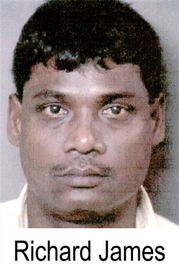
...and the picture next to the story is this one:

image

...am I the only one whose mind immediately goes to a skit from Dave Chappelle's show, the one with the punchline:

I'm Rick James, bitch!

? Never mind, it's probably just me. But at least I can drag that AP story to the trash now.

Posted by Patton Patton on   |   § 0

The Milblogging Conference of Aught Seven

This last weekend, I was privileged to attend the second annual milblogging conference. (Shouldn't it be a milblogger conference? After all, it isn't a gathering of milbloggings) As was the case last time, I had a fantastic time indulging my need to talk at great length about nearly anything. My wife, who has heard everything I have to say about most things, no longer sees the value in listening anymore; and so a captive audience of people who also feel the need to talk at length about nearly anything is Buckethead heaven. Which is proof, I guess, of the old saying about one man’s heaven being another one’s hell.

And this time, there was plenty to talk about, and, of course, much beer to be drunk. The festivities started with what Blackfive referred to as the “Pre-Cock.” We gathered at Arlington’s legendary Car Pool before the official Cocktail hour and reception. I was greatly pleased that Steve Schippert of Threatswatch was able to attend, despite needing to return home on Saturday for personal reasons. Steve is a fantastic guy, and only a little silly when inebriated. Many others were there as well – the aforementioned Blackfive, Princess Cat, Mike of USAA, Kevin, Noah Shachtman (now at Wired) and a few others who, while significant and entertaining individuals in their own right, have slipped through the cracks of my memory.

Moving over to the Cocktail Festivities, I hooked up with Murdoc and his wife, down from Michigan, and met his longtime companion commenter AW1 Tim. Jon of Aaaarrggghhh was there handing out prizes (though none for me) and various and sundry other bloggers. Rob the fast squirrel was there, and good company.

After attempting to eat fajitas in a room with no tables, and spending $7 for Heineken, we went back to Carpool. At this point, we lost a few people, but Noonan from Op-For, Threatswatch Steve, me, Cat, Rachelle, Scott (great guy, but he likes sleep more than beer – can we trust him?) Blackfive, Murdoc and a couple others kept going. While I did not drink as much as I did on the Friday before the last conference, I did put down a few and a nice glass of the Macallan, and things got kinda hazy.

Went back and crashed at Cat’s and slept on the couch while she and Rachelle slept together. Is that hospitality? I think not.

Bright and early the next morning, we got to the conference just in time to miss the President address the conference. I have to say that I missed a lot of the panels – if I sat down I started getting sleepy no matter how interesting the speakers – and there were some interesting speakers indeed. But I had been short on sleep Thursday night, and only got a couple hours the night before. Adapting my strategy, I generally spent most of the day outside the conference room, talking to the other attendees in smaller groups.

Had a fascinating conversation with the Armed Liberal of Winds of Change and Bill Roggio from the Fourth Rail, and at one point Bill turned to me after I said something and allowed that, “You’re awfully smart for a guy named Buckethead.” I still don’t know quite how to take that, but the sentence had the word ‘smart’ in it so I’ll count that a compliment. And Noonan is not the spare. Or so I have been told.

A big topic of discussion both in and out of the panels was of course the recent Army directive that all military bloggers must get all posts approved by chain of command. It seems that there are two currents in the Army – one which wants to use the milbloggers to aid it in getting information out into the world, “winning the information war” and another group that is operating not on a Web 2.0 basis, but rather a 50s era corporate Web -.5 basis. You can’t win, really, in keeping information contained. It’s damn near impossible in this new world we’ve created. What you can do is compete in an information ecosystem, and attempt to get your ideas, and your points of view respected. That seems to be the consensus, and milbloggers (and I am truly not really one of them, except in spirit) feel that they have a key part to play in that effort. I believe they are right. Bill Roggio, for example, is a one man counterexample to the idea that only major media outlets can provide comprehensive coverage of the war – this guy doesn’t just comment on the news, he is an active producer of it.

Noah Shachtman offered himself up for sacrifice in his panel, by defending the MSM. This was not an audience predisposed to think kindly of the “regular” media. You should have seen people rushing to the microphones to argue. Noah was right, though, there isn’t a conspiracy. But there is ignorance – and though Noah said that milblogs are a perfect resource for mainstream media, I don’t really see a lot of evidence that they are making use of it.

That was one of the things that I was talking about later with several people – in any instance where you have seen reporting on a topic with which you are intimately familiar, have you ever seen them get it right? Ever? And what makes you think that they get anything else right?

In the course of some of those conversations I also met American Soldier and Army Girl – active duty soldiers who are also active bloggers. They are approaching the problems of blogging while on active duty differently – AS is anonymous, while Army Girl must deal with her chain of command. Fascinating discussions, and both were great people to talk to. of Soldier’s Angels (and Vivienne) were both charming. Vivienne kept wanting me to pick up toys, which I was happy to do on a part time basis, but my Jocelyn has a prior claim.

At lunch, we had a presentation from Soldier’s Angels, a truly fantastic group that works with injured soldiers coming back from Iraq and elsewhere. If you are looking for a good cause to donate to, or really even if you aren’t – throw some money their way. They do incredible work. The highlight of the lunch was Chuck Ziegenfuss, a soldier who was wounded severely in Iraq. The guy is an amazing speaker – he told the story of how, after he was wounded, Soldier’s Angels helped him by (among many other kindnesses) getting him a laptop, and how that grew into Project Valour IT, which has now raised hundreds of thousands of dollars to purchase laptops for other injured servicemen and women. Besides being a hero and orator, Chuck is wonderfully profane and wicked funny. I was honored to meet him. Second best quote of the weekend came from him:

"Chuck, did you watch the DNC debates?"

"No, If I want to watch retards fight, I'll throw a bag of candy under the short bus"

After all the official events wound down, we retired to the lounge. There, I met McQ and Jon Henke; current and former members of Q and O. I had a blast talking to both over the course of the rest of the evening as we wended our way though the hotel bar, to PFChangs, and back to the hotel. Also met Lex, who does an excellent Irish accent while drunk. For all I know he may do an excellent sober Irish accent, but I never saw him sober. And no one has seen the Irish sober. Spent some quality time talking to (and smoking with) Jacki, who is not a blogger though she probably should be. (Remember, it’s not about fractals…)

Who else? Tammi, Chuck’s wife Carren, Laurie from Soldier’s Angels, Homefront Six all the way from Hawaii – we had a great time talking early Sunday morning while Lex sobered up, that’s all that comes to mind at the moment. I’ll have to call Cat and start asking, “Who was the one guy…” to fill in the rest.

Last weekend was one of the best weekends I’ve had in a long time. Spending two days in the presence of a crapload of highly intelligent, motivated and articulate people is inspiring. For those who, unlike myself, are inspirable anyway. Thanks to Andi for putting it all together.

And despite my description, it was not all about drinking. People who have done incredible work – the Soldier’s Angels, and everyone who has helped them – were honored. There was a lot of good discussion amongst the bloggers of course, but there were non bloggers there who, I think, got an earful – hopefully a useful one. And making new friends is never wasted.

Can’t wait for next year.

Posted by Buckethead Buckethead on   |   § 3

Police comments

Allegedly taken from patrol car video recordings.

  • "You know, stop lights don't come any redder than the one you just went through."
  • "Relax, the handcuffs are tight because they're new, they'll stretch after you wear them a while."
  • "If you take your hands off the car, I'll make your birth certificate a worthless document."
  • "If you run, you'll only go to jail tired."
  • "Can you run faster than 1200 feet per second? Because that's the speed of the bullet that'll be chasing you."
  • "You don't know how fast you were going? I guess that means I can write anything I want to on the ticket, huh?"
  • "Yes, sir, you can talk to the shift supervisor, but I don't think it will help. Oh, did I mention that I'm the shift supervisor?"
  • "Warning! You want a warning? O.K., I'm warning you not to do that again or I'll give you another ticket."
  • "The answer to this last question will determine whether you are drunk or not. Was Mickey Mouse a cat or a dog?"
  • "Fair? You want me to be fair? Listen, fair is a place where you go to ride on rides, eat cotton candy and corn dogs and step in monkey poo."
  • "Yeah, we have a quota. Two more tickets and my wife gets a toaster oven."
  • "In God we trust, all others we run through NCIC."
  • "How big were those 'Just two beers' you say you had?"
  • "No sir, we don't have quotas anymore. We used to, but now we're allowed to write as many tickets as we can."
  • "I'm glad to hear that Chief (of Police) Hawker is a personal friend of yours. So you know someone who can post your bail."

AND THE WINNER IS....

  • "You didn't think we give pretty women tickets? You're right, we don't. Sign here."

via Kenny, my Melbourne, FL correspondent

Posted by Patton Patton on   |   § 3

Grammatical Animadversion

Those who know me well know that I'm fairly flexible on matters of language. Go ahead, say "ain't" or write a double negative. I don't care all that much unless the context calls for precision. Coin a word! I do it all the time! (I'm personally very proud of "libervasion," as in "Five years in, the libervasion of Iraq has yet to draw to a favorable close for the USA.")

But what really burns my bacon is people who consistently fail to realize that two homophones are different. Case in point: Marshal, and Marshall. One denotes a person of high or ultimate rank in an organization, like Field Marshal or Fire Marshal. The other is a proper given name, like Marshall Mathers or Marshall Fauk. When everyone from high-school dropouts to tenured faculty, plus the guys who enter the scrolling headlines on major news networks, consistently write "Fire Marshal" as "Fire Marshall" I go a little nuts inside and wonder which Marshall it is who has fucked up so badly that his ass needs to be fired on the afternoon news.

That is all.

[wik] (Now, if was "Fire Alberto" or "Fire The Stoner Who Took Two Hours To Deliver One Freaking Mushroom Pizza Light On The Mozzarella To My House And Couldn't Even Put Together A Better Response Than To Cut His Reddened Eyes Away From Me And Mutter "Sorry If It's Late" ("Sorry If It's Late?" You Disingenuous Tool? We Both Know You Were Somewhere Doing Bong Hits, That's Fine, Just Don't Pretend You Don't Know What Goddamn Time It Is When A Stone Cold Pizza Arrives At My House In A Cloud Of Resinous Smoke)" then I'd understand. But Fire Marshall? That poor bastard was just doing his job.)

Posted by Johno Johno on   |   § 8

Why not laugh? It was funny.

Reuters has a story today, "North Korean general cracks George W. Bush joke".

SEOUL (Reuters) - In North Korea, where cracking a joke about the country's leader could see you, well, die laughing, poking fun at the U.S. president is obviously not as serious.

As military chiefs from both sides of the Korean peninsula met on Tuesday for talks, a general from the North started proceedings by telling a joke at George W. Bush's expense.

The South Korean generals appeared befuddled as to what to make of the humour...

Why the reticence to laugh, I don't know. It can't be because of a language barrier, right? The lack of laughter shouldn't be due to the DPRK being, basically, a totally screwed up wasteland, even though that's precisely what it is. The fact that the same joke couldn't be made about the Human Chia Pet in Platform Shoes is moot, really - it's got nothing to do with the story, notwithstanding Reuters' lead in.

And, if you ask me, it shouldn't be due to the joke not being funny, because, while not yucktastic, it mildly humorous, not at all offensive, and doesn't seem wildly far from the truth:

"I recently read a piece of political humour on the Internet called 'saving the president'," Lieutenant-General Kim Yong-chol was quoted as saying in pool reports from the talks.

He then retold the old yarn about Bush who goes out jogging one morning and, preoccupied with international affairs, fails to notice that a car is heading straight at him.

A group of schoolchildren pull the president away just in time, saving his life, and a grateful Bush offers them anything they want in the world as a reward.

"We want a place reserved for us at Arlington Memorial Cemetery," say the children.

"Why is that?" he asks.

"Because our parents will kill us if they find out what we've done."

OK, admittedly, it's a bit poorly constructed and it's derivative of other jokes I've heard, but so are most jokes, at my age. Apparently, both Reuters and the SoKo generals thought it was a bigger deal than it really was.

Posted by Patton Patton on   |   § 6