I thought Plan 9 From Outer Space was best

Interesting. In a poll of over 3000 sf fans by sfx magazine, Serenity was voted the best sf movie of all time, over second place Star Wars. I dug the movie, but I don't know if I'd rank it in first place. The whole list:

  1. Serenity
  2. Star Wars
  3. Blade Runner
  4. Planet of the Apes
  5. The Matrix
  6. Alien
  7. Forbidden Planet
  8. 2001: A Space Odyssey
  9. The Terminator
  10. Back to the Future

Posted by Buckethead Buckethead on   |   § 25

And so it's begun

"It", in this case, is the 2008 Presidential election pre-pandering season. How could I tell? Today's mail contained solicitations for donations from:

  • Rudy Giuliani
  • John McCain
  • Mitt Romney
  • Tommy Thompson
  • Bill Richardson

Pfft. Into the trash with the lot of them, after emitting a muttered "Holy shit!"

However, I was intrigued by several things about the mess of politically motivated mail feces pieces. First off, one of the items on that list is not like all the others. No, not the Mormon - the other odd item. Yeah, Richardson. I haven't a clue how his campaign is doing its targeting, but as much as I'm sure he's a stand-up guy and all, I don't know that I've ever taken any action which would have tagged me as anything other than, well, someone who would throw his mail into the garbage, unopened.

As for the rest, it's early days, and I guess there's a school of thought that the entirety of the Republican Party's mailing list (if not its "base", which excludes me) is ready for its quadrennial colorectal exam, to see if there are any changes in tendencies, proclivities, and candidate preferences. Oh, and IQ, too.

However, for anything other than a truly zero-cost mailing (which things don't exist), I'm amused that the GOP thinks the right marketing mode is "carpet bomb". At a minimum, given how early in the game it is, might it not make sense to attempt such mailings in waves, and adjusting the targets as responses from the gullible are tabulated?

I think it would, but they didn't ask me.

If they had, I'd have made the recommendation above, and I'd also have reminded them of John Wanamaker's famous saying:

"I know I waste half the money I spend on advertising," department store pioneer John Wanamaker said. "The problem is, I don't know which half."

I'd then point out that, according to Seth Godin, that's a myth:

Half my advertising works, I just don't know which half. Actually, it's closer to 1% of your advertising that works, at the most. Your billboard reaches 100,000 people and if you're lucky, it gets you a hundred customers...

Please ignore the casual numeric disdain of Mr. Godin - he's a marketer, not an arithmeticist. 100 people out of 100,000 is a lot closer to 1% than it is to 50%, but it's even more closer to 0% than it is to 1%.

And finally, I'd point them back to me, proof positive that the ratio that works is actually 0.00%

Note the two-decimal precision - that last bit is not only precise, it's accurate.

Posted by Patton Patton on   |   § 7

Against my will, I become fascinated

I am slowly, grudgingly, becoming interested in the 2008 presidential race. There are three reasons for this. First is $26 million dollars, and the second is The Hunt for Red October. The last is the fact that this will be the first completely wide open presidential election in god knows how long. No incumbents running. One hope, one fear, and history.

History first. This will be the first election with no incumbents with their hats in the ring since 1928, when dinosaurs still roamed the earth. In that long ago election, President Coolidge declined to run, and Vice President Dawes was so roundly disliked that he was not even considered. In the intervening 80 years every election has involved either a sitting President or Vice President, and while that is no guarantee of victory, it does simplify the process – since no party is going to piss on the inherent advantages that a incumbent brings to an election.

This year, we’ll have double the fun, as both parties will go through the agonizing (for the electorate) and embarrassing (for the candidates) process of anointing a contender for the hot seat. So, this time around we’ll have double the number of concept candidacies, twice as many extremist loons who seemingly believe that they have a real shot, and two times as many blustering hollow shells who think that a nice hairdo is qualification enough for the highest office in our republic.

It should be a good show.

Next, fear. Recent news reports have handicapped the performance of the various presidential wannabes over the first quarter of fundraising. Prominent and smirking at the top of that list is Hillary Clinton. Unless Obama surprises everyone and turns in some huge numbers, Clinton is the clear leader in the Democratic money stakes. And that bothers me.

To be sure, the Democratic Party, and its members, have a perfect right to nominate whomever they choose. Individuals and companies have a perfect right to make donations to whomever they choose. But Jesus Swordswallowing Christ, why Hillary?

Satan

I simply do not understand the appeal of this woman to anyone, especially including Bill Clinton. Now, as a symbol, she has some plus points: a woman in politics, a former first lady, senator from a moderately serious state, an abused wife, etc. But as for her personal qualities, what she actually is, I can’t get it. She’s shrill, the cliché is her primary mode of discourse, she’s disingenuous, an obstructer of justice, her one major policy initiative was a failure for more reasons than I can comfortably list, and she’s married to Bill Clinton. As bad as I feel Hillary would be as President, the idea of that walking, glad-handling hormone as First Lady is starkly terrifying.

I sincerely hope, and am fervently praying, that the Democrats will nominate someone else. Even Kucinich would be an improvement.

Lastly, we have the GOP candidates. It would not be fair to compare, as Dennis Miller did of the 2004 Democratic candidates, the current lineup to that of the 68 Mets. But the only serious announced candidates are McCain, Romney, Guiliani. A mick, a mormon, a wop. And I don’t throw those slurs out randomly – they seem to actually reflect, to me at least, the characters of the candidates. McCain is famously hot tempered, and I’m sure there’s a bit of him that would like to get roaring drunk and beat the crap out of people. Mitt Romney acts like a Mormon: sober, responsible, good to his family, and just a leetle creepy. And Guiliani is slicker than Hell, and a bit of a womanizer, and one suspects that he might not be that good in a standup fight against the Germans.

While I have nothing against these front runners, I know enough about them that I’m not feeling particularly for them.

The other candidates, they don’t do much for me. Unless one of them pulls a rabbit out of his ass, none of them are going anywhere. (Where are you going? Nowhere.) I am a bit of a political junkie, and while I haven’t posted on politics in sometime, I do keep up. Up until I saw a list of GOP candidates, I had never heard of Ron Paul, I had to be reminded that Gilmore was once governor of my state, and Sam Brownback brought to mind several bad jokes that have nothing to do with Kansas. The rest are mostly faceless, characterless boobs. Not that I am singling them out for opprobrium – that is the nature of all but a few politicians.

Which leaves Fred Thompson. The Hunt for Red October. That was the first time I became aware of Fred Thompson, playing the role of Adm. Josh Painter in the movie version of Clancy’s best novel. "This business will get out of control. It will get out of control and we’ll be lucky to live through it." Fred isn’t running yet, though Novak thinks he will, and the results of this interweb poll would seem to be encouraging.

I dig the guy. I think he’ll be the next Reagan. I hope he joins the race.

[wik] Thanks to the Maximum Leader for the link to the nifty interweb poll.

Posted by Buckethead Buckethead on   |   § 6

Ministry Nostalgia Tuesday

Since last week I've been getting a little nostalgic.

When I get this way- typically an annual event- I would post something maudlin about my soldiering days, and the good times and the high adventure (or what passed for it in Cold War Bavaria) and the lost opportunities that can put me in a days-long funk if I dwell on them. A recent article in Stars and Stripes about the few remaining US casernes in Germany, casernes that I once knew well, might have been enough to do the job. I mean, imagine your college, for example, which you were anxious to leave yet to which you grow more attached over time; where you learned hard lessons about, well, everything- chicks, drugs, booze, probably some art, literature, cars, debt, dealing with pricks- lessons that could only be learned in that place. And then imagine that your cherished alma mater is being sold and will never again be yours. It can be tough.

And you know, I did get nostalgic. A little.

But instead of the cloying post about lost innocence, leavened with the cynical asshole-ishness characteristic of much of my writing, I got to thinking instead about other things that are gone, in a sense, yet still remain. I got to thinking of music in that way, probably because of recent Ministry musical postings, and that brought me in turn to what Johno once deemed "chronological vertigo".

Chronological vertigo is the appreciation of timespan between a chosen point in spacetime and the present. But it's much more than understanding what a decade is, or a century, or a lifespan, or any other stretch of consecutive elapsed time between two points. It is understanding, even feeling, the relationship between that elapsed time and today; between then and now.

Consider some musics that are 30 this year: Kill City; Decade; Animals; Never Mind the Bollocks... The distance between those records' release and now is nearly the same as between them and the end of WW2. Next time someone mentions the Sex Pistols, consider that they are the halfway point between now and VJ Day.

Or what about Star Wars? The original is 30 years old now. If you were thinking about movies that were 30 years old while you happened to be waiting to see Star Wars, you might be thinking about The Secret life of Walter Mitty, or any of a dozen crummy westerns. But look- the difference between the release of Star Wars and today is probably longer than it was between the establishment of the Empire and the umasking of the Sith Lord, until the destruction of the second Death Star and the establishment of Endor as a martial power.

Think about *that*.

Posted by GeekLethal GeekLethal on   |   § 8

Redux: Godzilla vs. Megalon, as reported by Punky Brewster?

Not that I want to bash on the same topic too hard, but subsequent analysis I've seen of the Oracle vs. SAP kerfuffle (below), brings into question my understanding of copyright law, and my analysis of the overall case. Such as this bit, from an article of 3/27/2007 by Michael Hickins, entitled "SAP Could be 'In a World of Trouble'":

Analysis: The lawsuit that Oracle filed against its rival in the enterprise software market last week is going to get even worse. When all is said and done, SAP's conduct, if proved true, could cost it hundreds of millions of dollars in penalties, untold points of market share and even, perhaps, jail time for some executives.

In the complaint, Oracle said it plans to register thousands of new copyright claims for its software and then "amend its Complaint to add further copyright allegations and causes of action when the registrations for these copyrights" are granted by the United States Copyright Office.

I'm no lawyer, and I don't know who Michael Hickins is, but I'm guessing that either he's no lawyer either, or he's a lawyer similar in skills to the public defender assigned in the movie "My Cousin Vinnie".

Where do I start? Purple prose like "...hundreds of millions of dollars in penalties, untold points of market share and even, perhaps, jail time for some executives" is an easy first step.

Business judgment errors, if they were even errors at all, by a tiny subsidiary of SAP called TomorrowNow, seem unlikely to damage the corporate reputation of SAP to the tune of "untold points of market share", unless "untold" is a synonym for "zero".

In order for there to be hundreds of millions of dollars in penalties, it would seem required that Oracle present evidence of hundreds of millions of dollars in damages. This seems highly unlikely, and not just because this seems clearly less than some corporate spying skullduggery than SAP's division simply walking through unlocked doors at Oracle on behalf of Oracle's former support customers. I don't know what the controlling law is alleged to be, but treble damages, such as in the case of antitrust, don't seem applicable, and I have trouble conceiving that TomorrowNow, with several hundred employees engaged in servicing all its customers, not just those who've recently moved from Oracle, somehow mulcted hundreds of millions in business.

In earlier stories on the case, I'd not seen any reference to copyright violation as the core complaint. That connection is the basis that the author, via his source, "Eric Goldman, director of the High Tech Law Institute at the Santa Clara University School of Law", uses to arrive at the 9 digit number for penalties. The odd thing about this, aside from it being a new-ish underpinning for the complaint, is that in order to make its complaint even "complaintier", Oracle plans to "register thousands of new copyright claims for its software", and then amend its initial lawsuit.

Having authored copyrighted material, including software, I'm more than passingly familiar with the process, and it's got nothing to do with registering claims of copyright. All that's required is to clearly claim copyright in the document, and presto! you've got a copyrighted document. Registering such claims with the government extends the process, but doesn't increase the degree to which you possess copyright protection. So that part of the story raises flashing red flags to me regarding the credibility of Mr. Goldman, above, and by extension, of Mr. Hickins. If I'm right (and of course, there's a chance, however small, that I've misunderanalyzed this), Mr. Hickins is at worst guilty of producing an inflammatory article. Mr. Goldman, of course, should know better.

If the basis for the complaint is copyright infringement, then I wonder how it occurred. For instance, is the claim that SAP's division wasn't allowed to read the documents that were freely available on Oracle's system? I haven't seen (and don't expect to see) claims that TomorrowNow republished the documents under their own name, and fair use, last time I checked, included simply reading such copyrighted documents. If there's a clause in the Oracle support contract that prohibits disclosure of the contents of the Oracle documents, then the case might better be made against the customers who disclosed the documents, indirectly, simply by providing access to them via user ID and password.

I'm not the only one who's raised this question. From a story last week at InternetNews:

Scott Hervey, an attorney with Weintraub Genshlea Chediak, a Sacramento, Calif.-based law firm that specializes in trade secrets and trademark law, said it was too early to tell what this could end up costing SAP if all the charges are proven.

He noted that Oracle based its complaint on unusual provisions, such as "trespass to chattel." He said the last time he saw that provision used in a lawsuit was in 2003, when Intel unsuccessfully sued a former employee for sending e-mail to current employees.

He added that it was also interesting to note the laws that Oracle was not invoking in its complaint. In particular, despite making claims that SAP stole and copied copyrighted information, Oracle isn't suing for copyright infringement. "I'm curious as to why there's no such claim," he told internetnews.com.

And while the complaint alleges that SAP used stolen passwords, Oracle chose not to sue under the anti-circumvention provisions of the Digital Millennium Copyright Act. "The anti-circumvention provision prevents circumvention of access controls--and that's what passwords are," he said. Oracle would not comment on why it made those choices at this time.

Funny - the reason I didn't recall this case being based on copyright violation is that, initially, it wasn't. Which makes it seem as though Oracle's lawyers are pulling the case together on the fly. Why might they do so?

Goldman, again:

And according to Goldman, the very language of the lawsuit reads as much as a marketing document as a legal one. "There is no doubt in my mind that the document is intended to be circulated to potential and current SAP customers," he said.

Goldman pointed to several instances in the complaint, such as where Oracle refers to its "broader, deeper product line," showing that Oracle intends to use this case to seed doubt in the minds of SAP's current and potential customers.

Lawsuit as marketing ploy? Who would have thought it? Turns out that my opening line above needs amendment. Rather than "...brings into question my understanding of copyright law, and my analysis of the overall case", I should have said "brings into question my understanding of copyright law as a marketing cudgel". Yeah, that's more like it.

Finally, the mention of jail time for SAP executives seems silly, at this point in the case, because I'm unaware of any civil case that ends with jail time. Perhaps that's just me, and perhaps this could turn into a criminal case at some point. Though still no apologist for SAP, and still no lawyer, I think such an outcome seems highly unlikely.

(also posted at a issuesblog.com)

Posted by Patton Patton on   |   § 0

Not to get farther into "Economist mode", but...

I've had a devil of a time with delivery of the magazine (the Economist calls itself a "newspaper", whatever) recently, and within the past 4 days, I've received the last three weekly issues. So I'm a bit behind the times.

One of the must-reads, even when playing furious catch-up after having three weeks' reading dumped on me near-simultaneously, is a feature that's been in place for only about the past 5 or 10 years, a closing obituary. Another of the must-reads in each issue is the letters to the editor. In particular, as part of the standard configuration of the newspaper, the last letter in any given issue is normally the funniest.

Having, I hope, set the stage properly, I present you with this from the March 17, 2007 issue, the last of those letters:

Legacies
SIR – In response to the letters you received (March 3rd) criticizing your choice to run an obituary on Anna Nicole Smith, I would say that part of the joy of reading The Economist is to appreciate (for better or worse) how a waitress at Jim's Krispy Fried Chicken in a small Texan town can rise and fall and take a swathe of skilled, educated and talented people along with her. - Nick Jones, Atlanta

Somewhere, Greta Van Susteren must be sobbing deeply, wondering how her career ended floating in the sewers.

Oh, and in that same issue, in the US edition anyway, here was the cover illustration:

image

No, I have no idea what's up with that, either, though I guess it could be an indication that it's really cold in Europe.

Posted by Patton Patton on   |   § 0

What, exactly, constitutes a “5 Star” rated stock?

Things are more interesting for Dell, Inc. than perhaps the former and once again current CEO, Michael Dell would prefer. In today's Wall Street Journal, you could find a report that "Dell's Internal Accounting Probe Uncovers Evidence of Misconduct".

Dell Inc., after a lengthy internal probe of its accounting practices, said it had found evidence of misconduct but didn't specify what it was.

The computer maker said the investigation also found a number of accounting errors and deficiencies in the financial-control "environment." Dell stressed that its investigation isn't complete, however, and said it will delay filing its annual 10-K report with the Securities and Exchange Commission, originally due April 3, past an extension date of April 18.

In the wake of the options backdating feeding frenzy of the past year, additional news of corporate skullduggery large and small has started just bouncing off of me, leaving no meaningful impression, positive or negative. Such was the case with today's Dell news, particularly given that Dell hasn't filed a 10-Q with the SEC since June, 2006. They're now going to be late with their 10-K for the fiscal year ended February 2, 2007, as well.

All rather ho-hum, to be honest.

Until, on the way home Friday evening, I heard a story reported by Jeff Tyler on the always enjoyable Marketplace radio show. (audio available at the link, in RealPlayer format). Excerpt:

JEFF TYLER: Dell has not clarified what kind of "misconduct" has been uncovered. And that's left stock analysts guessing: How bad are the skeletons in Dell's closet?

Morningstar analyst Rick Hanna says the company is giving investors little to go on.

RICK HANNA: They haven't filed a quarterly report for over three quarters now. Think about an analogy. We're kind of driving in the fog and it's hard to see very far in front of you, because there's not a lot of light that's being shed on the situation.
Morningstar rates management practices at various companies. And Hanna says:

HANNA: They grade relatively poorly, quite frankly. On the Morningstar report card, Dell's management gets a "D."

In terms of consumer satisfaction, the company isn't looking so hot either. A new survey shows Dell is losing PC customers to other brands.

{...}

Taken together, Dell might not seem like a very attractive stock. But despite the dark clouds, Morningstar analyst Rick Hanna says the business model is solid and the stock is under-valued.

HANNA: As an example, they've probably got close to 5, $6 a share, just in cash, sitting on the books. They're still incredibly financially healthy. I mean, this is still a very, very solid, very strong company.

On a rating of 1 to 5 stars, Morningstar still gives Dell its strongest recommendation: 5 stars.

(ellipsis mine)

Since Dell's 10-K isn't actually due until Tuesday, they're not truly lacking quarterly reports for "over three quarters now", only two (Q2 2007 ended ≈7/2006 and Q3 2007 ended ≈10/2006). Nevertheless, the market has had earnings releases from the company, and so is not flying completely blind about reported performance. In other words, the analysts, such as Mr. Hanna, have the company's reported income statements and conference call information to use in providing ratings and advice. It's not quite like "driving in a fog", and all due respect to Mr. Hanna, it's not even like "it's hard to see very far in front of you". Perhaps a better analogy would be that it's hard to determine if the speed bump you just plowed over did any damage to your muffler.

As near as I can tell, what the market is missing are balance sheets and statements of cash flow for all periods after the 13 week period ending early in August, 2006, as well as any management discussion of results, aside from whatever occurred in company conference calls. Introductory accounting tells us that income statements represent what you did (or what you say you did), and balance sheets represent what you have. Clearly, one flows into the other, and without that last bit, attaching credibility to the income statement can be difficult.

Also, absent any reported balance sheet since August 4, 2006, Mr. Hanna's assertion that Dell's got $5 or $6 per share in cash is ill-founded. On that August balance sheet, there looks to be about $3.50/share of cash, and that's a number that's been trending down quite noticeably since January 2005. Receivables are growing, cash is shrinking, and the vaunted Dell model of years past, with days sales outstanding (DSO) measured in negative numbers seems long gone. They may have a solid business model, but it's not obviously the model that got them to number one in the industry. (To be completely fair, the old model had practical limits, of course).

Given the unreported, and unknown, basis of the concerns about accounting errors, deficiencies in the financial-control environment, and the possibility of employee misconduct, a cautious analyst would treat the last-reported numbers with, well, caution, and in no event would that analyst inflate (inadvertently, I'm absolutely certain) the reported numbers such as cash to provide a basis for retaining a high rating on the stock.

Particularly with a company whose management rates a "D", from that same analyst.

Morningstar's rating of Dell seems based more on "iconography"; on what it used to be rather than what it demonstrably is right now or will be in the reasonably predictable future - a company whose finances, customer service, and market dominance are all a bit sketchy for the time being. Dell's in no danger of disappearing, and isn't, to my mind, a bad company to deal with - I've bought more products from them than I can count, I consider myself a happy customer, and I will in all likelihood buy from them in the future. There are good companies with dubiously valued stocks, bad companies with rightly valued stocks, and two other permutations that don't support my thesis and which I'll let you calculate on your own. Dell arguably looks to be in that first category for now.

The stock would need to have performed twice as well as it has in the past several years just to rise to the mediocre level of "dead money". It's been a stone loser, in other words. And unless Morningstar has just recently raised its rating to "5 Star" (a hypothesis I doubt, but which doubt I can't support, since I don't subscribe to Morningstar), then Morningstar's ratings are based something far more ethereal than anything I'd be able to use to make an informed decision about a company's equity.

If it's at a bottom now, of course it could go up. It could also, based on the results of its financial review and competition from a rejuvenated HP, start digging from the bottom it's allegedly reached, acquiring a new bottom. And even if that doesn't happen, there's still no way to tell when or if Michael Dell will be able to bring the operations and market position back to their former luster.

Moral of the story? I still don't know what constitutes a Morningstar "5 Star" rated stock, and I'm understandably (I hope) skeptical of such a rating on Dell, and by extension on all other similarly rated stocks.

(also posted at a issuesblog.com)

[wik] In the weekend version of the WSJ, (subscription, but will be on Marketwatch site next week) curmudgeonly columnist Herb Greenberg, who's never a shortseller but seems to respect shortsellers more than he does stock-boosters, published a piece on Dell. With Seattle money manager Bill Fleckenstein as his source, he wrote:

In an August 2004 column on his Fleckensteincapital.com Web site, he reminded readers that it was the balance sheet, not the income statement, "that provided the tip-off that disaster loomed" for Dell rival Gateway, which rapidly became one of the PC industry's fastest financial fiascoes.

{...}

Mr. Fleckenstein was also uncomfortable with the size of the "long-term investments and long-term receivables" and "long-term liabilities" line items. It was a balance sheet, Mr. Fleckenstein wrote at the time, that "looks more like that of a financial institution than the box maker that it is." He continued: "If there turns out to be a problem with 'other current assets,' or any of these long-term investments or long-term receivables, you can see that when you match off these assets and liabilities, there could potentially be a lot less left than what people now think."

Therein lies the quandary for investors banking on a return to the powerful Dell model of the past: If Dell has to rearrange its balance sheet to show that it wasn't as profitable as analysts once believed, it may not be as profitable in the future as they are expecting.

(ellipsis mine)

Posted by Patton Patton on   |   § 2

Breathless email solicitations

I can't explain my tendency to rail about small, irksome things that are just part of the landscape, but since it's a tendency without obvious downside, I also can't muster the will to stop doing so, either.

Among my pet peeves is the marketing practice of sending email messages highlighting white papers supposed to be of truly crucial importance to me, the reader. I've ceased trying to determine why it is that many of the marketers think so highly of the motivational power of their email missives. In trying to answer that question in the past, I used to quickly have a look at their web pages, PDFs, or webcasts, not because the topic lit a fire under me, but solely because I was trying to figure out why they thought it would.

And, of course, by simply taking the time to look at the sometimes-maundering presentations, I made their "lists" of hot prospects, targeted for incessant future follow-up and cultivation. Take one of the other evening's four such entries from my inbox:

A thorough understanding of what’s going on in your IT environment is no longer optional.

Without it, you’re leaving your enterprise vulnerable to security, litigation and vendor-compliance risks. And, because the cost of maintaining IT assets represents such a significant portion of the budget, you could be throwing money away.

So it clearly behooves us all to achieve best practices in software and hardware asset management. This paper offers practical guidance that will put you in the know through best practices in asset management – steps that can help you better manage enterprise risks, save money and more. You simply can’t afford to pass this paper by.

Lucky for me, these days I'm much better at finding enough reason in the email itself to disqualify the whitepaper from ever passing before my eyes. For instance:

A thorough understanding of what’s going on in your IT environment is no longer optional.

Wow. I had no idea that it was ever optional, so that would be a fun fact to suddenly know, if the implied predicate for the assertion were actually true.

And, because the cost of maintaining IT assets represents such a significant portion of the budget, you could be throwing money away.

Irrelevant - without regard to the proportion of budget dedicated to maintaining IT assets, there's no guarantee I'm not throwing money way. Such as by wasting time reviewing the ten or more whitepaper notifications in my daily inbox contents.

So it clearly behooves us all to achieve best practices in software and hardware asset management.

Almost like standard practice in university calculus classes (and elsewhere), the "hand wave", a/k/a "and therefore, it follows". "It clearly" does nothing, let alone behoove me, not least because I am not a member of Genus Equine.

You simply can’t afford to pass this paper by.

Just watch me, Sparky. Just watch me.

The whitepaper referenced above may contain the secrets of the universe, for all I know. Regardless, I didn't read it, and won't be doing so in the future. The email solicitation was lame, it moved me only to the point of ridiculing it in a blog post, and I have enough respect for the sales people at ManageSoft not to send them on a goose chase of calling me or pestering me with further email messages I'd just ignore, as I'm not at all interested in their offerings.

Not that I know the sales people at ManageSoft - I don't. And it's possible that the sales people at ManageSoft are those directly responsible for the email message I've just finished making fun of, rather than some separate, largely incompetent, marketing department. No matter - enterprise software and services sales is a hard slog, filled with wasted salesperson time, and I think, regardless of their solicitation skills or the quality of their offering, that sales people are human, too; people whose time is as valuable as my own, even when I have no intention of doing business with them.

Perhaps I was just well brought up, but more likely, my recently-found reticence to even respond to solicitations that interest me for no reason other than to find out why they were supposed to is that I've tagged along on such sales calls with colleagues before, and I respect the craft, when done right.

I just wish that the sales craftsmen spent a bit more time trying to envision how their solicitations are actually processed by their intended, though sometimes poorly targeted, recipients.

(also posted at a issuesblog.com)

Posted by Patton Patton on   |   § 0

Valid uses of Flash technology

From the Economist's political cartoonist, KAL (a/k/a Kevin Kallaugher).

Like all Kallaugher's work, well done, and that's even before he gets his character to say "big honking ears".

[wik] Message from the Ministry of Future Perfidy: sadly, Flash hasn't been a thing for over a decade.

Posted by Patton Patton on   |   § 0

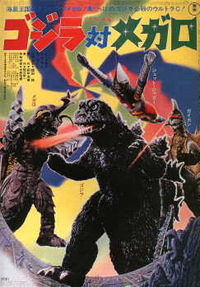
Godzilla vs. Megalon?

How else to describe a court battle between the two titans of enterprise software, Oracle and SAP? Heavyweights, both.

On March 22, 2007, Oracle filed suit against SAP alleging corporate theft. Per Oracle's filing:

"This case is about corporate theft on a grand scale, committed by the largest German software company—a conglomerate known as SAP," the lawsuit says. "From that Web site, SAP has copied and swept thousands of Oracle software products and other proprietary and confidential material onto its own servers."

My initial reaction to the news was "Whoa. SAP just made a big mistake". In the fullness of the news cycle, however, further details arrived, via a story in one of last week's issues of the WSJ (subscription req'd) entitled "SAP Unit Denies Oracle's Claims":

According to the complaint, TomorrowNow in some cases accessed information using log-in information for Oracle customers with expired support contracts. In other cases, TomorrowNow accessed information beyond what customers were entitled to access, according to the suit.

My reaction after reading this bit of news, in a story focused on SAP's proclamation of innocence, was that Oracle's position isn't quite as iron-clad as it had first appeared to be. 

I'm not the only one who thinks so. Wired Magazine, in an interesting article, also from last week, entitled "Is Oracle Using Computer Crime Law to Squelch Competition?" questions how different the case would be had the Oracle customers simply provided written manuals in their possession to the SAP subsidiary. Further, Jennifer Granick, the author of the Wired article, doesn't pick a likely winner in the case, but seems dismayed at the prospect of Oracle's succeeding in their suit, but doing so simply because the access was electronic rather than physical.

There's a larger issue that occurred to me in this matter, however. I'm no Oracle maven, but I remember quite vividly the marketing campaign Oracle ran earlier this decade touting "Unbreakable: Oracle's Commitment to Security". Ever since the 2002 debut of that campaign, naysayers have been a dime a dozen. In fact, Oracle itself, by its actions if not its advertising rhetoric, has admitted as much. No less a luminary than Bruce Schneier, founder & CTO of BT Counterpane was quoted thusly:

When they say their software is unbreakable, they're lying.

Ouch. That could have left a mark, directed anywhere other than at Oracle's marketing department, I'd guess.

But unless Oracle has dispensed with the fiction that they, alone in the technology world, are capable of providing a secure database, application, or portal, it would seem as though they're begging for further ridicule when complaining that SAP (via its TomorrowNow subsidiary) was able not only to get into Oracle's systems with expired passwords, but that SAP was also able, as if by magic, to access areas to which those same customer passwords were not authorized.

Friends of mine with cooler heads have pointed out that, if Oracle were attempting to get a customer to sign a new maintenance agreement, they might well have avoided disabling access for those expired accounts. My rejoinder? That still doesn't explain or excuse the fact that their security over this information must be marginal, at best, if they allowed access to items for which the customers weren't authorized.

And one logical conclusion a court could, but wouldn't be forced to, draw, is that Oracle didn't think highly enough of the supposed "corporate secrets" to even put a lock on the door.

Advantage, SAP?

(also posted at a issuesblog.com)

Posted by Patton Patton on   |   § 0