

Not Polite
I think I might like to buy this.
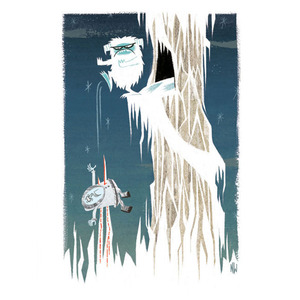
The website of the artiste. The fire-breathing sasquatch is also cool.
Posted by
Buckethead
 on
| § 0
on
| § 0
on
| § 0


Random posts on general randomness, motivated by a general laziness and ennui.
I think I might like to buy this.
The website of the artiste. The fire-breathing sasquatch is also cool.
on
| § 0
Johno peeks his head from his burrow and sends us this:
on
| § 0
[ You're too late, comments are closed ]
This might actually be quote of the month, come to think of it, but it's early yet.
Honesty may be the best policy, but it's important to remember that apparently, by elimination, dishonesty is the second-best policy.
- George Carlin
 on
| § 2
on
| § 2

While my wife is away schmoozing with music bidness types for her band, and the boy is in Ohio with Grandma - it's just me and the girls. And since they can be distracted with Dora the Explorer, I actually have a moment to think.
I thought I'd clear out a backlog of interesting stuff I've seen.
Giving women the right to vote really was a bad move:
Did Women’s Suffrage Change the Size and Scope of Government?
Giving women the right to vote significantly changed American politics from the very beginning. Despite claims to the contrary, the gender gap is not something that has arisen since the 1970s. Suffrage coincided with immediate increases in state government expenditures and revenue, and these effects continued growing as more women took advantage of the franchise. Similar changes occurred at the federal level as female suffrage led to more liberal voting records for the state’s U.S. House and Senate delegations. In the Senate, suffrage changed voting behavior by an amount equal to almost 20 percent of the difference between Republican and Democratic senators. Suffrage also coincided with changes in the probability that prohibition would be enacted and changes in divorce laws. We were also able to deal with questions of causality by taking advantage of the fact that while some states voluntarily adopted suffrage, others where compelled to do so by the Nineteenth Amendment. The conclusion was that suffrage dramatically changed government in both cases. Accordingly, the effects of suffrage we estimate are not reflecting some other factor present in only states that adopted suffrage. [...]
More work remains to be done on why women vote so differently, but our initial work provides scant evidence that it is due to self-interest arising from their employment by government. The only evidence that we found indicated that the gender gap in part arises from women’s fear that they are being left to raise children on their own (Lott and Kenny 1997). If this result is true, the continued breakdown of the family and higher divorce rates imply growing political conflicts between the sexes.
Yes, women’s suffrage really did herald the end days of America. The result of giving women the vote has been an ever-increasing nanny state funded on the backs of increasingly sex-dispossessed betas (dispossessed from banging women during their prime years). The elevation of diversity as a moral value and the flooding of the country with incompatible third world immigrants has no doubt been a secondary consequence of suffrage for women, who naturally bring their feminine sensibilities, for better or (more usually) for worse, to the polls. This is why I have argued that the next step in this national devolution toward mindless compassion is the creation of armies of cads. Men want sex, and will do whatever it takes to get it, whether that be good or ill for society.
Hmn.
I'm also thinking about Formalism but more on that later, after I go have a beer.
on
| § 0
has a new hobby. And a good one.
on
| § 0

From the Oatmeal, source of all kinds of awesome. Like, Seven Reasons to Keep Your Tyrannosaur off Crack Cocaine. And How Long Could You Survive Chained to a Bunk Bed with a Velociraptor? Or after Kicking a Bear in the Balls? And then there is the mighty, Motherfucking Pterodactyl.
on
| § 0
It's things like this that make me want to agree with Aretae.
on
| § 0
Overheard on the Penguins of Madagascar episode my kids were watching a minute ago. Truer words were never spoken.
on
| § 2
Cory Doctorow over at Boing Boing has a review of The Upside of Irrationality, The Unexpected Benefits of Defying Logic at Work and At Home. A snip:
...there are sections in which the science of irrationality is readily converted into practical techniques for living better, and these really shine. My favorite is the section on adaptation, that is, the way in which both terrible pain and incredible delights fade down to a kind of baseline normal over time. Ariely points out that adaptation can be slowed or even prevented through intermittent exposure to the underlying stimulus -- that is, if you take a break, the emotional sensation comes back with nearly full force.
Here's where our intuitive response is really wrong: we have a tendency to indulge our pleasures without respite, and to take frequent breaks from those things that make us miserable. This is exactly backwards. If you want to maximize your pleasure -- a great dessert, the delight of furnishing your first real apartment after graduation, a wonderful new relationship -- you should trickle it into your life, with frequent breaks for your adaptive response to diminish. If you want to minimize your pain -- an unpleasant chore, an awful trip -- you should continue straight through without a break, because every time you stop, your adaptive response resets and you experience the discomfort anew.
This is so true. My mom has successfully managed to do this with books - she is able to read a good book over a period of weeks, parcelling it out into bite sized nibbles. Me, I can't. The better the book, the faster I read it, and - as I've long suspected, I get less enjoyment out of it. I'm better at the miserable experiences, I'll plough right through 'til it's done.
I wonder if the author has any advice for procrastination - once I start a painful job, I'll finish it, but my problem is starting it. The pain of knowing you're avoiding something that needs to be done is real, but it's less in the short term than starting the thing.
on
| § 0
It's amazing how these women think they can get away with anything.
Hey, wait a minute, maybe I should call the police, too...
on
| § 0
Is on his way to Festung Buckethead and when he gets here, he'll be bringing in his purple velvet bag:
And while I was at it, I also pre-ordered:
Rainbow of Blood is a sequel to Britannia's Fist, an alternate history novel where the United States and Britain go to war in the middle of the Civil War - over the British connivance with the Confederates in building armored commerce raiders. It's somewhat like Harry Harrison's Stars and Stripes series, which also had the US and Britain at war, but over the earlier Trent Affair. Solid historical speculation, and not bad fiction. Tsouras has edited numerous volumes of alt-history essays, most of which are pretty good.
Charles Stross is one of my favorite sf authors right now. I just order anything he publishes. In this case, this is volume three of a really fun series where Cthulhoid monsters meet bureaucracy in the person of a UNIX geek.
Oh, and I got this, in honor of GeekLethal:
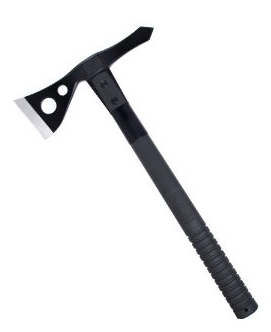
Thanks to everyone who offered suggestions, and thanks Dad for being an enabler for my addiction.
on
| § 2

Glommed from GraphJam
Speaking of low-brow humor and memes, this, via an email from my ever-precocious daughter: One definition of "meme", from the always interesting WolframAlpha
on
| § 1
The deathmarch continues, with new entries from Foseti, Devin and Aretae. A lot of static seems to be arising out of confusion over terminology. Good government, strong government, weak government... But what does it all mean? I think we need to back away from the word good. The libertarian (we'll take Aretae as an example) feels that the government that governs least governs best. So, by definition, any government that exists, is bad. Maybe a slight exaggeration. Foseti, Devin, and Formalists feel that weak government is necessarily bad government. So we mean different things when we say good. Obvious? All of our discussions on this center on three issues - whether a government is competent, whether it is strong, and whether or not it is interventionist. So, a three-axis rating could describe a government in a way we could all agree on; and then we argue over what is most important to the success, failure, or irrelevance of that nation and system. A competent government makes good choices, does whatever it is charged with doing efficiently and well, and selects good leaders. A strong government can make choices, enforce order, protect its territory, etc. An interventionist government is one that sticks its fingers into all the orifices of the public, telling them what and where they can and cannot do things. So, our favorite so far seems to be late 18th Century England. How does it rank? I think we could fairly describe it as on the whole competent, strong and non-interventionist. (Could we replace small/big for interventionist? I don't know if that captures it. But a large government is going to need to do something with its time, and an interventionist-minded gov't is going to get big.) We might describe UK 1760 as a 10,10,0. Its opposite might be USSR 1990 - 0,0,10. Our current USG 2010 is perhaps a 5,5,7 and trending lower on the first two and higher on the last. We can quibble about the rankings if we like, but this would separate the idea of "good" from the other qualities we're discussing. Aretae can admit that a government is strong and competent without admitting immediately that it is good.
on
| § 0
Found this on Foseti. It's like reading Joyce's Ulysses, but without the comforting assurance of generations of fey English majors that what you are reading is indeed a classic of western literature, no matter how little sense it's making to you as you read.
Start here, if anywhere. And here's a sort of concordance/glossary that may help you understand what you are reading. Or may not. I don't know if I do, but it's fun trying to imagine that I do. There does seem to be something behind the mangled spelling and odd terminology. Whether that something is good, I don't know. I hope he's not typing this in software that has spell-checking, because otherwise the red squigglies would blind him.
From "i luvs you allls o ye of little faith"
to all the spinsters with cats
who teh fed tricked into spinsterhood/serving debt lxolllozlzl
to all the fanboys in ther single mom’s basements
whose dads they never knew because the fed tookawy fatehrhood lzozlzl
to all the broken familes
who were split up by the need to make two salaries to feed the kids
to all aging necon womenz celeberating secretive tapings of butthex without teh girlths conthent lzozllzlzozlzl they tircked you too
to all the spinster chix again i am sorry they sdesouled you
in asscokcing sessins drugged you up on prozac
told you to abort your kids no wonder your’re d[pressed and all fucjked up no lozlzlzlzling here
my heart goes out to you while tucker max & goldman sax laugh zlzolzlzl
too all the aborted fetushes we ask for forgiveness we deserve not and to all those tricked into aborting the gift of life lzozllzllzl we forgive u too and pray for teh fethuses, but not in school as prayer is illegal in school lozlzllzlz
[wik] One of GBFM's favorite word is butthex. But it's not pronounced butt-hex. You are asked to imagine that Barney Frank is saying it - something more like but-thex.
[alsø wik] Not really germane, but considering what I just linked, who the fuck cares? GBFM uses a the pure quill variant of the Hemingway Black WordPress theme that once powered perfidy before we cleaned house and moved to this new, Buckethead-designed theme.
[alsø wik] I don't think we've ever had a more appropriate use of the 'deranged scribblings' category here on perfidy.
[wi nøt trei a høliday in Sweden this yër?] I just noticed that there is a post at GBFM entitled, 'how the federal reserve system created the PUA community lzozlzlzloozlzllzll!! they DO NO wan t the men to read mises or hayek or jefferson or the us constitution lzozlzlzlz they want to keep the men in the fiat masters’ cave — the fiat butthex matrix — “gaming” and fighting over the table scraps of all the desoulaed, haggaard, std-ridden, vicious, gold-digging, cold, defeminized, prozac-addled womenz the fiat masters buttthexed and deosuled in college during teh primae nocate ceremeonies, instead of manning up and fighting for their dvine irght to something far greater — an honorable, virtuous wife. lzozllzllzllzozzlz' - I believe I'll save that one for lunch tomorrow.
on
| § 3
It's been about a year and a half since I last posted anything at all on Perfidy, and even longer since I posted anything of substance.
The fact is, I just haven't been all that evil recently, and certainly not discriminating. What I have been doing is writing up a storm. In the last 18+ months I have, in no particular order, completed three novels, landed an agent, had said agent retire only days before I was going to fire her anyway, and in turn landed a remarkable pair of agents who are doing their damndest to sell my stuff. I've also refurbished my author website - twice - and relocated my webcomic so everything is now in one easy-to-find package on www.ianthealy.com. It's hands-down the best place to keep track of what I'm doing and to watch the cavalcade of guest stars as they parade through every Saturday (you fellow Ministers are encouraged to submit something should you wish to do so).
So with that brief update on my insanity, I shall return to work on my latest project, a slipstream inspired by such oddness as Six String Samurai, Circuitry Man, and The Bible. The title, I hope, says it all: Hope and Undead Elvis at the End of the World.
Yeah, it's like that.
 on
| § 0
on
| § 0

I subscribe to Slickdeals - it's an rss feed that gives me links to user-located internet shopping deals. Moderately useful. By combining slickdeals and consumer reports, I located a very nice, very large tv for a quite reasonable price. So this morning, I saw this in my feed:

I've not the slightest clue wtf a compound action bypass lopper is, yet I feel compelled to order one. I don't even want to find out what it is. That would just spoil it.
on
| § 0
on
| § 2
I mention the Bilderbergers in a post, and on the same day, an article about same appears on Drudge. It must be a conspiracy or something. My mustache is all a-twirl.
on
| § 0
The Onion scores again. I have to say, that if the Supreme Court were to actually adopt this method of writing opinions, a lot more people would be reading them.
on
| § 0
Here's a couple more interesting bits:
on
| § 0


