Let's get right back into it

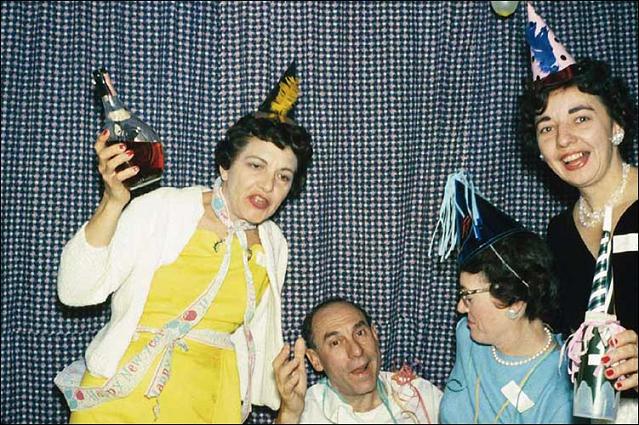
Having returned from flyover country seventeen pairs of socks richer, and bearing the bounty of "The Family Guy" on DVD as well as a new television, I welcome all and sundry back from their nondenominational yet subtly Judeo-Christian state-supported holidays.

Best gift: Rose Beranbaum Levy's "The Bread Bible", which contains enough wonkery for ten cookbooks (want to compensate, gram for gram, for the hydration levels of the salt you're adding to a recipe? Ever wondered how to convert recipes calling for active dry yeast into instant yeast? Ever wondered what the gluten-content difference was between Gold Medal and King Arthur all-purpose flours?), and makes incredibly good bread to boot. Well, I made incredibly good bread, but it was Levy's recipes. Highly, highly recommended.

Most necessary gift: Seventeen. Pairs. Of Socks.

And so, let's awaken from our tryptophan and sucrose slumbers to kick off the new year by reading this powerful and insightful piece by Aziz Poonawalla on being Muslim and being hated by other Muslims for your beliefs. On a pilgrimage to a holy spot in Yemen, he ran into trouble. Excerpt:

Inside... stood the young men, one armed with a nasty-looking rock. He made it clear in no uncertain terms (and despite the language barrier) that if we bent to our knees to prostrate, they would attack us. We were a small group of a half-dozen pilgrims surrounded by an entire village - but it was still enough to make me almost blind with rage. I could have snapped this fanatic in two, given his relative undernourished size. But even if we survived a confrontation, there would have been serious repercussions for the other pilgrims who were arriving later that day and the rest of the week. We were forced to grudgingly retreat, humiliated and seething with frustration at having our simple desire to express our devotion thwarted.

On the way out of the building, I deliberately dropped something I was holding right near the gravesite and then knelt to pick it up. In so doing I sneaked a hurried pseudo-prostration into my action. It escaped the notice of the rock-wielding fanatic and was, in retrospect, a foolish thing to have done. We encountered no resistance as we made our way back to our useless driver and vehicle, and began the long and bruising drive back to Hutaib.

Posted by Johno Johno on   |   § 0

2004

Well, here we all are. And we are all here, which is a good thing, given that a big chunk of the planet can't stand us right now. Feel free to insert my standard "bush sucks" boilerplate here. But...my light reading for the plane ride home was Irshad Manji's "The Trouble With Islam". It's light fare, but quite sobering. She's decidedly on the opposite side of where I've been on certain issues, with regards to Islam...a lot of what she says rings true. If so, and I can't find a way around it, certain opinions of mine are going to have to change...

Greetings, 2004, the year of the robot. We are all on autopilot now, automatons entering a maze, programmed with a rule set for some reality. Let's hope our maze is roughly the same.

Posted by Ross Ross on   |   § 0

Perfidious Comment Policy

Comments are a service provided by the Ministry of Minor Perfidy to you, the gentle reader. This service is subject to revocation on a retail or wholesale basis at the whim of the Ministry. Only one individual has thus far incurred our wrath sufficiently to be permanently banned. Don’t be that guy. Any advertisement made in this space is subject to a fee of $500 per ad. Posting an ad indicates your agreement with this fee schedule. If you are a comment spammer, please immediately die a prolonged, agonizing and messy death. After you pay the fee.

Swear, curse and spit if it makes you feel better. Generally speaking, saying “fuck” a lot doesn’t improve the quality of your writing, unless you’re Charles Bukowski. I don’t think you’re Chuck, though. In any event, we won’t delete your post for foul language. As to general purpose offensiveness, we all have pretty thick skins and you’d have to be a real jackass to get a post deleted for that reason. So don’t be that guy.

To sum up: play nice, share your toys with the other kids, and pretend you’re having a nice conversation with friends at your favorite restaurant. And remember, we’re watching you.

Posted by Ministry Ministry on   |   § 0

"Gripping"

Blogmatron Kathy Kinsley has an interesting piece up about how the Left (and, she admits, the right) in the US are "gripping." Gripping is, to wit, "If your way of handling a situation was to take a death grip on anything solid and hold for dear life, you were gripping."

I've seen the behavior on both sides of the fence (the marriage Amendment idea is a case in point on the other side). I linked this mostly because the concept is interesting. I've spent enough time on boats to know exactly what he means. I've also seen the reaction in cultural contexts (people living in other countries who speak only to fellow expats, preferably from their own country). Gripping when they should move with flow.

I think a lot of Americans, and not just the left, have been gripping since September 11, 2001. I've seen more stridency on both sides, less willingness to listen and more insistence on 'my way is the only true way™'. That is not a good thing. We need to learn from each other. We must adopt the best ideas from all sides. We must adapt to the changes, move with the ocean's swells. Gripping's just going to keep us white-knuckled in the same spot forever.

Absolutely.

Posted by Johno Johno on   |   § 0

Market Economics, at work for you

In Cleveland, they're learning that an unregulated utilities market only works if the utilities sector behaves like a... um... market.

Ohio's lawmakers and energy policymakers once thought free-market competition would drive down electric rates as independent generating companies and power brokers competed against utilities for residential and commercial customers.

So the General Assembly in 1999 rewrote state law to eliminate the regulated generation rates under which electric companies had long operated as virtual monopolies.

Told to work out the details, state regulators created a so-called "market development period" that began in 2001 and is supposed to climax in January 2006 with the birth of a robust, competitive market.

But with three years down and two to go, only a handful of outside companies have entered Ohio to sell power.

And the promised deep discounts for residential and small commercial users who signed up with alternative suppliers have not materialized for most customers. In fact, commercial customers of FirstEnergy still pay some of the highest rates in the country.

How this happened is as complicated and thorny as deregulation itself.

Experts say the failure of California's wildly ambitious deregulation plan and the collapse of Enron Corp. helped thwart the growth of a national wholesale market as a source of electricity for power marketers.

The insolvency of nearly a half-dozen other energy trading companies further stunted the wholesale market's growth. That, in turn, made the creation of local retail competitive markets all but impossible.

Moreover, the lack of coherent federal policies spelling out what authority regional transmission organizations should exercise over utilities has kept the movement of bulk power across the nation's electrical grid expensive and unreliable.

Still another part of the problem, say some critics, can be traced to the design of the deregulation law itself and to the rules that state regulators wrote.

The law allowed the monopoly utilities - FirstEnergy Corp., American Electric Power Co., Dayton Power & Light Co. and Cinergy Corp. - to continue collecting for old construction costs, including nuclear power plants, until Dec. 31, 2005. The utilities successfully argued that they had undertaken the construction projects as regulated monopolies and the costs otherwise would be "stranded."

The Public Utilities Commission of Ohio agreed to allow FirstEnergy to collect a total of $8.7 billion to compensate the company for those costs. Always part of the electric bill, the charge now appears as a separate item called a "transition charge" and represents about 30 percent of the bottom line.

And consumers who switch to another power company still must pay the transition charge.

Critics think that's wrong.

Me too. Market solutions to public problems never work if the effort is half-assed. This is a cautionary tale for advocates of market solutions to everything under the sun (me included). Sure, the market could make the world a beautiful place, but only if it works perfectly. Kind of like they used to say about Communism.

Posted by Johno Johno on   |   § 0

Live Long, Die Slow, Leave a Beautiful Album

We're entering an era in rock history where "live fast, die young, leave a beautiful corpse" will soon be replaced with "live long, die slow, leave a beautiful album."

The last two years have seen several high-profile last albums from dying artists, and I suspect more will be on the way as artists from the golden age of Rock confront their mortality. Joey Ramone's final effort, 2002's "Don't Worry About Me" and Warren Zevon's August 2003 release "The Wind" were both recorded as the artists raced the clock against cancer, and Johnny Cash released three albums between being diagnosed with and dying of Parkinsons-related ailments.

There is something novel about music written by dying songwriters. Even if the material has little to do with death on the face of it, their condition, as long as the listener knows about it, inevitably colors the listening experience. It's part of a larger package of "performativity" issues that pointy-headed academics (like me, sometimes) talk about, and which boil down for our purposes to the relationship between a fan and the musician they venerate, and how that relationship works in the fan's mind.

Part of popular music's appeal has always been in the persona the performer creates. From the on-the-spot character plays and dying-children ballads of Vaudeville and music halls to Jimmie Rodgers as "The Singing Brakeman," Johnny Cash as "The Man in Black" to Curt Cobain as "Tortured Genius," how an artist presents themself is tightly bound up with the music itself. Without the personas, the music would still stand up, but the songs are richer for them.

Paradoxically, in light of the importance of image, rock has always thrived on asserting its "authenticity." Long before the first rapper kept it real, rock and roll musicians were downplaying artifice, theatricality, and forethought in favor of instinct, spontaneity, and honesty. Of course, to present yourself as honest can take a lot of planning, acting, and hard work (viz. Jimi Hendrix, Bob Dylan), but that's beside the point. The point is, popular music is often assumed to be (or presented as) an unedited communique' from the singer's heart to you. Indeed many artists enjoy the interplay between their "real" selves and the characters they create, and this interplay only works if the perception remains intact that the artist has a "real" side visible to the fan.

And what better way to get "real" then with death, the ultimate authenticity trip?

Some artists have made careers out of audiences predicting (or celebrating) their suffering and death (Keith Richards, GG Allin, Kurt Cobain, Iggy Pop, a whole slew of rap guys). Can you imagine a world in which Keith Richards had died shortly after recording "Sister Morphine"? Can you imagine the towering legend that he would be? Can you imagine a world where Kurt Cobain had entered rehab? Can you imagine his decline from relevance? The possibility of dying suffuses our (my?) experience of Keith's and Kurt's work to the point that it's shocking that Richards is alive, and not at all shocking that Cobain is dead.

The interplay of an artist's persona and the reality of death gives power to the music created under these conditions. What we're seeing today is a new twist. Whereas Janis, Jimi, and Jim Morrison all gained in stature after their deaths as their legends grew unhindered by the real person, that was accidental. And although a dead Elvis is a saint and a dead Sinatra is no longer a wife-beating cad, death in their cases too only uncoupled myth from reality. But now, artists from an autobiographical songwriting tradition are singing about the end of their own lives, taking the opportunity to fuse their "real" inner lives with the public personas they inhabit, and actively mold the outcome. So far, the first efforts along these lines are excellent works of art.

But isn't it a little weird that watching our heroes chronicle their own death holds such an appeal? I mean, George Jones sings about drinking killing him on literally every album, and every couple of years almost manages to pull it off. One of these times will be the last. Tupac Shakur sang about dying over and over, and his posthumous body of work exceeds that released during his life. Pete Townshend eventually backed off his "hope I die before I get old" schtick, because he was getting old and the sentiment was getting weird.

It seems to me that, like with most other things, rock fans use musicians as scapegoats for their own darker urges and deathwishes. It is exhilarating to see someone walk the line between junkie and corpse, and it is profoundly satisfying to honestly mourn the death of someone who has touched your life deeply yet doesn't share your last name. I wept for Johnny Cash when June died, and I wept again for the man himself, but at least it's not my wife, father, or mother in the grave. I mean, it's cool and all, but I just want to call it what it is.

That being said, it is right and good that the first Rock and Roll Death Autobiographies are from Warren Zevon, Joey Ramone, and Johnny Cash, three artists whose personalities seemed always to shine through the characters they created. Death settles all questions of authenticity.

Listening to Joey give the Ramones Treatment to Louis Armstrong's "What A Wonderful World" or sing "I want my life, it really sucks" in "I Get Knocked Down," you understand the pain Joey is in yet understand that he approaches death the way he approached life-- with equal measures humor, introspection, and cartoonish fervor. Ditto for Warren Zevon. The last track on "The Wind," "Keep Me In Your Heart For Awhile," is an elegiac, touching, and humble capstone on a career that encompassed everything from archly intellectual smartassery to lacerating fury. Here the weight of his young man's anger seems to be stripped away as Zevon accepts that he won't be here anymore very soon. (Ironically, Zevon's 'meditiations on death' album was 2001's "My Ride's Here," recorded before he was diagnosed with cancer, and I suspect the irony was not lost on him.) Finally, if there is any justice in the Christian tradition, I know that Johnny Cash is sitting on a lawn in heaven next to June, and they both have guitars.

This article also appears at blogcritics.org.

Posted by Johno Johno on   |   § 2

Can't find the beat with both hands and a bop gun...

N.B. Revised extensively on the advice of commenters including my wife, who is more wise than I.

I am a man of many peeves, so many that I don't have pets. I'm more like a peeve farmer. And the "white person clap" is the first among them.

"What?," you ask? Well, I'll tell you! The white-person clap is when one claps one's hands on the first and third beats of a measure of music, no matter whether it's the 1812 Overture-- where it is almost appropriate-- or "Funky Drummer"-- where it's just not. The net effect, when such people inhabit an audience alongside more soulful people clapping on two and four, is that claps occur on all four beats of the measure as the two traditions collide. Ugly, ugly, ugly, and decidedly unfunky.

This time of year, PBS' programming is nothing but wall-to-wall music performances punctuated by reruns of The Vicar of Dibley. The same-ness of the performances is both stunning and discouraging. From the dude with the frizzy mullet and the white piano to former members of Elvis Presley's band with special guests, every single audience is the same: uniformly anglo, trending older, and uniformly unable to distinguish weak pulses from strong ones. 

Here's what happens every time: the big show finale comes... the house band kicks into some ridiculous arrangement of Proud Mary featuring The Canadian Brass... the band is tight, the backbeat is heavy on TWO and FOUR, and 1500 white people in boat shoes begin swaying back and forth and clapping on ONE and THREE like it's goddamned Lawrence Welk.

I swear to God, every time I see this shit it makes me crazy. We've had sixty years... sixty fricking years... of Rock and Roll... of TWO and FOUR - these people grew up on Little Richard, Elvis and Aretha... and they still can't find a backbeat. The JB's might as well be a polka band! The MG's might as well be Peter Paul and Mary! What the hell is so hard about feeling one TWO three FOUR?

It's not even like people are being asked to feel funky shit like "bom rest CHICKadika bom bombom CHICKadicka." Leave that to the pros. It's "boom CHUCK boom CHUCK boom CHUCK boom CHUCK." That's four on the floor, people, you grew up with it! There are no excuses! What the hell?

Jesus Christ! &*%! @?^!!!!

*panting*

The December Award for Inadvertant or Vertant Perfidy goes to... PBS, because I can. Stank you very much.

[wik] Duane, on my crosspost at Blogcritics, notes the following:

Traditionally (and there is a tradition here, oh yes!), the white person's clap consists of clapping on the 1 and 3 beats of a 4/4 meter, when the natural emphasis is on the 2 and 4 beats. You can see that in large audiences when a bunch of dorks are one beat out of sync with the music, so the net effect is that there are clapping sounds on all four beats -- the dorks (about 1/2 the crowd) and the rest (the eyerolling other 1/2) contributing equally. Quite maddening. Who are these people? Why are they mostly white? I used to blame Lawrence Welk and the polka, but now. I just don't know.

I don't know either, Duane. Maybe there's a vaccine? 

Posted by Johno Johno on   |   § 0

Freedom Tower

Last week, the design for the building to replace Manhattan's World Trade Center towers was unveiled. It's a tall office building topped with an open scaffolding which will contain windmills to provide a certain percentage of the building's power. Cool! Better yet, the design contains elements that will echo the surroundings: the scaffolding will resemble the cables on the Brooklyn Bridge, and the topmost spire is meant to echo the Statue of Liberty's hand thrust skyward.

The new building will include observation decks and a top-floor restaurant, and if they could find a way to throw in a super-secret piano grotto that would also be cool. Who do I call for this?

I almost forgot to mention-- in a grand New Yorkish gesture of "fuck you" defiance, the rebuilt World Trade Center will be the tallest building in the world.

[wik] Will Baude of Crescat Sententia nails it: "I do think there would have been something poetic about the twin piers, or a simply adorned void, but replacing the World Trade Center with the tallest building in the world is a pleasantly arrogant thing to do."

[alsø wik] Is the name "Freedom Tower" Orwellian? You decide!

Posted by Johno Johno on   |   § 0