Highbrowish

Entertainment, music, the finer things in life; and their opposites.

Talking Nicely About Not-So-Nice Talk

Recent conversations with co-workers have turned to etiquette, manners, and other socially constructed behavioral governance. We swapped some stories about rude people, rude places, and entirely rude populations. I riffed a bit on the difference between being crotchety which, as a native Yankee I certainly am, and being rude, which I rarely am on purpose.

Anyway manners are on my mind. Who are the rudest people you've ever met as a group, ie Mets fans, cab drivers, retired accountants, French speakers, fat bastard Belgians...? Where is the rudest place you've ever been? That is, not necessarily the least developed, but where the population at large seemed universally ambivalent to your continued existence?

Posted by GeekLethal GeekLethal on   |   § 13

Franken More Boring Than Baseball

So there was a Red Sox game on the radio the other day, which means I had no Howie Carr to listen to on the drive home. The only thing more mind-numbingly boring than watching baseball on television is hearing it on the radio. My back up in such instances is to listen to Sean Hannity, who I can stomach in small doses, until he mentions God one time too many or plays an awful song and it sets my teeth on edge, and it's about that time in the drive that I lose reception anyway.

But this time was different. I switched over to hear Hannity, and found the same baseball game on THAT station (grrrrr). I started scanning, and found that a local station was broadcasting the Al Franken Show. Last I knew no one in the area had it, so I was surprised. And I listened for about 40 minutes.

I was shocked to hear something more boring than baseball.

First of all, the woman Franken's with comes across like a total bonehead. Not quite as annoying as more famous insufferable sidekick Robin Quivers, but not half as entertaining either. But more importantly, Franken had no chops. He had the "Bush lied!" bit down, but that's hardly original, or even interesting. The focus of the segment I heard was alot of tape from Bill O'Reilly and Rush Limbaugh, taken (presumably) from recent shows. He was trying to refute specific things each had said or claimed. You might think that would be worthwhile to hear, you know, refuting the haters point by point, but it wasn't.

Franken was the sonic equivalent to the old Saturday morning PSAs about reading and pollution and crying Indians. Sounds like it should have something behind it, but it's just more background noise. I should care about it, but its sandwiched between cartoons so how serious can it be? Franken is sandwiched between other hippy-friendly programming, so how seriously can I take him?

I think Al missed the point of this whole thing. People respond to right wing bombastic broadcasting because it's entertaining. Not for the insight into politics listeners get, but for the entertainment they get. Franken went into this equal parts debate team captain and "Bu$h Lied" giant puppet head driver, and it fell completely flat for me.

I'd expected more from a comedy writer.

Posted by GeekLethal GeekLethal on   |   § 4

Winds of Change.NET: What Does "Anti-American" Mean In America?

One more time: On being anti-american, WoC refers to Schuler's bit
.
A few nice thoughts in there, but...From the anti-gay constitutional amendment people, we've learned that we love the sinner, not the sin.

It seems highly appropriate to apply that to America itself.

We can love a child, but a child is not a perfect being.

Didn't the Bible have something to say about pride? Why is pride so often associated with patriotism?

Personally, I think pride should be taken, at most, in something you've done or earned. Taking pride is something you simply are is, well, kind of pompous. Schuler said:

"If you look down on or despise your fellow Americans (or anyone else for that matter) you may have a lot of great and wonderful qualities but you are not pro-American."

Taking pride in something you are is looking down on other people, who aren't.

Posted by Ross Ross on   |   § 3

Jim, ya canna' change the laws of aging!

Actually, that's just a horribly tasteless headline to note the sad news that James Doohan, Mr. Scott, of Star Trek fame has been diagnosed with alzheimers. Why do I even post this? Because getting old scares the living hell out of me. I live in my mind and dread above all else the possibility that my memories and creativity may one day be stolen from me without my even knowing. I don't care for things, for stuff, which is good because at this rate I'm never going to have any stuff anyway, but I DO care about the life of the mind. That's why my wife looks at me funny when she finds out that one of the boxes we schlepped all the way to Massachusetts contains nothing but my notebooks from high school-- chem notes, Spanish, doodles, unfinished stories, all useless crap that I'll never need again. But that box and the others like it are my brain's offsite storage, making room in the active brain space for useful things: the rules to Advanced Dungeons and Dragons 1st Edition. All the words to Monty Python's "Philosophers' Song." The causes and outcomes of The Whiskey Rebellion. The recipe for Godzilla Punch. What am I without these things?

Posted by Johno Johno on   |   § 3

Baby, If You've Ever Wondered...

Wondered, whatever became of other dorks who had to secretly pine for Bailey because you just knew Jennifer would break your heart and she was so fake anyway but saw that Travis could have bagged Bailey whenever he wanted but she dug Fever and besides Travis was Mr. Carlson's boy toy....

Um, someone started a new WKRP blog here.

Posted by GeekLethal GeekLethal on   |   § 3

Marlon Brando leaves his body behind

Marlon Brando sleeps with the fishes. CNN says it's from "unknown causes," but anyone who has watched his weight balloon over the past few decades knows better. The legitimate news outlets can do Brando a proper obit better than I ever could, so I will leave it to them to do the chronologies, rave about his career, and wonder at his eccentric behavior. I have some thoughts of my own.

Of all the actors of his generation, Brando understood the power of raw physicality better than anyone; he used his entire body as an expressive instrument. His first roles capitalized on his ability to project untamed raw violence and sexuality with an undercurrent of confusion and rage. His best early work, “The Wild One,” “On The Waterfront,” “A Streetcar Named Desire,” all benefit from this talent. Entire books have been written on John Wayne’s physical vocabulary, and his conscious nods to classical statuary. But where Wayne, for all his grit, could throw a hint of effeteness into the mix when required (don’t believe me? Look at how he stood! Hip to the side!), Brando was never less than a bull. Even in their prime, noted overactors like heirs Al Pacino and Robert De Niro could more than echo the ferocity of Brando’s rages.

But the bull learned to be subtle too. Building on his Method roots acting on the stage, Brando came to understand that the camera sees everything. A mere twitch of Brando's massive eyebrow could reveal entire universes below the surface, and the hunch of his shoulders could connote rage, confusion, self-loathing, defensiveness, or weariness. The same man who played Stanley Kowalski as an inferno played Vito Corleone as a smolder.

For a striking example of his versatility in this regard, compare Corleone to Colonel Kurtz. With nothing more than some cotton in his cheeks, Brando played Vito Corleone as a hunched old man who, though once physically powerful, was now terribly weak. Kurtz, on the other hand, emanated sheer black menace. Using the same set of postures—even sitting the same way—Brando managed to convey two completely opposite characters. Many under-actors, Ed Harris, Kevin Costner, David Duchovny, sometimes act entirely with their faces, and sometimes only with their eyes. Brando could act with his scalp-- “Apocalypse Now” proves it.

It is ironic that the greatest body actor ever to walk a silver screen got larger as his talent waned, as if he was cloaking his talent in fat and ego until he was a waddling joke in a muu-muu, grunting his way through embarrassments like “The Island of Dr. Moreau” as if his mere presence was enough to lent gravity to the silliness. And now, fittingly, his body is all that’s left.

Posted by Johno Johno on   |   § 2

Girl, You'll Be A Woman Soon

And what a thin and bony pair o' women ye'll be!

Happy birthday to the Mary Kate and Ashley Olsen Phenomenon Worldwide Enterprises Ltd., who turn 18 this weekend.

AND they just graduated high school!

I'm sure we're all so very, very proud.

Posted by Johno Johno on   |   § 2

'Scuse me while I whip this out

In a post earlier this week on Bill Parcells, Larry Bird, and the Whole Big Race Thing, I observed that I think

it's funny that affirmed non-liberal Patton also acknowledged the potential third-rail-ness of the question by [jokingly] prefacing his first comment with "well, not to sound illiberal..."

Has Political Correctness turned us all into a nation of pussies, or is merely an epiphenomenon of something else? Last night I was watching a bowdlerized "Blazing Saddles" with every "n**ger" cut out. It wasn't the same movie. Can you even imagine a film like Blazing Saddles getting made today?

Patton latter responds

"we're all just a bit too thin-skinned, which has led us to a place where normal discourse, particularly in politics, but also in art, sport, and other areas, is either neutered to the point of uselessness or poisoned to the point of, well, moveon.org, DU, Ann Coulter, KOS, or a whole bunch of other shrieking nitwits. Picture a ballpark vendor: "Umbrage! Get your umbrage here!"

When I was a serious academic historian, I did a lot of work in African-American history, particularly on the images of black maleness in the late 19th and early 20th centuries as captured in folk ballads and popular song. Characters such as Stagger Lee (later memorialized in the 1956 Billy Price hit of the same name) represented a subtheme of African-American masculinity, an alternate road to renown and greatness separate from the mainstream of American culture. These songs acknowledged that the traditional avenues of the American Dream (land ownership, equality before the law, etc. etc.) were closed off to a great many people in the aftermath of Reconstruction, and instead recounted tales of resistance (to use the Marxian term) in the form of unfettered badassery. Mediating between stories of real criminals, sometimes Robin Hoods but often not, and artificial figures emulating them, the badman ballads of the 1885-1920 era presented homegrown figures to celebrate (and loathe) for people stung by the reversals of Reconstruction and the failed promises of deliverance its end represented. Stagger Lee and his latter-day decendents such as the Black Panthers, Iceberg Slim, Sweet Sweetback, gangsta rappers, and Dee-bo from the movie "Friday" represent an important ongoing theme in American cultural history that has never been fully addressed, much less studied.

But I digress. The reason I stopped working on this stuff was it was becoming too difficult to be a good historian, that is, progress along tangled lines of inquiry with an open mind, without worrying too much about political bullcrap or whether this white boy from Ohio is even allowed to speak about issues of African-American male identity, even 140 years ago. Between the tacit understanding that no serious historian would spend time analyzing the sex scenes in "Sweet Sweetback's Baadasssss Song" (a character who was named, by the way, at the age of 12 for the sweetness of his sweetback by a prostitute) for how they addressed and reinterpreted continuing themes in American cultural history, and the very overt understanding that if I were ever to present my work in conference I'd better be ready to eat a mountain of crap, I lost my taste for it. Moreover, I got sick walking on eggshells, trying very carefully not to be insensitive to all and sundry in the course of working out what all of it means.

The reason I bring all this up is to argue that, despite Dinesh D'Souza's fatuous argument, "The End of Racism" has not yet come. The major issues are sewn up, the big issues are settled, and racism has gone underground where it's harder to fight, but it's not dead. The battles now are so subtle, so intangible, that it's possible (easy, common as dirt) to go way to far to the other side and see racism where none could possibly exist. The word "niggardly," anyone?

It's very difficult to speak in a nuanced fashion about race, and even harder to evoke a nuanced response-- that is, "have a discussion". Why is it only getting harder?

Posted by Johno Johno on   |   § 7

In which Johno propagates yet another listy-type meme event

Perfidious crony Brdgt has a cool twist on the whole great movie list thingy.

[N]ame your favorite movie that these actors have been in. Not necessarily their best performance, just your favorite.

Some of these were rather hard, especially the really great ones and the really bad ones, you really had to focus on the film, rather than their performance.

Brdgt has some interesting choices, though unsurprisingly many overlap with mine. Here's my pix:

Sigourney Weaver: Aliens
Robin Williams: Good Will Hunting
Clint Eastwood: A Fistful of Dollars
Mel Gibson: Mad Max
Paul Newman: Butch Cassidy and the Sundance Kid
Brad Pitt: Fight Club
Goldie Hawn: Death Becomes Her
Audrey Hepburn: Breakfast at Tiffanys
Diane Keaton: The Godfather
Halle Berry: X-men
Kevin Bacon: Animal House
Ewan McGregor: Trainspotting
Sean Connery: Goldfinger
Anthony Hopkins: The Silence of the Lambs
Jack Nicholson: One Flew Over The Cuckoo's Nest
Harrison Ford: Blade Runner
Tom Hanks: Bachelor Party
Robert DeNiro: Godfather, Part II
Al Pacino: The Godfather

Brdgt is right; some of these are haaaard. How do you choose between the Sigourney Weaver picks Ghostbusters, Alien, Aliens, and Galaxy Quest? Much less the De Niro or Connery picks, or even little ol' Robin Williams, who was in The Fisher King and (yes, yes) Aladdin? Perceptive readers will notice that I chose Tom Hanks in Bachelor Party over Saving Private Ryan, Philadelphia, or Suburban Everyman Cries Again for Redemption. That's only because a donkey on 'ludes is comic genius of a rare and wonderful sort.

Posted by Johno Johno on   |   § 0

Harry Potter and the onset of puberty

I had a 1000-word post all ready to go on how good the new Harry Potter movie is when my browser crashed, taking everything with it. I lack the energy and will to recreate my masterpiece at this time, so I will just say this: 's great. Go see.

[wik]...and here it is.

Last Friday night my wife requested that we go see the new Harry Potter movie, "Harry Potter and the Prisoner of Azkaban." I'm glad she did. Even sitting in an un air-conditioned theater with a busted speaker with a drunken woman in the next row up vomiting loudly into a plastic bag every few minutes, I enjoyed "Azkaban" far more than the other Harry Potter films.

I don't know Alfonso Cuaron's previous work except by reputation. This is partly due to a self-enforced five-year moratorium on arty movies, and partly due to the fact that the only video store within walking distance of my house is totally ghetto. On Saturday I observed that they were carrying two copies of direct-to-video gorefest "Chupacabra," on DVD, the same number of copies as "Shattered Glass," the film we came to rent. Sadder yet, both copies of "Chupacabra" were out, and I was still able to rent "Shattered Glass." So, although I had heard plenty of good things about "Little Princess" and very badly want to see "Y Tu Mama Tambien" (also outnumbered by "Chupacabra," 2-zilch), I didn't know what to expect.

Cuaron reportedly didn't know much about Harry Potter when he agreed to take on the project, and that's probably a good thing. A major weakness of the first two films, directed by "Home Alone" auteur Chris Columbus, was their slavish adherence to the books they drew upon. I felt that they work okay as unified films, but didn't hang together cinematically. They were okay, even pretty good, but not up to the massive potential the source material presented.

It turns out that Cuaron was an inspired choice to direct. Eschewing Columbus' approach Cuaron and screenwriter Steve Kloves cut the material to the bone, relying on the audience already having read the books or seen the first two films. Very little is explained, and newcomers to the series will doubtless end up confused as to who is who and what is going on.

spoilers abound below the fold

On the other hand, dedicated fans of the book might object to some of Cuaron's omissions, such as the scene between Draco Malfoy and Ron Weasley in Diagon Alley, just who "Wormtail, Mooney, Padfoot, and Prongs" are, and the long arc of the relationship between Harry and Sirius Black, but these cuts are necessary if J.K. Rowling's overstuffed tale is going to make it as a film at all. Besides, we've all seen plenty of Quidditch by now, thank you very much. Mainly, Cuaron makes Rowling's story into a movie, with a film's attention to character development and pacing, using the book merely as source material, doing for Rowling what Kubrick did for Steven King with "The Shining" and Coppola did for Mario Puzo with "The Godfather."

Curaon, who is blessed with a very Mexican eye for magical realism, has also overhauled the look of the film. His Hogwarts is a warren of half-ruined courtyards and dimly lit passageways clinging to a sheer mountainside, as tortured and dangerous as his suburban London is plain. Magic is a matter of fact thing, part of life, and rather less wondrous than in Columbus' treatment. The sole exception to that is the long opening shot when we discover Harry under the covers late at night playing with his wand. (Did I mention puberty is a main theme of both the book and film?) The evil Dementors are brought to terrifying life, and Curaon employs a sort of smearing, stretching effect to the faces of people upon whom the Dementors are feeding. Cuaron also earns major points for making full use of the animated paintings on the walls of Hogwarts (with the hilarious Dawn French perfectly cast as the Fat Lady), and for making the film in general seem lived-in. Hagrid's shack, in particular, with its muddy pumpkin patch, swarms of raucous crows, and grubby interior, looks great. It's not how I pictured it when I read the book, but it just might be better. "Azkaban" was the best of the Potter books so far, and Cuaron's sets, shots, and lighting choices underscore the main themes of the story: puberty's a confusing, scary bitch of a time; and people aren't always what they seem.

One effect of the relentless trimming is that relationships between the characters unfold somewhat differently than they do in the novel. David Thewlis (last seen in Timeline, and as "renowned video artist Knox Harrington" in The Big Lebowski) plays Professor Lupin as a rumpled, sympathetic British boarding-school instructor, much as in the book, but his rage at Peter Pettigrew and his subsequent enwolfening speaks to more and darker impulses beneath the surface than Rowling suggested. Since the film can devote so little time to the character of Sirius Black and Harry's relationship with him, most of the important bonding must take place in about five minutes. Harry's feelings about his parents, ever-present in the books, fade here to the background. Since Harry's relationship with his dead parents, and their connection to the Big Evil Guy, is a central feature of the story of Harry Potter, I miss the development. But for the purposes of this film, that's just not such a big deal.

Some scenes stand out as especially remarkable. The confrontation in the Shrieking Shack pits top-flight actors against each other (David Thewlis, Gary Oldman, Alan Rickman, and Timothy Spall as the rattish Peter Pettigrew), and Cuaron just lets them do their thing. The constantly rocking set, which calls to mind the forced-perspective nightmares of "The Cabinet of Doctor Caligari," echoes the tumult between the characters. Ditto the showdown by the lake when Harry must stop the Dementors killing himself and Sirius Black. Although the acting isn't much compared to the generous use of CGI, Cuaron's handling of the FX-laden scene is lyrical, beautiful, and scary. Other nice touches were the Marauder's Map, some funny interclary scenes with the Whomping Willow, the Knight Bus (with stops called by shrunken head), and some excellent crowd actions in the Leaky Cauldron.

Emma Thompson hams it up as Divination professor Sibyl Trelawney, and her over-the-top comic turn underlines the creepiness of her one moment of actual prophesy. Michael Gambon plays Dumbledore as an avuncular aging hippie, a treatment I like better than the late Richard Harris'. The aforementioned David Thewlis and Timothy Spall are perfectly cast as Lupin and Pettigrew.

All the child actors have grown up and matured. Daniel Radcliffe and Emma Watson are great as Harry and Hermione, and even Rupert Grint has toned down the Keanu-ish mannerisms he employed in the first two films. With the onset of puberty, some characters are barely recognizable-- Matthew Lewis' Neville Longbottom is about a foot taller than before, and Jamie Waylette and Josh Herdman as Crabbe and Goyle look less imposing now that they're the same size as everyone else. Radcliffe in particular is maturing as an actor, and manages to capture Harry's conflicted inner life in glances, reactions, and understated readings. Cuaron allows the actors to hint at their characters' growing maturity, bringing out confused emotions, halting romantic advances (between Ron and Hermione), and underscoring the characters' growing realization that the world is a complicated place and not even friends will always remain who they seem to be.

While it's not easy to make the case that Harry Potter and the Prisoner of Azkaban is outstanding cinema in its own right, since much of Cuaron's interpretation depends on having seen the first two films, but within the bounds of the series, Azkaban is by far the best one so far. Children's movies don't get much respect, but this one stands with The Iron Giant, Princess Mononoke, and Charlie and the Chocolate Factory as nuanced, completely entrancing tales that don't condescend to the viewer.

The only black mark against the series so far: 3 movies, 0 boobies. Get to work, people!

Posted by Johno Johno on   |   § 5

No

The question, asked over at MSNBC, is, "Can ‘Star Wars: Episode III’ be saved?"

Read the piece, and I'll think you'll find that hope is fading. Not that we had a lot of hope going into it. The first two movies as well could have been done by chimps.

Posted by Buckethead Buckethead on   |   § 1

I hate long goodbyes

The last episode of the "Buffy the Vampire Slayer" universe of shows (okay, two shows, "Buffy" and "Angel") ended last night with the series finale of "Angel."

Not afraid to say I got a little teary watching the end of a saga I've enjoyed for eight full years. "Buffy" was one of the best shows on TV for most of its run (the last season was spotty), and "Angel" was just getting great again after a rough last season, which of course was a perfect time for the WB to cancel it. F**kers. And Joss Whedon ended the series with a Butch & Sundance cliffhanger.

Tacitus has an "Angel" open thread if you're feeling nostalgic (or curious).

Posted by Johno Johno on   |   § 7

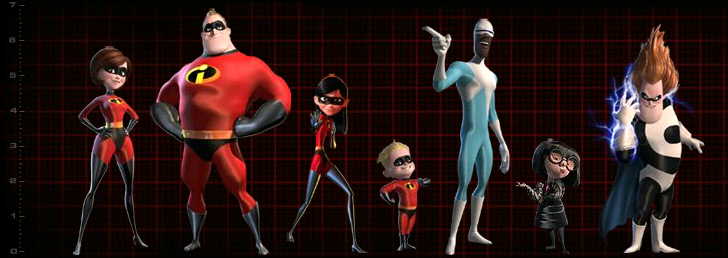
The Incredibles

I am so, like, psyched! The director of one of the best movies of all time, the Iron Giant, is teaming up with the best animation studio since the glory days of Disney - Pixar - to make a new movie, The Incredibles.

image

Sweet!
 

Posted by Buckethead Buckethead on   |   § 3

What you reading for?

Bill Hicks had a great bit on reading:

I was in Nashville, Tennessee last year, and after the show I went to a Waffle House, I'm not proud of it, I was hungry. And I'm alone, I'm eating and I'm reading a book, right? Waitress walks over to me, "Tch tch tch tch. Hey, what you readin' for?"
Is that like the weirdest fucking question you've ever heard? Not "what am I reading", but "what am I reading for?"

Well, godammit, you stumped me. Why do I read?

Well... hmmm... I guess I read for a lot of reasons, and the main one is so I don't end up a fucking waffle waitress, okay?

Recently, the Ministry has been kicking around a new canon of works that we and our commenters feel should be immortalized. It's a highly idiosyncratic list, ranging from Bukowski to Heidegger, which of course a cafeteria-stylee discussion of the very sort I started blogging to participate in.

In the interest of saving the world from a job at Waffle House, John Hudock of Common Sense and Wonder has called us on our navel-gazing and countered with a more useful meme:

[A] much more interesting question is not what barely remembered books you may have read 30 years ago but what are you reading now. So I am starting my own book meme asking what were the last dozen fiction and non-fiction books you read.

Fair enough, and a great idea. Leaving aside the fact that 30 years ago today I was feeding through an umbilicus, I'll play. Go check out John's list, which is loaded with books I've never even heard of, and I will update this post with my own list after I wrack my brain to come up with the titles of 24 recent reads.

Leave your own list in the posts, and feel free to denigrate others for their taste. That's half the fun!!!

[wik] As promised, my crappy lists.

Fiction

His Dark Materials (3 books), Philip Pullman
Ilium, Dan Simmons
The Confusion, Neal Stephenson
Journey To The West (4 books), Wu Cheng�en
Da Vinci Code, Dan Brown
Master and Commander, Patrick O�Brian
Post Captain, Patrick O�Brian

Nonfiction

Gulag, Anne Applebaum
Krakatoa : The Day the World Exploded: August 27, 1883, Simon Winchester
Alexander Hamilton, Richard Brookheiser
The Bread Bible, Rose Beranbaum Levy
New Ideas from Dead Economists, Todd Buchholz
A History of Everything, Bill Bryson
The Language Police, Diane Ravitch
Benjamin Franklin, Edmund Morgan
The Best Music Writing 2002, Jonathan Lethem, ed.
America Day by Day, Simone de Beauvoir
Democracy in America, Alexis de Tocqueville
In Denial: Historians, Communism, & Espionage, John Earl Haynes, Harvey Klehr (on deck)

Posted by Johno Johno on   |   § 4

On Distance and Time

I have been considering distance for years.

It's a funny thing, distance.

A tiny distance can mean the difference between life and death: if the car were that much closer and had killed you outright; if the bullet had been that much closer to an artery you'd have bled to death in minutes; if you had fallen that much farther, and died instead of breaking your leg.

It is difficult to fit spatial distance in my head. We all manage, of course, as we live our lives to understand how far apart things are, and how inconvenient it will be to drive to most of them. But the randomness of distance, the lack of apparent reason governing the way things become proximate-or not- is more difficult to fathom. God has tried to explain it to me, but I don't listen to her because she confuses me.

Chronological distance is even worse, although it is predictable and not random. It's measured in time, after all, so barring relativistic speed, planetary gravity wells, or Atlantean crystals polished and buffed extra shiny, we all experience the same minutes and hours at the same rate. As I age, I am trying to better understand the relationship between the years I have lived and experienced to the years prior to my own sentience.

The distance, in other words, between what was and what is.

Which brings me to "The Breakfast Club". Yes, the movie. We've all seen it. Brian and his soup. I distinctly heard a ruckus. Moliere really pumps my 'nads. You remember. It was released in 1985.

There is a brief scene in "The Breakfast Club" where Judd Nelson's character, the stoner earring guy, mimics the signature riff from Cream's "Sunshine of Your Love". He knew it, we knew it; he dug the song, we dug the song.

Which brings me to "Disraeli Gears", the Cream record where that song first appeared. It was released in 1967.

The distance between "The Breakfast Club" and today is about 19 years, give or take the vagaries of release dates and premier venues and such. The distance between "The Breakfast Club" and "Disraeli Gears" is about 18 years.

We are farther from Judd Nelson's stoner earring guy than he was from Cream's first record.

I've been doing more comparisons like that recently. Sometimes they make me dizzy. Sometimes they make me sad. Sometimes they make me want bagels. Usually they occupy my mind enough to keep me awake for my long commute- there is a significant spatial distance to overcome between home and work.

Posted by GeekLethal GeekLethal on   |   § 20

Kicking It Old School

Set your TiVos... Colonial House begins May 17th. I'm a fan of this entire genre of reality TV for pointy-heads. I've watched most or all of Frontier House, Manor House, 1900 House, Life in the Iron Age, and 1940s House, and look forward to watching modern Americans wipe with oak leaves, attend Puritan meetings, and attempt to remember whether the punishment for Slander is whipping or the stocks.

Y'know, 1628 was a pre-modern era, and ways of thinking, speaking, and ordering society that prevailed then are completely, disorientingly, alien to modern people. I will be interested to see the degree to which the producers and players will be willing to take that fact.

Posted by Johno Johno on   |   § 6

When smarmy dickheads talk, people listen

A little while back, we had a post on the list of "great works" that had been feverishly circulating the interweb. Several of us submitted our lists, highlighting the works we had read, or at the very least perused. But after the orgy of metooism had passed, the criticisms inevitably surfaced. Among the complaints: too much Russian lit, too much English romantic drivel, not enough humor or sf, Hemingway sucks, and in general that the list reads like a dead white male's greatest hits - with a few nods to the sob sisters. Johno undertook to start our own perfidious list, which will serve as a useful starting point:

HST: Fear and Loathing in Las Vegas
Miller: The Canticle of Leibowitz
O'Rourke: Parliament of Whores
Stephenson: Cryptonomicon
Bester: The Stars My Destination
Heinlein: The Moon is a Harsh Mistress
Toole: Confederacy of Dunces
Pynchon: Gravity's Rainbow
Bukowski: Run With The Hunted
Burroughs: Naked Lunch
Hammett: The Maltese Falcon

(Before we go any further, I must establish my street cred by saying that I have read all of these except for Bukowski and Pynchon.) Johno's list has the goes in a completely different stylistic and philosophical direction than the original. I would offer, also a direction much better, reasonable and suited to the tastes of this webthingy.

Before we get really going, I think we need to make several ground rules for our list. If you disagree, savage them in the comments. First, nothing newer than, say, about 1970. Works need some time to settle into a canon, and we should not be thinking about something written after I was born. Second, philosophy and history should be eliminated from the list unless they have compelling literary value. Clausewitz is terrifically important, but nearly unreadable. Gibbon however, is a delight to read as well as being profoundly ensmartening. Third, light on the poetry. And fourth, no matter how painful it is, no more than one example of an artist�s work unless they are a) Shakespeare, b) writing in two distinctly different genres/modes, or c) both. 

If we combine Johno's list and implicit challenge with the flawed but still useful original list that we got from the Oldsmoblogger, we might have something nifty-keen. I would offer these amendations to the original list: No Brontes, and substitute Emma for P&P. No Cooper - read Twain if you are in doubt. Who the hell is Silko, anyway? He's the only one on the list I've never heard of. He's gone. Turgenev? There are several Russians better suited to the list, and likewise Pasternak. Tolstoy, Chekov, Dostoevskiy - that should be sufficient. No Morrison, either. The Shakespeare list should be Hamlet, Taming of the Shrew, History of Henry IV part II, and the sonnets. The rest, they shall stay as they are. If we add Johno's list in its entirety, along with:

Milton, John - Paradise Lost
Chandler, Raymond - The Long Goodbye
God - The Bible
Gibbon - The Decline and Fall of the Roman Empire
Frank Herbert - Dune
J.R.R. Tolkien - The Lord of the Ring

we are heading in the right direction. Everyone pile on in the comments!

Posted by Buckethead Buckethead on   |   § 44

What Do Smarmy Dickheads Read?

A list of classic books is working its way 'round the blogging classes. I picked it up from the Oldsmoblogger who picked it up from others. And now I bring it to the Ministry, because Lord knows we need another reason to think we're so-damned-smart.

Books actually read are bold; portions only or Cliff's Notes don't count.

Forthwith, the list:
Beowulf
Achebe, Chinua - Things Fall Apart
Agee, James - A Death in the Family
Austen, Jane - Pride and Prejudice
Baldwin, James - Go Tell It on the Mountain
Beckett, Samuel - Waiting for Godot
Bellow, Saul - The Adventures of Augie March
Brontë, Charlotte - Jane Eyre
Brontë, Emily - Wuthering Heights
Camus, Albert - The Stranger
Cather, Willa - Death Comes for the Archbishop
Chaucer, Geoffrey - The Canterbury Tales
Chekhov, Anton - The Cherry Orchard
Chopin, Kate - The Awakening
Conrad, Joseph - Heart of Darkness
Cooper, James Fenimore - The Last of the Mohicans
Crane, Stephen - The Red Badge of Courage
Dante - Inferno
de Cervantes, Miguel - Don Quixote
Defoe, Daniel - Robinson Crusoe
Dickens, Charles - A Tale of Two Cities
Dostoyevsky, Fyodor - Crime and Punishment
Douglass, Frederick - Narrative of the Life of Frederick Douglass
Dreiser, Theodore - An American Tragedy
Dumas, Alexandre - The Three Musketeers
Eliot, George - The Mill on the Floss
Ellison, Ralph - Invisible Man
Emerson, Ralph Waldo - Selected Essays
Faulkner, William - As I Lay Dying
Faulkner, William - The Sound and the Fury
Fielding, Henry - Tom Jones
Fitzgerald, F. Scott - The Great Gatsby
Flaubert, Gustave - Madame Bovary
Ford, Ford Madox - The Good Soldier
Goethe, Johann Wolfgang von - Faust
Golding, William - Lord of the Flies
Hardy, Thomas - Tess of the d'Urbervilles
Hawthorne, Nathaniel - The Scarlet Letter
Heller, Joseph - Catch 22
Hemingway, Ernest - A Farewell to Arms
Homer - The Iliad
Homer - The Odyssey
Hugo, Victor - The Hunchback of Notre Dame
Hurston, Zora Neale - Their Eyes Were Watching God
Huxley, Aldous - Brave New World
Ibsen, Henrik - A Doll's House
James, Henry - The Portrait of a Lady
James, Henry - The Turn of the Screw
Joyce, James - A Portrait of the Artist as a Young Man
Kafka, Franz - The Metamorphosis
Kingston, Maxine Hong - The Woman Warrior
Lee, Harper - To Kill a Mockingbird
Lewis, Sinclair - Babbitt
London, Jack - The Call of the Wild
Mann, Thomas - The Magic Mountain
Marquez, Gabriel GarcÃ-a - One Hundred Years of Solitude
Melville, Herman - Bartleby the Scrivener
Melville, Herman - Moby Dick
Miller, Arthur - The Crucible
Morrison, Toni - Beloved
O'Connor, Flannery - A Good Man is Hard to Find
O'Neill, Eugene - Long Day's Journey into Night
Orwell, George - Animal Farm
Pasternak, Boris - Doctor Zhivago
Plath, Sylvia - The Bell Jar
Poe, Edgar Allan - Selected Tales
Proust, Marcel - Swann's Way
Pynchon, Thomas - The Crying of Lot 49
Remarque, Erich Maria - All Quiet on the Western Front
Rostand, Edmond - Cyrano de Bergerac
Roth, Henry - Call It Sleep
Salinger, J.D. - The Catcher in the Rye
Shakespeare, William - Hamlet
Shakespeare, William - Macbeth
Shakespeare, William - A Midsummer Night's Dream
Shakespeare, William - Romeo and Juliet
Shaw, George Bernard - Pygmalion
Shelley, Mary - Frankenstein
Silko, Leslie Marmon - Ceremony
Solzhenitsyn, Alexander - One Day in the Life of Ivan Denisovich
Sophocles - Antigone
Sophocles - Oedipus Rex
Steinbeck, John - The Grapes of Wrath
Stevenson, Robert Louis - Treasure Island
Stowe, Harriet Beecher - Uncle Tom's Cabin
Swift, Jonathan - Gulliver's Travels
Thackeray, William - Vanity Fair
Thoreau, Henry David - Walden
Tolstoy, Leo - War and Peace
Turgenev, Ivan - Fathers and Sons
Twain, Mark - The Adventures of Huckleberry Finn
Voltaire - Candide
Vonnegut, Kurt Jr. - Slaughterhouse-Five
Walker, Alice - The Color Purple
Wharton, Edith - The House of Mirth
Welty, Eudora - Collected Stories
Whitman, Walt - Leaves of Grass
Wilde, Oscar - The Picture of Dorian Gray
Williams, Tennessee - The Glass Menagerie
Woolf, Virginia - To the Lighthouse
Wright, Richard - Native Son

Posted by GeekLethal GeekLethal on   |   § 23

Do Dead Androids Dream of Electric Banking?

Weird Franco-psycho writer Emmanuele Carrere has penned a biography on weird California-psycho writer Philip K. Dick, I Am Alive and You are Dead.

A recent Economist had a brief review of the book, which is not yet released. That review spent alot of its brief space describing Dick's drug use and abuse; presumably Carrere spends alot of time on that as well, as the "review" didn't offer much substantive critique of other content.

One fun fact the review mentioned was the love affair Hollywood has with Dick's work (an affair that will continue through the immediate future) has generated upwards of $700 million, yet not as much $$ flows back to the Dick estate as one might hope.

I'm not a big fan of biography, but I might have a peek at this one just for the union of weird spirits in Carrere and Dick.

Posted by GeekLethal GeekLethal on   |   § 11

Nebula Awards, uh, Awarded

You can go here for the full details. The only winner that I read (saw) was the winner for best screenplay - which went to the Lord of the Rings: The Two Towers. As further evidence of how completely out of touch I am, I barely recognized any of the nominees or winners. I need to stop reading antedeluvian sf like Norstrilia, and read some new stuff.

Coraline, the winner for best novella, is the only Gaiman book I haven't read. I suppose that will be next on my list.

Posted by Buckethead Buckethead on   |   § 0